Showing posts with label creativity. Show all posts

Thursday, 3 July 2025

The Relationship of Story, Meaning and Imagination for Younger Writers

Writing is Shaped by Family & Community Life

Well known Australian writer Dorothy Hewett grew up on the sprawling  sheep station of 'Lambton Downs' in South Australia. Bruce Bennett suggests that this was “the seedbed of Hewett’s creative fiction” (p.xv). Hewett herself, suggested that: 


“The first house sits in the hollow of the heart, it will never go away. It is the house of childhood become myth, inhabited by characters larger than life whose murmured conversations whisper and tug at the mind”


Above: Dorothy Hewitt


My childhood was very different to Hewett’s. I didn't live on a sprawling sheep station with the richness of memories and opportunities that Hewett experienced. As well, home for me was far from being a place of harmony and security. Nor was it a place where great literature was shared. Yet, I too found inspiration and ideas for my writing, from the storytelling, yarns, poetry, and music of my childhood, and from the key events of my early life.


Above: My First Home


Looking back at my childhood, and my early writing that survives, I can see how both were shaped, in part by the home I lived in, as well as my family and early uncontrolled life. Home was not in general a happy place, but it was an environment in which storytelling was everywhere, and not just from books. The stories that surrounded me had connections to music, poetry, 'yarns' and my free range life style. The latter offered boundless opportunities through my self-made adventures, and also the varied experiences and challenges of everyday life.


The tension between my experience of story and the literature of school, was a great challenge for me, especially in high school. I lived in a home where storytelling, yarns and some more contemporary poetry were what mattered. But at school, it seemed that it was only the work of great writers that was valued. This tension for me, had an influence on how I dealt with literature in my classrooms later in life as a teacher, academic and writer. 


The Many Seed Beds of Story Telling in My Life


Sometimes, hidden within the stories our students write, are hidden echoes of their personal life. Many find personal suffering is too painful to share, perhaps a near death experience that they were too scared ever to reveal it to their parents. However, there are often hints, crumbs along the path of their lives than can offer deep insights. These might reflect an event, person, or even a deed done for which they feel deep shame.


At a distance of many decades, I can see an example of this in my early writing. One piece I wrote in my teens was titled "The Orphan Seagulls". This picture book told the story of two seagull chicks who were sometimes left alone in their nest, on a high rock cliff near the ocean. While often only the father would leave to find food for them and their mother, as they grew older and food needs were greater, both parents would at times leave them.


On one of these occasions, the two half grown chicks huddled in their nest as a Sea Eagle flew in circles above the cliff that held their nest. They were high in the clouds, looking for prey. Father was well beyond the clouds and out to sea, and Mother had gone out quickly just along the shore, to seek some easy pickings in the surf below. But she had not gone long before we saw an eagle circling above us. I wrote about it in early story this way: 


"While mother was away, we took the opportunity to sit on the edge of our nest and stretch our wings, which were now fully feathered. Suddenly, we saw an eagle above us and we realized it had spotted us. It began to circle and then descend. We looked beyond it hoping that mother might be returning. But we could not see her." 


As an adult, I often recall childhood memories of my sister and I often being left at home on a Saturday and sometimes Sunday nights while our parents were out entertaining at clubs, weddings and hotels. When it was time for bed and they hadn't returned, we would huddle under the covers and worry at every noise we heard outside. On one such evening someone came and banged on the wall outside my sister's room where we were both trying to fall asleep. We were terrified! Thankfully, it stopped but we couldn't get to sleep. When our parents arrived home at about midnight we rushed to them. Dad tried to calm us by going outside, searching the surrounds before coming back and saying it was probably a horse that had come into our yard and bumped into the house. This of course, was nonsense. 


As a teacher, when I read the writing of some of my students, I would at times hear a few faint echoes of life experiences they had which troubled them. On a few occasions, my students privately shared some of these experiences.


Growing Young Writers


I believe as teachers we can have a great influence on growing our students as writers. We will do this if we are able to inspire them with great literature and powerful story telling. As well, we need to assist them build on such literature, to grow as story tellers and writers themselves. 


Imagination is of course, a key ingredient in this quest. So, how might we inspire our students to write not just because they have to, but to release them to explore ideas and seek deeper personal insights that turns life experiences into rich story telling?


Above: A very young writer composing an early story


First, we need to flood their world with stories and poetry of all kinds. This requires skill by the teacher to introduce them to varied works, and inspire them to read and seek out books themselves.


Second, we need to model this by sharing books that would also be appropriate for them, and that open up opportunities for them to share some of their favourite books.


Third. we need to create an environment in the classroom that allows space for such personal reading, and some time when they can share these with other students. One simple way to do this is to allow students to go and read if they have finished other subject area activities and tasks. I might return to this topic in a future post.


Good Luck!

Monday, 23 December 2024

'Identifying that which is valuable in EVERY child'

I'm not sure what your childhood was like, but mine wasn't great. As we have reached the end of the academic year in schools and universities within Australia, I thought it might be useful to revisit the first question in my pedagogical framework in 'Pedagogy and Education for Life'.

"Do I identify that which is valuable in each child?"

If you have followed my work, you will have realized that my family life was problematic. For most of my early years up to the age of 17, I lived in a dysfunctional family with two alcoholic parents. I also had the devastating experience of finding my mother had died during the night after a massive heart attack. This was the result of alcoholism that left her an emaciated woman, who ate little but drank much. My father was also an alcoholic for much of my early life, although thankfully he stopped drinking when I was 12 years, when he lost his job after being found with alcohol on his breath at work.

In my case, it was my 4th Grade teacher who was the first to recognize that while I was an annoying student at times (partly due to my struggles with life at home), he saw potential in me. I now know, my behaviour was due mainly to disinterest and boredom with what he was trying to teach me. But he invested time in me, trying to find something that would capture my imagination and hence improve my behaviour.

The secret of his success as a teacher, was that he saw some hidden potential in me that no other teacher had ever been able to see.He recognized that I was bored and had significant home life problems. He turned me around by providing some unique opportunities to stretch my knowledge and motivation by trusting me to undertake some special projects in our class.

Above: An early school photo. Good luck if you can pick me!

How did he respond to my disinterest and bad behaviour?

First, he created jobs for to keep me busy and learning something in the process. His most ambitious move was to turn over full responsibility for a brand new tropical fish aquarium that he trusted me to set up and care for. He also encouraged me to learn more about the tropical fish and give talks to our class and other students about them, including their habits, food and natural environments of the fish.

Second, he ensured that my learning opportunities were pitched at a level that challenged me, rather than making me do the whole class activities which I found, easy, boring and seemingly a waste of my time.

Every teacher reading this will probably be saying, "I can't design a separate curriculum for one nuisance student!" Of course you can't, but by recognizing that my ability wasn't being stretched, and my home life was appalling, he knew he needed to do something different for his benefit and also mine. I am so grateful he did! 

As teachers we need to realize that our students come to us with different strengths, abilities and interests. To some extent, this requires us to address the diverse interests and abilities in our classrooms and adopt varied methods and content.

My early teaching experiences

Given my early school experiences, it won't surprise you that when I became a teacher I tried many innovative things to engage my students. I was always looking for things that would stretch them, widen their knowledge, and inspire them to learn new things. For example, in my second year of teaching with a Year 6 class at the time, I came across an old gramaphone on the side of the road as I drove to school. It was being tossed out. Our family had a gramaphone when I was a child. It was in our garage, still worked, and I would play old records on it. 

I stopped my car, asked the owners were they 'really' throwing it out. They said yes and I asked could I have it. I managed to push it into the large boot of my car and slowly drove the 2km to my school. I had another staff member help me to take it to my classroom. I put it the middle of the room and wondered what my students would say when they saw it. One or two knew what it was and one student said they had lots of old records in his garage. He went home (he had a lunch pass) and returned with some records. We used the gramaphone for much of the rest of the day. We listened to it, explored how it actually worked without power, wrote about it and so on. It was an incredible learning experience. I took it home and restored iy on a tiny balcony of an apartment my wife and I rented. I still have it to this day, and it is a prized object that we occasionally play for fun.

Teaching the Whole Child

I know that some teachers feel the expectations they have today as teachers are different to what I had several decades ago. But the need to encourage creativity, and develop inquiring minds that lead them to ask questions and look for explanations for things that are new to them, is critical.

In the process, we might uncover knowledge and interests that will surprise us. Schools are so regimented and programmed today, that in many ways creativity is dampened. We need to look for opportunities to widen our students worlds.

A side benefit to such an approach to teaching will I believe lead us to discover things about our students that we were unaware. In the process we might just identify in each child things that are valuable and sometimes unique. 

Thank You

Thank you to the many thousands of people who follow my blog. This is my last post for the year. My apologies for not posting on this blog last month, life has been busy.

Seasons Greeting to all!! I look forward to staying in touch in 2025.

Trevor


Tuesday, 19 December 2023

Holiday Ideas to Stimulate Children, Reduce Screen Time & Keep Parents or Carers Sane!

My apologies if you follow my Literacy blog as well as this Pedagogy blog (& thanks too!), but I thought readers of this blog might find these ideas from my Literacy blog of help in holiday periods when school is out.

In Australia, our schools will close in the third week of December for the Summer holidays which last about 6 weeks. After over two years of COVID isolation, lock downs and disrupted schooling, life is just starting to return to normal. As we enter holiday periods with our children and grandchildren, it's helpful to plan a little. While some children might go to summer camps, or holidays with families, there will be plenty of time either at home or away for children to become bored. Hopefully, the solution is NOT just to simply increase their screen time.


If Christmas falls in winter as it does in the US and other northern hemisphere nations, then outdoor activities will be hard. But there are plenty of things to be done inside that are stimulating and fun. In Australia, traveling to catch up with family and friends, the beach, hiking, boating, fishing and more take up lots of time. But there is still time to fill at home because some children end up home while parents go to work for at least part of the holidays.

At Christmas, many families have ongoing traditions that you continue in families or schools. One special tradition in our family is to make the traditional English Plum Pudding using a recipe passed down on my mother’s side first used by her English and Scottish ancestors in the 1800s. Family legend is that one of our relatives worked as a cook in Holyrood Palace in Edinburgh and that the recipe was passed down to family members generation by generation. I used to make the pudding as a child with my grandfather and I’ve carried that tradition on first with one of my daughters, and these days also a second pudding with one of my granddaughters. Perhaps you have your own traditions?

I've written a number of posts in the past about things to do in the holidays with kids (here), as well as simple travel games to fill the time on trips with your children (here). There is also an earlier post on ‘Planning With Kids’ that offers '20 Great Holiday or Travel Activities for Kids (5-15)'. To maintain some balance, you might also read my post on why 'Boredom is still good for children!'.

In this post, I thought I'd revisit some of the ideas and add a few new ones. Holidays offer an opportunity to stimulate your children's minds, and help prepare them for another year of school in 2023.

My criteria for choosing holiday activities are that they should:

  • Stimulate creativity
  • Encourage exploration and discovery
  • Involve using hands as well as their minds
  • Encourage interaction between you and your children
  • Foster language and literacy development 
  • Increase their knowledge
  • Keep them interested

1.      An Excursion

 
The untold great places for an excursion wherever you live. Are you near or in Sydney? Why not enjoy one of the wonderful walking tours of the historic rocks? We took 4 of our grandchildren on a self guided tour of the Rocks during school holidays a few years and had so much fun. The tour we used was free. We were provided with a map and commentary that allowed us to have an adventure together as we explored the historic area. We acted out varied scenarios along the way and took photos to share with other friends & family.

2.      Why not get your children to create an animation, with one of many apps. 

This sounds a big deal but it's not with the right app. I wrote a post about some wonderful apps for digital story telling a few years ago (HERE). One of my favourites is 'Puppet Pals. For one thing, it's VERY easy to use. Your children will work it out in minutes. Puppet Pals is available as a free app for the iPod Touch, iPhone and iPad. Most apps are available for other devices as well. It's essentially a simple way to create an animated movie using 'cut-out' themed characters and a variety of backdrops and scenes to create an animated 'puppet' play.


There is a free version that comes with Wild West backgrounds and actors.  However, you can also purchase different themes for as little as $US0.99 or the 'Director's Cut' in which you can access all the themes for $US2.99. These allow you to obtain a range of additional scenarios and characters based on themes such as monsters, space, pirates, arthropod armada, Christmas and so on. You can even make your backdrops and characters.

It's a very simple app to use that provides very easy story boarding. You can record dialogue, move characters around, create some simple effects, change backdrops and settings and characters. While ideally, before creating the animation, the writer/producer prepares plot summaries and story ideas, but I've seen my grandchildren make excellent animations on their first take. One they used is the 'Arthropod Armada' theme from 'Director's Cut'. 

As a teacher, I also could see myself using a smart board to collaboratively develop a story with my class before introducing individuals and groups to this smart little app.

 
3. Books with a difference

a)  Pick some special books they haven't seen - 

Try to borrow or buy at least 2 books for each child. Based on their interests try to choose books they'll enjoy, not simply books you'd like them to read. Opportunity shops, book exchanges and libraries are also a great place to start looking for some cheap second hand books. I have another post on book exchanges, op shops and web exchange sites here. Alternatively, take them to your local library to choose some.

b)  Use Books as a creative stimulus - While the sheer joy of the book is usually enough, sometimes books can stimulate many wonderful creative activities. For example:

After reading Maurice Sendak's "Where the Wild Things are" go outside and dramatise it. Let one child be Max and let others take turns at being the wild things. Make a boat out of bits of wood, or even have a go at making one out of a large cardboard box (or several).

After reading Jeannie Baker's book "Where the Forest Meets the Sea" (a book about the Daintree Rainforest in which all the pictures are collage), encourage them to make a collage out of natural materials (and maybe some wool, straws etc to supplement) in response to Baker's pictures. Or read a second book and have them use collage in response.


Or after reading Graeme Base's "The Waterhole" get them to paint the waterhole (they can draw the animals, cut them out and paste them around the waterhole).

4. Dramatisation

Dramatisation is an excellent way to respond to a book. If you have a dress-up box all the better. Let your children either re-tell the story through dramatisation or improvise. Get involved to help set the pattern for turn taking etc. I play a mean wolf, and an even better Grandma!


5.   Writing with a difference

Introduce children aged from 5 to diaries or holiday journals.

a) Scrapbooks & journals - Make this fun, not a school activity. Some might prefer to just make a holiday scrapbook by pasting in tickets, leaves they collect, food wrappers etc. But you can also show them how to create a travel diary.

b) A holiday blog - Tech savvy mums and dads might encourage their children to write online. Why not set up a family blog that can be read by friends and relatives (even if only for two weeks). You could use this as part of a trip away, or just use it at home. Older children could set up the blog themselves and all family members could contribute. Let them have access to a digital camera and a scanner and the sky is the limit. See my post on 'Children as bloggers' (here).

c) Start a family joke or riddle book - Maybe offer them some jokes as models ("Knock, knock", "Why did the centipede cross the road"....) etc.

6. Craft

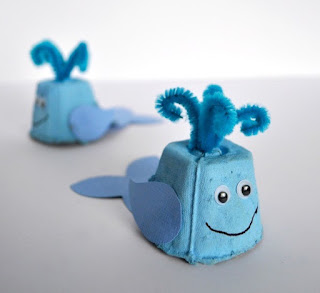
a) Structured Craft ideas - simple beadwork, noodle craft, mask making, making plaster moulds (and painting them), anything for young children that requires paper tearing, gluing, glitter, stickers, works well.

b) Unstructured creative craft - Stock up when you go to the supermarket with simple materials like paper plates (good for masks), brown paper bags, sticky tape, glue, cotton balls, tooth picks, paper cupcake holders, straws (cutting up and threading), noodles (for threading).
c) Play dough - You can buy cheap coloured modelling clay but home-made playdough works well. My wife 'Carmen's can't fail' recipe is 1 tablespoon of oil, 1 cup of plain flour, 0.5 cup of cooking salt, 2 tablespoons Cream of Tartar, 1 cup of water, colouring. Mix together and put in a saucepan on medium heat until it binds together, stirring all the time. Fold together by hand. If you keep it in a sealed plastic bag it will last for ages in or  outside the fridge.

There are endless things to do with play dough. Try to move beyond just cutting out shapes (which kids still love). Encourage them to make a house, a farmyard, a bed, and an aquarium. Use some plastic animals with the play dough or small plastic people. If you don't mind tossing the play dough out you can let them use sticks, plants etc to make simple dioramas. Kids will create complex stories as they manipulate the play dough.

7. Creative Play

I've written a number of previous posts on play (here) but planning for play is important. While you can say to your children go outside and 'play', doing some simple planning at times will lead to more stimulating play times.

a) Dress-up box - If you don't have one take the kids to an Op shop to start one. You might even pick up some gems like old helmets, hats, belts (you can cut them down), handbags etc.

b) Water play - This is hard in cold weather, but maybe you could make bath-time special for young children with extra bubbles, different stuff to take into it. In warmer weather give them a bucket of water and some things to scoop, sieve etc - obviously only UNDER SUPERVISION. Above, it's pick on Grandad day!

c) Build a cubby house - No not with wood, just use a table, some chairs, wardrobes (hitch the blankets into the top of the doors, some pegs and sheets and blankets. By draping them over other objects you should be able to create a special space (about 2x2 metres is enough for three small kids). Or you could try your hand at making one from large cardboard boxes. I've done both types and the fun was the same on both occasions.

Try to get at least 1.5 metres of height. Have the kids 'help' and then get them to collect some special things to have in the cubby.

I used to let my grandchildren have my cheap transistor radio from my shed (lots of fun). We also had a tea set. Sometime they had toys with them and games. If you're up to it, climb in as well and read some stories. I've seen a cubby of this kind amuse kids for half a day. Then of course for the adventurous you can share some snack food as well. You can even build a cubby inside! See my post on cubbies (here).

d) Indoor and back yard fun

Treasure hunts - Write the clues on paper using words and pictures depending on ages and make the treasure worthwhile (chocolate, a coupon for an ice cream in the kitchen etc). For something a little more challenging why not try a map with grid references (see picture opposite).

e) Cooking

Kids love cooking with their mothers or fathers. Do simple stuff. Nicole (Planning With Kids) has lots of great ideas for cooking with kids on her site. Don't forget to make it a language activity as well by getting them to follow the recipes.

Wrapping up - A few basics hints

  • Have a strategy for the holidays - map out a timetable (post it on the wall) and try to plan a few significant events and think through the general structure of each day.
  • If you have younger children still at home, being joined by school kids on holidays, try to think about how you will cope with all their interests and think about varying daily routines a little.
  • Pace yourself - don't use all your best ideas in the first few days (you'll wear them and yourself out and you'll struggle to keep up the variation later).
  • Expect bad weather - think about some ideas that will work in rainy weather as well. It's called the "Law of Holidays" - expect lots of wet weather and a day or two of sick kids.
HAVE FUN!

Thursday, 27 April 2023

God Made us as Creatures Who Learn

In my last post, I indicated that I would write three posts that address the overriding key purposes that give shape to the pedagogical framework I have outlined in my book 'Pedagogy and Education for Life'


I suggested that as teachers and school leaders, who are people of God, there are some key principles that should give shape to all we do in our schools and classrooms. For we must do more than just teach and fill heads with knowledge to do well on tests that open up opportunities to gain careers leading to worldly success. Yes, we do seek to nurture our students to do well academically, but we also seek to help them grow spiritually into Godly men and women, who bring honour to their God.


The principles that should shape our pedagogy are not to be based simply on the latest educational trends, great curriculum ideas, and new methods. Ultimately, Christian education must be shaped by end goals. I write in Chapter 1 of my book, that schools and their teachers require a telos (i.e. “the good” or aimed-for goal of schooling) reflecting the faith foundations of the school. If the goals that we trumpet in school documents and on websites, only stress success in life, citizenship, traditions, academic achievements, culture and sport, then we are just mimicking secular schools and worldly goals, and losing sight of our primary reason for existing as faith-based schools. Education is always to aim at much more than simply worldly. I quote Douglas Barnes in the opening of Chapter 2 “Education as Formation in Communities”:


Education is “embodied in the communicative life of an institution, the talk and gestures by which pupils and teachers exchange meanings even when they quarrel”.


My last post looked at the overarching principle ‘God made as unique creatures’. If you missed it, you can find it HERE.


In this post, I look at the second major purpose of education in faith-based schools.


God made us to be Learners


This second major pedagogical principle has nine sub-elements or practices to support this major principle. The pedagogical actions serving the principle are demonstrated as we encourage our students to be learners who bring honour to God in all aspects of their lives.


This overarching principle should lead us to create classrooms where students acquire much more than simply knowledge and success on assignments and exams. We want them to humbly understand who they are, what is the purpose of their learning, as well their gifts, all of which come from God. Our primary purpose of course, is to live in ways that honour God. As teachers, to maintain this focus, we need to adopt pedagogical practices that encourage our students as learners to:


·    Gain more than just content, knowledge and skills to achieve success in exams and life.

We also hope they will gain knowledge which helps them to seek meaning and truth transcending this life (see Principle 5).


·    Grapple with bigger questions. Who is God? What is our true purpose in life? How can my learning be used for ‘good’ and bring honour to God, not simply self, family and School (see Principle 6)?


·    Use God given imagination and creativity. These are gifts to help us learn, explore the world and honour God in diverse ways (see Principle 9).


What is our task as their teachers?


As teachers, we are to:


·        Foster learning communities in our classes – Such communities allow students space to question and challenge one another. In doing this we help our students demonstrate humility when confronted by the alternative ideas and views of the world. Ultimately, as teachers we are to demonstrate and model humility as we encourage and develop the same qualities in them. This begins by encouraging them students to tussle with BIG ideas.


·        Create open and ‘questioning’ communities – Communities like this not only allow space for creativity, risk-taking and problem solving, they encourage them (see Principle 11). This requires us to explore and use different approaches to teaching and learning to ‘grow’ students who bring unique abilities, learning styles and worldviews that might well be different from your our own as their teacher (see Principle 7).


·        Become “Kidwatchers”, constantly observing and monitoring our student’ – Through close attention to our students, we observe and support their learning, well-being, and journey toward faith (see Principle 11). We also strive to understand them as people as we observe the things that challenge and encourage them in their faith; and also see the things that distract them from leading a faith-centred life. As well, we need to observe our students not just in formal classes, but as they take part in the full range of school activities.


I would encourage all of us as teachers to regularly assess how well we are tracking as Christian teachers who seek more than simply worldly success for our students and our school.


In my next post, which be the third and final post in this short series, I will look at the final major purpose that shapes my pedagogy, 'God Made us for Communion’.

Wednesday, 21 December 2022

Holiday Ideas to Engage and Stimulate our Children, Reduce Screen Time, and Learn New things.


This will be our first holiday period without COVID restrictions. After almost three years of COVID restrictions, isolation, lock downs and disrupted lives, life is just starting to return to normal. As we prepare for this holiday periods with our children and grandchildren, it's helpful to have a plan. Some children might go to summer camps, or holidays with families, but many will be at home alone. Boredom, is a state where can try to fill it with things that might not be helpful. Six weeks of screen time is NOT a good option.

Today I'm making the traditional family Christmas pudding with one of my granddaughters. Always a special treat which I once did with one of my daughters. I hope that my readers all have their own traditions that you look forward to each year. If not start some with your children or grandchildren.

Do you have Christmas traditions that might involve your children and grandchildren? If not, start some. It might be as simple as a shopping outing together to buy gifts for other people (siblings, relatives, friends etc). Many teenagers will simply go out with friends. I'd encourage you to inject yourself into some of these.

If Christmas falls in winter as it does in the US and other northern hemisphere nations, outdoor activities will be hard. But there are plenty of things to be done inside that are stimulating and fun.

I've also written a number of posts in the past about things to do in the holidays with kids (here), as well as simple travel games to fill the time on trips with your children (here). There is also a post on Planning With Kids that offers '20 Great Holiday or Travel Activities for Kids (5-15)'. To maintain some balance you might also find my post on 'Boredom is still good for children!' to be helpful.

In this post I thought I'd revisit some of the ideas and add a few more. There is no better way to stimulate your children's minds and prepare them for another year of school in 2023.

My criteria for choosing these holiday activities are that they:

  • Stimulate creativity
  • Encourage exploration and discovery
  • Involve using their hands as well as their minds
  • Encourage interaction between you and your children
  • Foster literacy development 
  • Increase their knowledge
  • Keep them interested

Encourage your children to make a film 

Near or in Sydney? Why not enjoy one of the wonderful walking tours of the historic Rocks. We took 4 of our grandchildren on a tour of that was free and provided a map and commentary. We acted out varied scenarios along the way and took photos to share with other friends & family.

https://sydneyexpert.com/rocks-self-guided-walk/

1. Use a simple animation app to get them started - This sounds a big deal but it's not with the right app. I wrote a post about some wonderful apps for digital story telling a few years ago (HERE). One of my favourites is 'Puppet Pals. For one thing, it's VERY easy to use. Your children will work it out in minutes. Puppet Pals is available as a free app for the iPod Touch, iPhone and iPad. Most apps are available for other devices as well. It's essentially a simple way to create an animated movie using 'cut-out' themed characters and a variety of backdrops and scenes to create an animated 'puppet' play.

There is a free version that comes with Wild West backgrounds and actors.  However, you can also purchase different themes for as little as $US0.99 or the 'Director's Cut' in which you can access all the themes for $US2.99. These allow you to obtain a range of additional scenarios and characters based on themes such as monsters, space, pirates, arthropod armada, Christmas and so on. You can even make your backdrops and characters.

It's a very simple app to use that provides very easy storyboarding. You can record dialogue, move characters around, create some simple effects, change backdrops and settings and characters. While ideally, before creating the animation, the writer/producer prepares plot summaries and story ideas, but I've seen my grandchildren make excellent animations on their first take. One I've used used is the 'Arthropod Armada' theme from 'Director's Cut'. 

Puppet Pals is a wonderful resource for supporting story telling, writing, language development, creativity, and problem solving, while at the same time introducing them to film making and animation. I could see myself using a smartboard to collaboratively develop a story with my class before introducing individuals and groups to this smart little app.

Books with a difference


2. Pick some special books they haven't seen - try to borrow or buy at least 2 books for each child. Based on their interests try to choose books they'll enjoy, not simply books you'd like them to read. Opportunity shops, book exchanges and libraries are also a great place to start looking for some cheap second hand books. I have another post on book exchanges, op shops and web exchange sites here. Alternatively, take them to your local library to choose some.

3. Use Books as a creative stimulus - While the sheer joy of the book is usually enough, sometimes books can stimulate many wonderful creative activities. For example:

After reading Maurice Sendak's "Where the Wild Things are" go outside and dramatise it. Let one child be Max and let others take turns at being the wild things. Make a boat out of bits of wood, or even have a go at making one out of a large cardboard box (or several).

After reading Jeannie Baker's book "Where the Forest Meets the Sea" (a book about the Daintree Rainforest in which all the pictures are collage), encourage them to make a collage out of natural materials (and maybe some wool, straws etc to supplement) in response to Baker's pictures. Or read a second book and have them use collage in response.

After reading Graeme Base's "The Waterhole" get them to paint the waterhole (they can draw the animals, cut them out and paste them around the waterhole).

4. Dramatisation - Dramatisation is an excellent way to respond to a book. If you have a dress-up box all the better. Let your children either re-tell the story through dramatisation or improvise. Get involved to help set the pattern for turn taking etc. I play a mean wolf, and an even better Grandma!

Writing

5. Diaries and journals - Introduce older children to diaries or holiday journals. Make this fun, not a school activity. Some might prefer to just make it a scrapbook by pasting in tickets, leaves they collect, food wrappers etc. But you can also show them how to create a travel diary.

6. A holiday blog - Tech savvy mums and dads might encourage their children to write online. Why not set up a family blog that can be read by friends and relatives (even if only for two weeks). You could use this as part of a trip away, or just use it at home. Older children could set up the blog themselves and all family members could contribute. Let them have access to a digital camera and a scanner and the sky is the limit. See my post on 'Children as bloggers' (here).

7. Start a family joke or riddle book - Maybe offer them some jokes as models ("Knock, knock", "Why did the centipede cross the road"....) etc.

Craft

8. Structured Craft ideas - simple beadwork, noodle craft, mask making, making plaster moulds (and painting them), anything for young children that requires paper tearing, gluing, glitter, stickers, works well.

9. Unstructured creative craft - Stock up when you go to the supermarket with simple materials like paper plates (good for masks), brown paper bags, sticky tape, glue, cotton balls, tooth picks, paper cupcake holders, straws (cutting up and threading), noodles (for threading).

Creative Play

I've written a number of previous posts on play (here) but planning for play is important. While you can say to your children go outside and 'play', doing some simple planning at times will lead to more stimulating play times.

10. Dress-up box - If you don't have one take the kids to an Op shop to start one. You might even pick up some gems like old helmets, hats, belts (you can cut them down), handbags etc.


11. Water play
 - This is hard in cold weather, but maybe you could make bath-time special for young children with extra bubbles, different stuff to take into it. In warmer weather give them a bucket of water and some things to scoop, sieve etc - obviously only UNDER SUPERVISION. Above, it's pick on Grandad day!

12. Play dough - You can buy cheap coloured modelling clay but home-made playdough works well. My wife 'Carmen's can't fail' recipe is 1 tablespoon of oil, 1 cup of plain flour, 0.5 cup of cooking salt, 2 tablespoons Cream of Tartar, 1 cup of water, colouring. Mix together and put in a saucepan on medium heat until it binds together, stirring all the time. Fold together by hand. If you keep it in a sealed plastic bag it will last for ages in or  outside the fridge.

There are endless things to do with play dough. Try to move beyond just cutting out shapes (which kids still love). Encourage them to make a house, a farmyard, a bed, and an aquarium. Use some plastic animals with the play dough or small plastic people. If you don't mind tossing the play dough out you can let them use sticks, plants etc to make simple dioramas. Kids will create complex stories as they manipulate the play dough.

The blanket cubby!
13. Build a cubby house - No not with wood, just use a table, some chairs, wardrobes (hitch the blankets into the top of the doors, some pegs and sheets and blankets. By draping them over other objects you should be able to create a special space (about 2x2 metres is enough for three small kids). Try to get at least 1.5 metres of height. Have the kids 'help' and then get them to collect some special things to have in the cubby. Use a toy box for a table, some cushions to sit on. I used to let my grandchildren have my cheap transistor radio from my shed (lots of fun). Some will enjoy a tea set; others will collect animals and toys. If you're up to it, climb in as well and read some stories. They'll like the edges tucked in to cut out light so you might need a torch. I've seen a cubby of this kind amuse kids for half a day. Then of course for the adventurous you can share some snack food as well. You can even build a cubby inside! See my post on cubbies (here).

Above: A 'house' one of my grandchildren made (with help) from a box I saved

Indoor and back yard fun

14. Treasure hunts - Write the clues on paper using words and pictures depending on ages and make the treasure worthwhile (chocolate, a coupon for an ice cream in the kitchen etc). For something a little more challenging why not try a map with grid references (see picture opposite).

15. Cooking - Kids love cooking with their mothers or fathers. Do simple stuff. Nicole (Planning With Kids) has lots of great ideas for cooking with kids on her site. Don't forget to make it a language activity as well by getting them to follow the recipes.

16. Insect scavenger hunt - Try an insect scavenger hunt (one of my grandchildren's favourite activities). You'll be surprised just how many you can find. You'll need to be careful turning rocks over and digging around, but even in Australia it's low risk if you supervise. Place a pile of bricks in a damp place and then let the kids help you to uncover them a few days later - watch the critters scurry. We always enjoy a good snail race afterwards!

A few basics hints
  • Have a strategy for the holidays - map out a timetable (post it on the wall) and try to plan a few significant events and think through the general structure of each day.
  • If you have younger children still at home, being joined by school kids on holidays, try to think about how you will cope with all their interests and think about varying daily routines a little.
  • Pace yourself - don't use all your best ideas in the first few days (you'll wear them and yourself out and you'll struggle to keep up the variation later).
  • Expect bad weather - think about some ideas that will work in rainy weather as well. It's called the "Law of Holidays" - expect lots of wet weather and a day or two of sick kids.