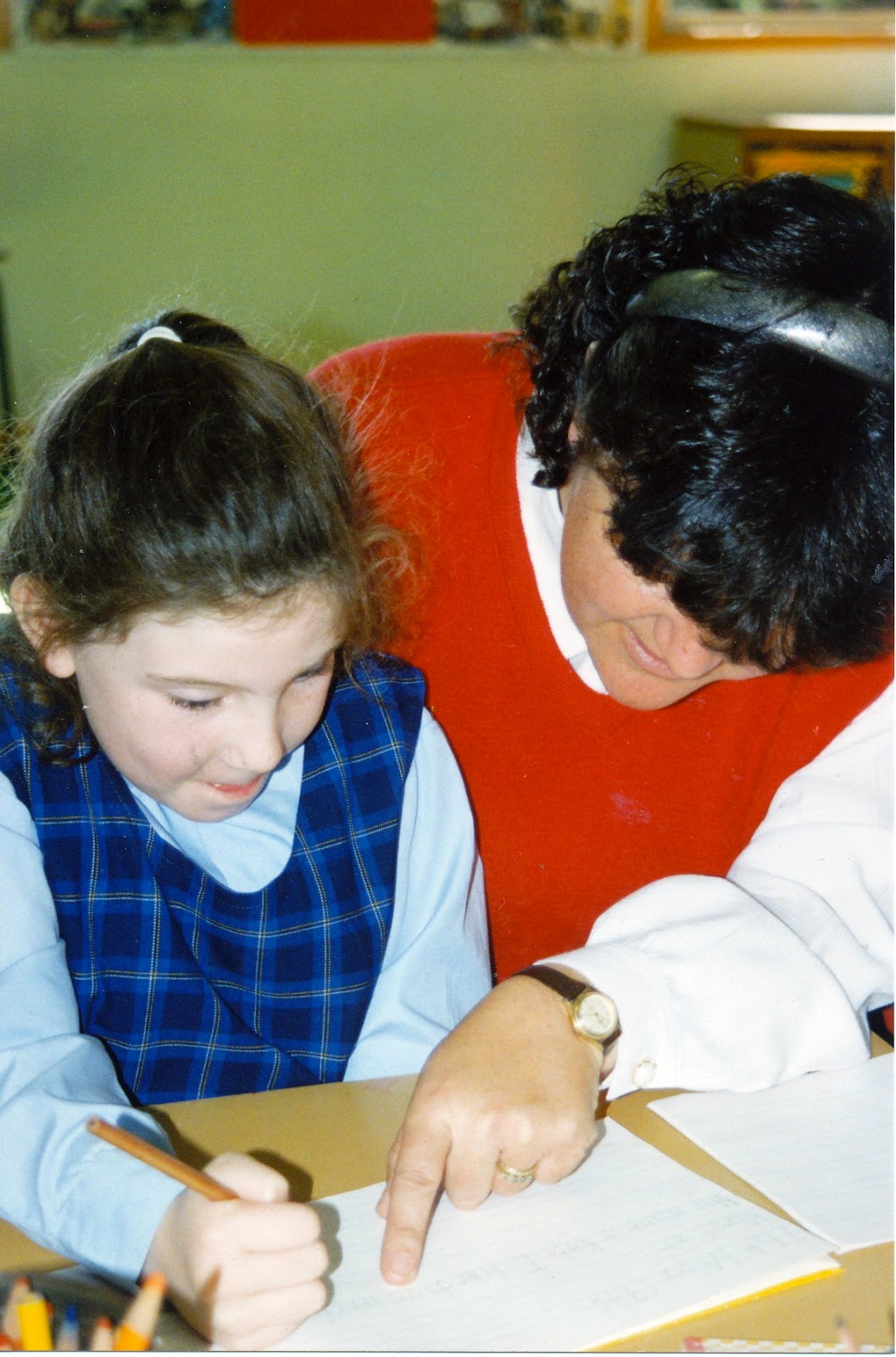
It's difficult to write a post like this one without appearing that I'm being (at least indirectly) critical of teachers, and parents. As a former teacher, I'm aware of the challenges in teaching, whether infants, primary or secondary. And as a parent, and more recently a grandparent, I understand how tough parenting can be. All levels of education have their own unique issues in 2022, there are also some issues that are common to all.

As a teacher, you will be aware that parents tend to be more critical than they once were. Expectations are higher than ever! Every parent feels their child is unique (and of course in one sense they are), and many want them to end up working as brain surgeons, lawyers, engineers or some other high-paying role. Teaching is unfashionable right now partly because everyone talks it down, including teachers.

Many parents will also question what teachers do, even though the teacher is the education and teaching expert, not the parent. It is one of the few professions in the world where almost everyone feels they have the right to question the professionals. And of course, media critics of teaching abound.
As well, school education systems are constantly wanting to test and measure achievement with instruments (i.e. tests) that inform them on how students and schools are being judged. These measures never offer a comprehensive picture of what our students are learning, and always seem to end up producing negative stories in the press. Is there any wonder teachers feel unhappy?
It seems that many people are quick to criticize and slow to acknowledge that teaching and parenting are both challenging roles in the 21st century. What can we do about this situation? I want to suggest that both key parties need to review and reassess their hopes and desires for children. In particular, I think as parents, we need to think carefully about what our students' aptitudes and skills are, and how these might equip them for specific roles in life. At day's end our children can't all be brain surgeons, CEOs, lawyers, doctors or CEOs of their own start-up companies with their unique products and inventions that resulted from their university studies. So how do we set realistic goals and expectations for our children as they enter education? Let me ask a few pointed questions:
1. When your child first entered primary/elementary school, were you already aware of what you expected from education for your child? As well, had you already decided what profession you wished them to pursue?
2. When your child entered the secondary school, had you realigned your expectations much?
3. What factors shaped the above choices? Was one factor your desire to see them do something similar to you as their parents? Or, in some cases, perhaps something quite different and 'better'? And high paying!
4. How closely did you examine your child's natural gifts, abilities and interests in thinking through such decisions?
Why pose these questions?
I ask questions like these because I have observed for decades that many parents embrace goals for their children very early in life, that aren't necessarily based on an objective assessment of their children's aptitudes and abilities. Recent research in Australia suggests that a majority of parents expected their children to go to university, with 62.8% indicating either Yes, definitely or Yes, probably. As well, fathers who hold trade qualifications are less likely to expect their children to enter higher education. But both mothers and fathers tend to rate boys as being substantially less likely to attend university than girls, and overall parents over-estimate the likelihood of their child entering university. Some of my family members, and many friends always saw me as destined for engineering. I commenced mechanical engineering with Australia's major steel company (BHP) when I left school, but in a few months I tossed this in and pursued teaching as a career! My father was NOT impressed. My experience and that of many others, suggest that we need to think more carefully about the aspirations we have for our children.

In this post, I am composing the post against a backdrop of nail guns being used to build a luxury home near me. The workers are mostly men, who have completed 4 years of high school education followed by a trade course over 2-3 years at a technical college. I suspect that few were very successful at school. They all drive cars much better than mine and the builders I know live in homes (usually with minimal or no debt) that are better than many university educated people can afford. They seem to enjoy and get satisfaction from their time spent on site, with a predictable pattern of 3-4 hours’ work (7.00am till 11.00am), one hour for lunch (or 'smoko' as some call it), and then another 3 hours before they go home and forget about work till the next day.
All parents and teachers are different, but as an informed observer I want to offer a critique of some of the expectations parents and teachers seem to hold, and encourage all readers to answers the following questions.
What do schools seek to equip children for?
If you answered "get to university", "succeed in their final exams", "end up with a good job" etc, I think your response might just be VERY narrow. All schools, and particularly Christian and religious schools of all types, should be seeking to develop the whole child, not be setting expectations on the first day of primary/elementary school for them. Our will always reflect our relationship with the child and our personal aspirations. In my book 'Pedagogy and Education for Life' I point to Doug Blomberg's thoughts on the relationship between teacher and child. He makes a very telling point that has relevance to both teachers and parents when thinking about our hopes and career expectations for children. He states in 'Wisdom and Curriculum' that the task of the school, including faith-based schools is to use curriculum, which he defines as inclusing “the relationship between the teacher and the child” for a central purpose:
"... to create a (school-)world within the world, because it is a selection from and sequencing of an all-but-infinite range of possible experiences. It is a conscious (re-)ordering of the world for the purposes of teaching and learning. The ends to which these processes are directed provide the criteria for the selection and organization of school experience." (Cairney, 2018, p.44)
I underline the final sentence because it speaks to the issues I'm discussing in this post. The expectations of parents are (I suspect) pretty much set before school. While these might change across the years of school life, they do not shift easily, and in some cases never do!
Parents have the primary role in shaping future expectations early in life, but this tends to shift over time, with teachers and other students also playing a role in the development of every child's hopes and dreams for life after school. Teachers must be aware of this and reflect on how they might influence pathways for the good, or perhaps, NOT for the good of the child.
I might do a follow-up post on this topic, but for now I simply leave readers to ponder and perhaps discuss the issues I have raised with others.