Showing posts with label teaching. Show all posts

Tuesday, 30 April 2024

The Power of Community to Create Change in Disadvantaged Schools

Foundations for Change in Secular Education

While this blog has focused largely on pedagogy in faith-based schools, I've been reminded recently that secular schools face similar challenges with students, and also in relation to teacher development, I think there is more common ground than we might imagine. Having started my teaching life as a non-Christian in secular government run education, I have spent many years helping to develop teachers and schools in both sectors. As such, I have been an insider to both. I often ponder what's the same and what is different? In this post, I want to concentrate on teacher and school development.

A Helpful Recent Case Study of School Transformation

Cessnock is a rural town in Australia about 112km from Sydney. I know this area well. As a child, I spent all of my school holidays with my maternal Grandparents in Cessnock. My Mother also grew up there, and fell in love with a smooth Scotsman who was working in the coal mines nearby. Her family owned and ran mixed businesses, essentially 'General Stores' or shops in the days before major supermarkets, department stores, huge shopping centres and online shopping. My mother's family were staunch Methodists and from the late 1890s until 1964 they ran General Stores in the area.


Above: One of my Grandparents' Stores (Closed in 1964)

My Mother and her brothers attended a government primary school at Kearsley, just two doors from their store in the town. Later they attended Cessnock High School. One of my uncles (my Mother's brother) eventually taught at Cessnock High for many years and was Science Master. In those days, it was a 'tough' school and achievements were mixed. Decades later, I was posted to the town in the 1990s as a curriculum consultant for the Hunter region for English and Literacy learning, and could see that there were many problems. It was a tough place to be a teacher.

So, how is education going in this once difficult place for teachers? Cessnock High has been dramatically transformed! The change in this particular school has been so significant, that the Department of Education in our State (New South Wales) has decided to adopt and 'role out' the Cessnock model to seek reform in all of the schools in the Hunter Region of NSW, and perhaps the whole state, if not the nation.


Above: Cessnock High School

The school where teachers once feared having to work due to student violence and indifference, has undergone an amazing transformation. A dedicated principal, some excellent teachers and new education methods, have led to some of the most improved NAPLAN scores in the country. NAPLAN is an international assessment program that assesses student performance on a common test covering reading, writing, language and numeracy. I sat on the national committee that oversaw these tests for 15 years and understand how difficult it was to affect change and improvement.

Surprisingly, Cessnock High now has some of the most improved NAPLAN scores in the country. Its year 12 results have improved by 50 per cent. The learning model they have adopted may well be rolled out across Australia. I find this extraordinary. In a school where violence amongst students was rife and school performance was so poor, there has been such an incredible transformation.

While the principal is clearly a great leader, he is reluctant to take too much credit. He explains the change in these words:

"We've been able to build a culture … where there are very few negative behaviours," he said. "The violence doesn't exist at all in our school anymore and school is a calm place." Of course, there is more to it than that!

 A Whole School Approach

The transformation in this school is remarkable. One of the keys reasons appears to be a whole of school approach using a model developed with Newcastle University staff that they label "Quality Teaching Rounds". 


Just what is this model? In essence, it is a structured learning model to improve classroom teaching and student results. It does this by creating small groups of teachers who take turns to observe and critique colleague's lesson against three criteria:

  • Quality teaching: demonstrates a deep understanding of important knowledge and the best ways to communicate this to students.
  • Quality learning environment: ensures the classroom environment is optimized so students can absorb knowledge and learn.
  • Significance: effort is made to ensure lessons are relevant to students' lives and hold significance in order to boost engagement.

What have they found? In the words of the Principal, the "lessons are more engaging, the environment to learn is safer and the learning is more significant." As a result of the changes, the behaviour of students has changed dramatically allowing learning to blossom and as a result, academic achievement has risen markedly. I think our Christian schools can learn much from this, but how might it be slightly different?

So What's Different?

My definition of education in 'Pedagogy and Education for Life' is in short:

"Education is the whole of life of a community, and the experience of its members learning to live this life, from the standpoint of a specific goal."

There is no doubt that Cessnock High School has created a desire amongst parents, teachers and students to change community life, and in particular classroom behaviour and application to school and learning. One of the features of the 'Cessnock' approach is that teachers collaborate together, and even sit in on each other's lessons to offer feedback and advice. This is very helpful and shows that they are concerned not only for their own teaching, but that of others and even more importantly, the learning and welfare of their students. 

It would be wonderful if teachers could sit in each others classrooms at times to help one another reflect on how in the cut and thrust of each day, they are not only teaching their students, but are also shaping them for life. As I write this, I recall a colleague who taught next to me in a primary school in Sydney. His class was always out of control and he screamed constantly at the students, while they laughed and messed about. I coped by closing my door to shut out the chaos. But might I have been able to help him?

Above: My first school as a teacher

What might be different if used by Christian schools?

Central to the 'Cessnock Model' is the visitation of teachers to one another's classrooms. They do this to watch, learn from and help colleagues for example to:

  • Use effective and sound methods,
  • Maintain student attention,
  • Offer feedback and support to students, and
  • Use more engaging approaches to teach subject content etc.

But what might a Christian colleague also be looking for? Might they also use some extra lenses? For example:

  • How does the content and learning relate to their lives;
  • How does content (especially in the Humanities) relate to Christian views of the world;
  • How might student non-engagement with content, teaching etc, reflect more than disinterest or boredom;
  • How might some behaviour relate to life outside the classroom not just within it; and
  • How do student responses at times offer windows into where students stand in terms of personal happiness, faith and trust in God.

A good way to test such an approach in Christian schools would be to consider first the approach being used by Cessnock, and reflect on how their school might benefit. Some questions might help:

First, what is the balance in classroom and school life between promoting success in school learning and growth as people, citizens and ultimately, children of God. How is the school different to public schools, and what is common?

Second, staff might consider how the approach could be implemented in a way not only to make them better students, but also to help shape our student's as God's children who develop a whole of life understanding of how their faith should shape all of life.

I will continue to ponder how Christian Schools might respond to this new work. I hope you will too. I'd be keen to hear your thoughts on the topic which I might revisit later.





Wednesday, 26 October 2022

Realigning Education & Career Expectations in Schools and Families

It's difficult to write a post like this one without appearing that I'm being (at least indirectly) critical of teachers, and parents. As a former teacher, I'm aware of the challenges in teaching, whether infants, primary or secondary. And as a parent, and more recently a grandparent, I understand how tough parenting can be. All levels of education have their own unique issues in 2022, there are also some issues that are common to all. 


As a teacher, you will be aware that parents tend to be more critical than they once were. Expectations are higher than ever! Every parent feels their child is unique (and of course in one sense they are), and many want them to end up working as brain surgeons, lawyers, engineers or some other high-paying role. Teaching is unfashionable right now partly because everyone talks it down, including teachers.


Many parents will also question what teachers do, even though the teacher is the education and teaching expert, not the parent. It is one of the few professions in the world where almost everyone feels they have the right to question the professionals. And of course, media critics of teaching abound.


As well, school education systems are constantly wanting to test and measure achievement with instruments (i.e. tests) that inform them on how students and schools are being judged. These measures never offer a comprehensive picture of what our students are learning, and always seem to end up producing negative stories in the press. Is there any wonder teachers feel unhappy?


It seems that many people are quick to criticize and slow to acknowledge that teaching and parenting are both challenging roles in the 21st century. What can we do about this situation? I want to suggest that both key parties need to review and reassess their hopes and desires for children. In particular, I think as parents, we need to think carefully about what our students' aptitudes and skills are, and how these might equip them for specific roles in life. At day's end our children can't all be brain surgeons, CEOs, lawyers, doctors or CEOs of their own start-up companies with their unique products and inventions that resulted from their university studies. So how do we set realistic goals and expectations for our children as they enter education? Let me ask a few pointed questions:


1. When your child first entered primary/elementary school, were you already aware of what you expected from education for your child? As well, had you already decided what profession you wished them to pursue?

2. When your child entered the secondary school, had you realigned your expectations much?

3. What factors shaped the above choices? Was one factor your desire to see them do something similar to you as their parents? Or, in some cases, perhaps something quite different and 'better'? And high paying!

4. How closely did you examine your child's natural gifts, abilities and interests in thinking through such decisions?


Why pose these questions?


I ask questions like these because I have observed for decades that many parents embrace goals for their children very early in life, that aren't necessarily based on an objective assessment of their children's aptitudes and abilities. Recent research in Australia suggests that a majority of parents expected their children to go to university, with 62.8% indicating either Yes, definitely or Yes, probably. As well, fathers who hold trade qualifications are less likely to expect their children to enter higher education. But both mothers and fathers tend to rate boys as being substantially less likely to attend university than girls, and overall parents over-estimate the likelihood of their child entering university. Some of my family members, and many friends always saw me as destined for engineering. I commenced mechanical engineering with Australia's major steel company (BHP) when I left school, but in a few months I tossed this in and pursued teaching as a career! My father was NOT impressed. My experience and that of many others, suggest that we need to think more carefully about the aspirations we have for our children.


                         Image: Aerial photo of the Newcastle Steelworks (c1960s) where I began training and work


In this post, I am composing the post against a backdrop of nail guns being used to build a luxury home near me. The workers are mostly men, who have completed 4 years of high school education followed by a trade course over 2-3 years at a technical college. I suspect that few were very successful at school. They all drive cars much better than mine and the builders I know live in homes (usually with minimal or no debt) that are better than many university educated people can afford. They seem to enjoy and get satisfaction from their time spent on site, with a predictable pattern of 3-4 hours’ work (7.00am till 11.00am), one hour for lunch (or 'smoko' as some call it), and then another 3 hours before they go home and forget about work till the next day.


All parents and teachers are different, but as an informed observer I want to offer a critique of some of the expectations parents and teachers seem to hold, and encourage all readers to answers the following questions.


What do schools seek to equip children for?


If you answered "get to university", "succeed in their final exams", "end up with a good job" etc, I think your response might just be VERY narrow. All schools, and particularly Christian and religious schools of all types, should be seeking to develop the whole child, not be setting expectations on the first day of primary/elementary school for them. Our will always reflect our relationship with the child and our personal aspirations. In my book 'Pedagogy and Education for Life' I point to Doug Blomberg's thoughts on the relationship between teacher and child. He makes a very telling point that has relevance to both teachers and parents when thinking about our hopes and career expectations for children. He states in 'Wisdom and Curriculum' that the task of the school, including faith-based schools is to use curriculum, which he defines as inclusing “the relationship between the teacher and the child” for a central purpose:


"... to create a (school-)world within the world, because it is a selection from and sequencing of an all-but-infinite range of possible experiences. It is a conscious (re-)ordering of the world for the purposes of teaching and learning. The ends to which these processes are directed provide the criteria for the selection and organization of school experience." (Cairney, 2018, p.44)


I underline the final sentence because it speaks to the issues I'm discussing in this post. The expectations of parents are (I suspect) pretty much set before school. While these might change across the years of school life, they do not shift easily, and in some cases never do!


Parents have the primary role in shaping future expectations early in life, but this tends to shift over time, with teachers and other students also playing a role in the development of every child's hopes and dreams for life after school. Teachers must be aware of this and reflect on how they might influence pathways for the good, or perhaps, NOT for the good of the child.


I might do a follow-up post on this topic, but for now I simply leave readers to ponder and perhaps discuss the issues I have raised with others.

Friday, 29 April 2022

Our lives are always embedded within a personal history & story

I've been working on my family history. I set myself the task of compiling the story of the previous 3-4 generations of my family history in words (yes, a ‘small’ task!). As I wrote, I found myself revisiting images of people, places and events. I knew that any family history is always shaped primarily by memories and perspectives of varied family members (and non-family members too), who often have different lived experiences and accounts. Even two or more siblings can have slightly different memories of the same events, person and relationships. I began to see that as well as the family stories handed down across the generations, that photographic evidence and documents also matter!


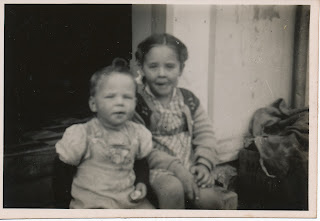
 Above: My sister & me (a 'few' years ago)

But varied evidence is not always 'equal' in validity. It all helps to shape who we think we are, what we believe, and even character, beliefs and values. An image alone, can help us to situate and understand our memories within a specific place and time. They act as anchors for 'truth'. But an image requires interpretation, so in partnership with the memories of multiple people and sources, places and events, we will end up nearer to the 'truth'.
 

My Great Great Grandfather watched a son and daughter leave Scotland in 1882 never to return to their homeland. As I began to dig out old family photos and records, and listen to the memories of those still living, a bigger and more complete story emerged of what had happened. The addition of unseen images in boxes, old newspaper clippings, ship records and so on, contributed to a bigger and more complete story; one richer than any single family member could recall. There is often much knowledge that is in common between family members, but gaps can be filled by other people and official documents. Like many families, there have been some surprises, with troubling events uncovered, and amazing stories unearthed.

As I have embraced this journey I've been reminded of the words of Alasdair Macintyre:


"The story of oneself is embedded in the history of the world, an overall narrative within which all other narratives find their place."


Of course, it is true, every story is unique, but also our personal stories reflect the stories of others before us, as well as those we live life with now. Alasdair's words seem to be very much 'big picture', but he is right. As a Christian, I believe that my story is reflective of and part of the greatest story ever told. It should not surprise us when we discover that while our personal stories are unique, they share elements with other people's stories, and are also shaped by the lives of our family members, and previous generations from our maternal and paternal relatives.


 Above: My Dad near the Forth Bridge in Scotland having returned after 60 years


I grew up in a less than perfect home. For much of my childhood both parents were 'absent' from my life for varied reasons. They had part-time lives as entertainers, and in my father's case, full-time shift work in the mines. Like all parents, they had some shortcomings; hence my older sister and I were fairly independent from about the age of 10. But we both loved them and were shaped in part by them and their lives. We both married early and found wonderful life-time partners, and set about building a different family life for our children.


I fell in love with my wife for varied reasons. These included her kindness, gentleness, quiet confidence, servant heart and the fact that she made me laugh! She is also smart and a perfect partner in life. The person she is reflects her personal history, faith and family. After joining her family, I discovered her mother and grandmother were very much the same type of women. In the last 10 years we have discovered through family history research, that earlier generations of women on Carmen's side across four centuries, shared many of the same qualities. Their lives, no doubt served to shape in part their children and ultimately later ancestors.


In my life, I've written in previous publications and posts how teachers had a strong influence on me. A few I loved and some I loathed. As teachers, how we engage and nurture the children in our care matters. The small number of teachers who did believe in me, saw me as more than just a cheeky and unkempt kid (which I also was). Whatever role we fill in life, we can have an influence for good.


Above: Terry Malone, Dr Phil Lambert & Me


I had the joy last night of attending the launch of a book from the recently retired Assistant Director of Education in NSW Dr Phil Lambert. He invited me to attend along with a former colleague I taught with 48 years ago! To our great surprise he mentioned us both in his book. As a 1st year student teacher he was assigned to my class (in just my third year of teaching). He shared that he'd considered leaving teacher training until he came to my classroom for his first period of practice teacher. He said that he observed my love of teaching, and the friendship and fun I had with the teacher in the next room Terry Malone. The fun and joy we had teaching, and the impact on the children's lives inspired him to continue. He came to the school thinking of dumping teaching, but he left keen and excited about completing his course. To learn this many years later was a joy!


I share the above story, not in any sense of pride (although I was encouraged by it), but simply to demonstrate that the lives we live each day matter. Our stories are always intertwined with other people's stories. As teachers, it is important to consider how we encourage our students to live in ways that acknowledge their true identities, while also seeking to help them grow and mature through lived experience. Just like their parents and wider families, teachers play a part in helping to shape the character of our students.


The central goal of Christian education should always be more ambitious than academic standards, cut-off scores, future jobs, sporting achievements, and so on. As Alasdair MacIntyre argues, education in our schools should lead to “purity of heart,” not just appropriate behavior and school success. As I outline in my book "Pedagogy and Education for Life":


"The role of teachers and schools is to partner with parents to create learning school communities that work in concert with the many other communities in which all students are participants. These school communities of learners will teach and nurture and indeed form the children who God gives to us, in whatever educational context we meet them."


If you're a teacher, be encouraged, and seek to place the learning of your students and their growth as people at the centre of your concerns. You serve in a noble and important profession.

Monday, 6 January 2020

Understanding & Responding to the Diverse Nature of Learners - Principle 11


One of the most depressing things that I observe in schools is the tendency to adopt a core and common curriculum taught using a limited set of teaching methods. Even more depressing is the fact that this approach takes no account of varied learning styles, nor does it consider the individual needs, interests and abilities of the children in the classroom.


The use of curriculum and teaching practices that assume all students are the same, and teaching diverse classes a common program with identical expectations, couldn’t be further from what Christian education should be. God made us as unique and diverse creatures, and this wasn’t by accident. Varying abilities and even learning styles weren’t an unfortunate accident of creation.

All students will have different strengths, weaknesses, and needs. Romans 12:3-18 is the place in Scripture we go to when we think of different spiritual gifts. But just as God has given his people varied spiritual gifts, he has also created us with different abilities, strengths, interests, skills, personalities and so on. The diversity evident in any classroom is extraordinary and needs to be accepted and addressed. This will be demonstrated by using varied methods, techniques and strategies for the varied abilities and gifts we will see represented in our classrooms.

"4 For just as each of us has one body with many members, and these members do not all have the same function, so in Christ we, though many, form one body, and each member belongs to all the others. We have different gifts, according to the grace given to each of us. If your gift is prophesying, then prophesy in accordance with your faith; if it is serving, then serve; if it is teaching, then teach; if it is to encourage, then give encouragement; if it is giving, then give generously; if it is to lead, do it diligently; if it is to show mercy, do it cheerfully." (Romans 12:3-8)

 Christian teachers, classrooms, and schools should at least grasp and demonstrate these basic understandings in word and action. We are to do this by responding to, valuing, respecting and building on our children’s varied abilities, skills, needs and gifts. Teaching to the middle, or application of restrictive methods to the point of frustration for some, is not an option that should serve as an appropriate goal or acceptable practice. We are to encourage and help students who are slower to learn, and enrich those students who show specific gifts. We must also develop those who have learning difficulties. God has made our children to be different, hence we need to educate, extend and grow all of our students as learners and people.

Recognising pedagogically that we understand diversity and difference

God delights in us as learners and has given us the ability to learn in varied ways. Learning can occur in formal and informal ways within the family (Deut 6:1–9) and likewise the school. We should use varied methods to accommodate the differences that we observe in our students. The Bible offers many examples of the diverse ways that humans learn, as well as clear and practical examples of how great teachers work. The actions of teachers across the Old and New Testaments demonstrate the varied activities used. These include planning diverse activities that respond to our observations and experiences, a strategy that Jesus used often (e.g. Luke 13:18–21). In other places in Scripture we see how narrative and parables were used to teach (Ezek 17; Luke 8:4–8). On other occasions learning was framed using allegories and metaphor to help learners grasp profound truths (Isa 5:1–7; Ezek 16). Good teachers in the Bible also offered and used first-hand experience to reinforce key learning (Luke 9:1–8; 10:1–20). Learning of course throughout the ages has often occurred within the general activities of life, as discussion and questioning were used by parents and teachers to help children and adults grasp new ideas and concepts (e.g. Luke 24:13–25). The Bible also has many examples of signs and symbolic acts being utilised to bring home significant truths (1 Kgs 11:29–39; Isa 20:1–6).  

In many ways, the above diverse approaches are similar to what the educator would call experience based learning. And of course, direct expository teaching through the spoken and written word is common and needed as well. Do we exercise our freedom to use sound and varied methods that equip our students for the whole of life? This diverse array of models for learning from the Scriptures should encourage us to think broadly about the possibilities for shaping teaching and learning in our classrooms.

In summing up, let me say that experienced teachers know almost intuitively, that just as there are many different and unique learners in every classroom, there are many methods we can use in teaching that match the different types of learners. As I stress often in my book ‘Pedagogy and Education for Life’, and already quite specifically in the 7th Principle, we must never assume that all students are the same. God made us as individuals. No two of us are exactly the same and all have a part to play in God's world (1 Cor 12:27) as well as in any classroom. God also gave each of us different gifts to be used. The Apostle Peter reminds us that each of us “should use whatever gift you have received to serve others, as faithful stewards of God’s grace in its various forms.” (1 Pet 4:10).

Teachers have a great responsibility to use diverse pedagogy to assist learning and teaching. This is to reflect student diversity, and to encourage the diverse gifts and abilities that we see in our students. With such diversity within our students, it should be obvious that diverse methods are needed to help our students to learn and grow into independent and mature learners.

Friday, 12 January 2018

Imagination, Learning & Life

Teachers often speak of the importance of imagination as the foundation of creative activities, but how often do we consider the vital part it plays in wider learning, life and faith? I want to suggest that imagination is central to life, and is used by God as he draws us to himself. It is within communities of interest and practice, that our view of the world, and our place within these multiple communities, are shaped. James Smith has argued, that as we live with other people, our views, aspirations, goals, hopes and identities are influenced and changed. Our imaginations are implicated in much of the activities of life.[1]

The Apostle Paul understood that because of this, our imaginations need to be ‘captured’. As the early church emerged and people from varied backgrounds came together, they brought varied stories from the past and hopes for their futures. In Ephesians 2 we read how Paul challenged this new community of believers to grasp that they were no longer bound by their past, and hence he gave them a vision for their future. He reminded them that because of Christ we are “… no longer foreigners and strangers, but fellow citizens with God’s and also members of his household” (Eph 2.19). They were to seek transformed lives within a community where there was no longer Jew nor Greek, slave nor free. Jew and Gentile alike, needed to be able to imagine a new future, a new identity and a new world. 

In his letter to the church in Rome (Romans 6:11-13), Paul also reminded his readers that they could experience a new unity and standing before God, not shaped by their past, but by their hoped for future. This required them to seek and know God and embrace membership of God’s kingdom. This was not simply a cerebral assent of the mind, it involved them reimagining their futures.

Above: The Pantheon in Rome
In their helpful book, Veith and Ristuccia[2] suggest that imagination expressed within community is an important way that God transforms us. As we express, test and consider our imaginings with others, we are transformed and so are they. As our students share their lives, and as they imagine their futures, they are influenced and changed. Our imagined, as well as our reasoned discussions of God and his word, rarely do as well in isolation. Journeys towards faith are generally community projects.[3] God redeems our imaginations as well as our minds and wills. Like us, our students flourish in relationship to other people who they not only know, but who they trust.

The teacher must grapple with the reality that in the mainstream activities of classroom life, there may well be little that binds members together; little shared concern, or even common hopes for the future. If our classroom activities fail to engage the imaginations of our students, they will exercise these in pursuing other activities, goals, hopes and dreams.[4]

Maurice Friedman suggests that “ … the true teacher is not one who pours information into student’s head as through a funnel – the old-fashioned ‘disciplined’ approach – or the one who regards all potentialities as already existing within the student and needing to be pumped up – the newer ‘progressive’ approach. It is the one who fosters genuine mutual contact and mutual trust. “[5]

The key to reducing the generational distance between teacher and child, and to establishing classrooms and schools as communities that are transformative and allow ‘space’ for the ‘imagination’, would seem to be a better means to developing understanding of one another.

How is this discussion of dialogue, and relational communities connected to imagination? Imagination is a foundational part of how such communities are formed. Veith and Ristuccia, in their book 'Imagination Redeemed' suggest that "... human imagination is where a vision for life is set, where mind and heart and will converge." 

Imagination is central to how our student minds are engaged, hopes are formed, aspirations are primed, friendships are conceived and supported. As students engage in the life of the school, and the communities of practice that they inhabit, imagination plays a key role in connecting who they are, who they wish to become, and what is critical to their sense of belonging. The role of the imagination in education, pedagogy and 'life' is a key component within my latest book - 'Pedagogy and Education for Life' - that will be released in March/April by Wipf & Stock

NEXT Post - 'The Power of Story'


[1] James K.A. Smith, ‘Educating the Imagination’. Case Quarterly No. 31, 2012, pp9-14.
[2] Gene E. Veith & Matthew P. Ristuccia, Imagination Redeemed, Crossway: Wheaton Illinois, 2015, 135-136.
[3] Ibid., 136.
[4] Trevor Cairney, Pedagogy and Education for Life, Wipf & Stock: Eugene OR, In Press.
[5] Friedman, ‘Introduction’, in Martin Buber, Between Man and Man, Routledge & Kegan Paul: New York, 1947, xvii-xviii.

Wednesday, 3 January 2018

Is there such a thing as Christian Pedagogy?

In my soon to be released book - 'Pedagogy and Education for Life' (Wipf & Stock) - I explore what a 'Christian' pedagogy might look like. One of my key arguments is that any education claiming to be Christian should be shaped by biblical wisdom and understanding. Christian pedagogy isn't simply a specific methodology, a defined worldview, or unique curriculum content and methods assessed through varied 'Christian' lenses. Instead, I offer a simple definition of what Christian education might be:

Education is the whole of life of a community, and the experience of its members learning to live this life, from the standpoint of a specific end goal.

A central premise of the definition and the book, is that Education is about the “whole of life” of a community, not simply curriculum or method. The students and teachers who are the central participants in any school need to “learn to live this life” together from a particular standpoint. As such, at the very foundation of any Christian pedagogy is not ‘what we should teach?’ or ‘how we should teach it?’, but ‘why we teach?’


The Bible teaches that our lives are to be centered on knowing and honoring God in the here and now, with an eye on the future as we await Christ’s return and the coming of the kingdom of God. Our true and ultimate home is not on Earth. Indeed, we are called to live out our lives as “foreigners” or “aliens and strangers” (1 Pet 1:17b; 2:9–12). We live between two worlds: the current one, and the next to come. This can be a confusing place for children!

If education is the whole of life of a community, and the experience of its members learning to live this life, from the standpoint of a specific end goal, then we have more to consider than curriculum and methods.

 
Avoiding Ends-based Education

One of my common observations of schools (religious and otherwise), is that they offer an education focused on the ends, rather than the means of education. But I argue that ends and means must always be seen in relation to the ultimate problems of life, problems that concern the nature and destiny of humankind. This should lead to a pedagogy that reflects an understanding that God made us in his image as creative, problem-solving beings, to seek him and live in relationship to him and one another. While doing this, God also called us to love, serve, and work with a knowledge of his risen Son in order to bring God glory. Education is a process of cultivation and formation. Put another way, the task of the teacher is the nurturing and transformation of habits of body and mind that enable children to fulfill God’s purposes for their lives centered in Christ.

My book should be out in March or April, but in the meantime, I intend to write a number of posts that will prepare my readers for the arguments that will be outlined in detail in the book.

In future posts I will discuss some of the many topics that I cover. Not all will be as separate posts, but all will be at least introduced:
  • The role of the imagination in education
  • Forming & connecting communities that matter in education 
  • Why the 'whole of life' of any community is what matters
  • Children's worlds: A myriad of competing 'Communities of Practice'
  • Making belief, desires and views of the world are observable and discussible in supportive contexts
  • The place of 'formation' NOT indoctrination: What might it look like?
  • Helping students to engage with their world
  • Helping our students to navigate the world
  • Why does 'standpoint' matter?
  • Understanding why God made us as creative beings
  • The power of story
  • The place of truth and the One who is the author of truth
  • Wholeness, and why it matters
  • A pedagogy that intersects and connects other different worlds
  • Where do values, worldview and virtues fit in?
  • A concern for meaning, understanding, truth & critical thinking
  • Classroom life & the teacher's role within it
  • Storytelling and Life
  • Imagination & Life
  • A framework for Classroom & School Life
 I look forward to engaging with you in future posts.

NEXT Post: 'Learning Occurs Within Communities Not Just Schools'