Showing posts with label communities of practice. Show all posts

Friday, 30 May 2025

The Role of the Imagination in Story & Character Development

In 2024 I presented two keynote addresses to a national gathering of the 150 leaders of ‘Christian Schools Australia’. To do so, I drew on the ideas outlined in my book 'Pedagogy and Education for Life: A Christian Reframing of Teaching, Learning and Formation'. I suggested that Christian education and pedagogy must be rooted in an understanding of God's people in-between this life and the next.


As I suggest many times in my writing, we are shaped as we engage with others, and as we inhabit varied 'communities of practice'. That is, we move in and out of many situations and groups, all of which have an impact on us in varied ways. This is reality for our students as they attend our schools, and inhabit many groups. The term “Intertextuality” helps us to understand what this means. It was coined by cognitive anthropologist Julia Kristeva (1991).


It describes how we ‘inhabit’ the varied groups in life. And as we do we learn things, and take on many of the same concerns, passions, values and beliefs of the groups or ‘communities’. As teachers and school leaders, we need to understand this as we teach, educate and point students in wise directions for life.


1. Imagination and COMMUNITY


Martin Buber suggested as we build relationships, our ‘Character’ requires us to have and preserve a level of freedom, expressed in any human communion. Conversely, ‘compulsion’ illustrated by rules, can create disunion, sometimes humiliation, and hence rebelliousness.


In many ways, this is why the informal networks of life beat the formal structures of education hands down, in influencing the heart, life priorities, hopes and dreams. Why? Because in such less formal gatherings young people are able to ‘speak into’ the lives of their friends in ways that few teachers and even parents cannot. So, the varied communities our children inhabit, help to shape minds, lives, expectations, imaginations and hoped for futures.


Ironically, sometimes families (and some schools) only end up reinforcing the things that matter much less than faith in the living God. Even in faith-based schools, teachers and leaders can end up promoting worldly success, starting salaries for future jobs, career status, achievement etc. This is at the expense of faith and character, wise choices and growth. School for many, can become an annoying imposition that one endures, knowing that one day they can escape to find what they see as ‘true’ freedom. The communities that matter most can end up being outside the formal structures and life of school.


2. Creating different and more effective communities within our classrooms


What we need to consider as teachers and schools, is how we can build more effectively different within our classrooms and the school at large. That is, communities which can shape imaginations, and how our students use them.


But how can this be done? Let me offer a fuller vignette that might help to reinforce this key point. How can we assist our student imaginations to be shaped within our school communities of practice?


A number of years ago, I spent 12 months team teaching within a Year 1 classroom in Wagga Wagga, a wonderful town in inland Australia. My partner (Inta) was teaching in a Lutheran school, at a time when we were not plagued by the current education system’s desire to test children for the sake of testing. Rather, Inta’s key priority for these early learners was to embed them within an exciting classroom, that in its own way was a well-focused and exciting community that both taught and shaped at the same time.


One of my first observations as I entered the grade 1 classroom, was the rules within this classroom for 6 year old students in their second year at school weren’t dominant, and yet all seemed to know where the boundaries stood. As a result, there was movement, shared learning and intertextuality everywhere.


3. What do I mean by 'Intertextuality'? 


What is intertextuality, and why is it important? As I have already alluded, it is the relationship between one text or experience and another. By ‘text’ I’m using a term linguists use to refer to a spoken or written unit of meaning, of whatever length that forms a unified whole (a caption, headline, story, joke, play, essay, musical lyrics, letter etc). This term was first coined by philosopher Julia Kristeva in the 1960s. In essence, intertextuality involves “the connection or relationship between similar or related stories, images, songs, ideas and so on”. The interconnections we see can of course influence other learners to create very exciting classroom communities.


When I entered Inta’s classroom on my first day, it was obvious that the talk, drawing, writing, play etc, were being ‘collectively’ shaped as students read and wrote together, as extensions of their relationships with the teacher, and other students. Such interconnection didn’t stop within the classroom. I observed them in the playground, on the bus going home, and at home itself, with the texts playing a key role in establishing and extending their relationships. Sometimes the response of one child would lead naturally to the response of others.


I became involved very quickly and in my second week I read them the delightful book 'The Jolly Postman' (Ahlberg & Ahlberg, 1986). The children's interactions with the book as they sat on the floor in front of me was very exciting. They loved the book!


After finishing the book, I allowed time for students to chat about it, then sent them back to continue with a range of language activities (including writing). Within 10 minutes of reading the Jolly Postman, one student returned to show me a letter that she had written which was obviously inspired by the book we had just read (see PPT).  She announced:


Look Mr Cairney, I've written my own Jolly Postman letter.  Chlorissa is writing one too.”


Within 20 minutes there were at least 10 letters in preparation, and by recess the whole class was writing "Jolly Postman" letters. Within a few days the class had produced many letters to favourite characters in books. 


The next day I was confronted by a small group of students who politely suggested (almost demanding): 


“Mr Cairney, we'll have to write our own Jolly Postman book.  Can we do one?”


And of course, Inta set about putting the wheels in motion to do just that. This was to dominate the next day or so at school. 

When it was time for me to leave the classroom after a few months I was presented with the class version of its own 'Jolly Postman' book. 


With the class letters inspired by ‘The Jolly Postman” Inta used the words from the book and the children's letters, and turned it into their own book, which they presented to me when I left them.


4  What can we learn from this example about imagination and character development?


This literacy lesson illustrates how classroom environments provide an opportunity for students to build textual histories, as they relate to others and share their experiences. These and other events in and outside school, help to shape them and to establish their hopes, dreams, values and priorities in life. As James Smith famously suggested, “we are what we love”. And this class had been inspired by Inta to love books!


This type of shared experience is a vital part of any classroom environment. Straight rows and "eyes to the front" and "heads down" will maintain discipline and focus on the teacher's agenda. This is of course is important and essential at times, but for younger learners, creativity and enthusiasm for reading, writing and even arithmetic (to use an old adage) are critical. So too, are creativity, joy in learning and collaboration with others, are also key skills for life.


Friday, 28 June 2024

The Tricky Relationship Between Open-Mindedness, Critical Thinking and Indoctrination

In this post I want to address what I see as the tension for people of faith between three well known concepts, 'Open-mindedness', 'Critical thinking' and 'Indoctrination'. My specific focus will be on how Christian schools deal with them. For some of my readers who identify with other faiths, what I have to say has equal relevance to you too. Educating the whole child, involves many things, but the role of faith in their (and our) lives must be central and obvious.

Etienne Wenger in his book "Communities of Practice" suggests that living in the world is a process of "negotiated meaning". In saying this he isn't saying there is no such thing as "truth", but his comment is still a bit confusing. I also find his use of the term "negotiated meaning" as quite dangerous. 

A "truth" IS something that is known to be true. We can of course argue about such things with others, but in reading a book like the Bible, which seeks to shape the lives and beliefs of Christians, we need always to be seeking the truth. But what is a 'truth'?

An application of this relationship between truth & life

The implications of the above for Christian life are significant. I DO believe in "truths" and clearly this is what the Bible teaches. But ensuring that we understand how we live by faith and seek the truth as believers, requires attention to the Word of God and the mutual support of others. 

I want to illustrate this by looking at the relationship between the three key words in my title, the difference between "open-mindedness", "Critical Thinking" and "Indoctrination".

What Wenger DOES NOT mean in his statement is that we can arrive and believe in a specific truth by negotiation (and perhaps convenience). As Christians we have little trouble answering the question "is Jesus the Son of God"? But what about "does being a Christian require us to meet together as believers"? And, "is the Bible really truth or can we leave out the bits we don't like"? I recall a teenager in a young adult group I led once, who tore Romans from her Bible because she didn't like its teachings on Homosexuality.

As we unpack these questions about truth, indoctrination and so on, we might also keep in mind some of the practical matters we deal with constantly as parents, and also as parishioners. For example, at a time when we are still emerging from three years of the COVID pandemic, we might ask is watching my church services online every Sunday okay? My answer is no if members are healthy and can get to church. 

Above: Image of the COVID-19 image

But why? Because the Bible teaches us that while we should worship and pray privately (Matthew 6:6) it's also clear that we should not give up meeting together to worship and pray (Heb 10:25). Involvement in our Christian community is important and an imperative. Technology enabled us to 'meet' as churches during the global COVID 19 pandemic, but now it is much less of a threat, we need to meet together as much as possible. As Hebrews 10:25 reminds us, we should NOT

 "... give up meeting together, as some are in the habit of doing, encouraging one another - and all the more as you see the Day approaching."

Surely this isn't essential for salvation? Of course it isn't, but we need to meet with one another. But is it essential for salvation? No! And yet in the Catholic Church the attendance at Sunday Mass is seen as an imperative. But why? One frequently used justification for it is, that it's our obligation to meet to pray, listen to the message from the priest, and go to communion to keep in a 'state of grace'. The last bit of this Catholic view is what is most problematic. Christians are commended and encouraged to gather together. Not simply to take part in the "sacraments" but to learn from God's word, grow in faith and serve one another as we learn, worship our God and rejoice. Devotion to attending Church and taking part in Mass does NOT save anyone. Only faith in our God and the only true access to forgiveness and salvation, Jesus!

Above: St Mary's Cathedral Sydney

"For God so loved the world, that he gave his one and only Son, so that whoever believes in him shall not perish but have eternal life." (John 3:16)

So what about the "Tricky relationship between these three things..."?

My post is meant to be a cautionary word to Christians and in fact all people of faith with belief in God. 

a) Open-mindedness

The dictionary meaning of "Open-mindedness" is not the acceptance of anyone's views about God and salvation. Rather it is "the willingness to search actively for evidence against one's favoured beliefs, plans, or goals, and to weigh such evidence fairly when it is available". It has nothing to do with being humbly accepting everyone's views of the world and their views on what faith in God looks like.  

b) Critical thinking

Again the Oxford Dictionary meaning is "the objective analysis and evaluation of an issue in order to form a judgement". This has nothing to do with accepting the beliefs of others and allowing this to reshape your own view of God and our obligations before him. No, we must examine the Bible and read it to seek the truth for ourselves.

c) Indoctrination

Finally, what is the meaning of "indoctrination"? This might surprise you. "The process of teaching a person to accept a set of beliefs uncritically".

Summing up and a few warnings

So, what implications do the above have to those of us who support religious schools of any type. 

First, as teachers in all religious schools, our task is NOT to indoctrinate. Rather, as Christians it is to present our beliefs as they are reflected in the Bible, and challenge our students to consider these for themselves. And of course, as teachers, we are to live our lives in a manner that is based on our beliefs. Children very quickly see through hypocrisy.

Second, as parents we should not simply send our children to a faith-based school to ensure their salvation, no matter what our faith might be. If we want our children to accept and follow the faith we profess, we must live this life ourselves. Children once again see through hypocrisy. 

Third, we should not simply seek to enforce our beliefs on any child, whether your own or one you teach. Our children must be taught and encouraged to have faith, but ultimately they must accept this for themselves.

Hopefully, our schools as institutions, and their teachers and leadership, demonstrate their faith is genuine in their lives and actions. As well, in all aspects of what the school demonstrates as most important, should offer the most powerful demonstration of the value and truth of the faith they accept.


Wednesday, 25 January 2023

What should the priorities be for a Christian teacher?

As we approach the beginning of a new school year in Australia, it’s timely to ask every teacher, how they will judge their success as a teacher, as well as that of the school?


My comments are meant for school teachers at any level. As Trevor Hart points out in the foreword to my book, my primary   intent in writing ' Pedagogy and Education for Life' was to challenge teachers to maintain a strong focus on developing both the hearts and minds of their students. 


If readers gain nothing else from reading my book, I hope they at least take away the message that teachers need a pedagogy founded in an ‘eschatology’. Eschatology of course, is that part of theology concerned with death, judgement and the final destiny of our souls as well as mankind more broadly. As Christian teachers, we must help our students to grasp that there is an eternal future not simply an earthly one. The eternal future will always trump our earthly future. The faith-based school must avoid a pedagogy that is short-term, and simply prioritizes worldly success.


In any Christian school the faith of our teachers, and the ethos of the school, should point to a hope that is not just in the world. The lives of teachers and the priorities they set, play a major role in student formation. There are more significant goals than academic achievement, a good job or the right university course. To focus on, and hopefully achieve these goals, we need to remember four key things:


1. First, teachers must work hard at creating classroom environments that sustain faith in God, and assist student formation as learners and communicators, to sustain their faith in varied communities of practice in life. 


2. Second, we need to create classroom environments where students can ask questions of you as their teacher, but also of each other. Our questions and observations as teachers, should not just focus simply on assessing how smart they are, but also whether they demonstrate love for one another, humility, curiosity and an openness to knowing God.


3. Third, the communities we sustain must of course bridge the many communities of practice that students live in day by day (Chapter 2 of my book covers some of this ground). Not just the communities they experience at church and in faith-based schools, but those they frequent outside school.


4. Finally, schools must be places where the different communities of practice subtly present in classrooms, playgrounds, and varied social settings outside school, don't draw them away from God. Instead, the varied communities they inhabit, also shape them primarily in the habits, beliefs, attitudes and practices of life.


Chapters 1-4 in ‘Pedagogy and Formation and Education for Life’ are of course key chapters that cover the key role teachers have in shaping communities of practice that have eternal significance. The wonderful work of Charles Taylor and Lev Vygotsky are a focus in these chapters. A major theme is that learning is much more than the gaining of knowledge and worldly success.


For the teacher, this requires us to create classrooms where students can reflect on and see the relationship between their lives, and the varied communities they inhabit in and out of school. In chapter 5 of 'Pedagogy and Education for Life' I share five vignettes that seek in a practical way to demonstrate show how classroom and school life can shape our students to centre their hopes on God, not simply worldly success. Schools might find these helpful when discussing the way we can achieve the goals I outline above.


Thursday, 22 September 2022

Building Communities of Literature & Learning in Our Classrooms

This is a cross-post from my literacy blog 'Literacy, Families & Learning'. It wasn't intended specifically for faith-based schools, but what I say has relevance NOT just for literacy, but also in informing our pedagogical ideas on how we sustain student communities in Christian and other religious schools.

One of the signs of a great book is that once it is finished you have a deep desire to tell someone about it, and perhaps even pass the book on to them. I can recall times when I reached the end of a moving novel and I would simply sit quietly, ruminating on the 'journey' I had just completed through the book. And later, there would be a deep urge to tell others about it. After a special book, we might read it again at some later point, or loan it to a friend and revisit the story in conversation with them.

Our classrooms and homes should be places where children read books and want to share their stories with others. This is certainly critical in the primary years of schooling, but so too it is possible and important within high schools. If literature is only read to prepare for exams, it is a sad state of affairs. Our classrooms can and should be 'communities of readers and writers'. But sadly, our students today are more likely to participate in groups in and outside school sharing social media videos like TikTok, talking about or sharing music, fashion, funny photos and so on online. While they are forming or supporting friendships and communities of practice, nonetheless these conversations are often trivial and superficial.

I shared in my book 'Other Worlds: The Endless Possibilities of Literature' stories from three class 'communities'. Classroom communities where literature was part of what bound the students together. One was a kindergarten in the cane fields of Queensland. As their teacher finished 'The Three Little Pigs' (Jacobs, 1969) the children shared their responses. Some repeated words or the details of the story, "the wolf wanted to eat the pigs", "he was a bad wolf", characters were mentioned and so on. Others responded more seriously and thoughtfully. "I've got a big bad wolf and I put him in water", "My big bad wolf got shot with hot rocks". Another said more reflectively, "The wolf got hurt because he tried to hurt the pigs".

I was able to observe a second reading community in a one-teacher school at which I taught many years ago. I had 31 children in a single classroom from Kindergarten (5 year olds) to Grade 6 (12 yr olds). When I arrived at the school I found many reluctant readers, and varied abilities across the grades. I set about flooding the classroom (school!) with books at all levels and with varied content. I was to observe how complex sub groups (or sub communities), developed as children read books and told others about them across grade levels. I also read to them and shared many books that stimulated their interests. 


A third reading community was a Kindergarten class; which in Australia is the first year of formal schooling for 5 year olds. I was part of the classroom for most of a school year as a co-teacher and researcher. During designated reading times, the students could grab a book and scurry off to one of many reading spaces: a secret cave in one corner; a castle made from cardboard boxes; an area created using the existing walls in one corner, as well as a cupboard for the other 'wall', and streamers hanging from the ceiling through which they entered; and as well, a small library surrounded by shelves filled with children's books.

What was common to each of the above three reading communities was that story was an essential part of the classroom life. Books were shared as a class, in groups and in informal settings. The children read together 'independently', in pairs or groups, and many opportunities were given for response and sharing. Each classroom in different ways demonstrated a number of similar things:

First, all were dynamic reading, writing and learning communities. 

Second, each exemplified how reading, while it can be solitary, is often shared with others, and that in the sharing, the desire to read is enriched and strengthened.

Third, they illustrated David Bloome's argument that "reading involves social relationships among people... including social groups and ways of interacting with others...".


If we want our children to experience reading in all of its forms, and to read literature that enriches their lives, extends their knowledge of the world, and helps them to grow as people, then community building must be a priority. The next time you watch a group of students sitting together with phone in hand sharing the latest video, ponder how the enthusiasm and excitement they are showing looking at phones, can be replicated in relation to books that can teach, inspire and enrich their lives.

Friday, 29 April 2022

Our lives are always embedded within a personal history & story

I've been working on my family history. I set myself the task of compiling the story of the previous 3-4 generations of my family history in words (yes, a ‘small’ task!). As I wrote, I found myself revisiting images of people, places and events. I knew that any family history is always shaped primarily by memories and perspectives of varied family members (and non-family members too), who often have different lived experiences and accounts. Even two or more siblings can have slightly different memories of the same events, person and relationships. I began to see that as well as the family stories handed down across the generations, that photographic evidence and documents also matter!


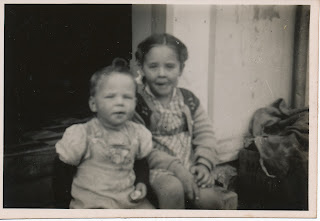
 Above: My sister & me (a 'few' years ago)

But varied evidence is not always 'equal' in validity. It all helps to shape who we think we are, what we believe, and even character, beliefs and values. An image alone, can help us to situate and understand our memories within a specific place and time. They act as anchors for 'truth'. But an image requires interpretation, so in partnership with the memories of multiple people and sources, places and events, we will end up nearer to the 'truth'.
 

My Great Great Grandfather watched a son and daughter leave Scotland in 1882 never to return to their homeland. As I began to dig out old family photos and records, and listen to the memories of those still living, a bigger and more complete story emerged of what had happened. The addition of unseen images in boxes, old newspaper clippings, ship records and so on, contributed to a bigger and more complete story; one richer than any single family member could recall. There is often much knowledge that is in common between family members, but gaps can be filled by other people and official documents. Like many families, there have been some surprises, with troubling events uncovered, and amazing stories unearthed.

As I have embraced this journey I've been reminded of the words of Alasdair Macintyre:


"The story of oneself is embedded in the history of the world, an overall narrative within which all other narratives find their place."


Of course, it is true, every story is unique, but also our personal stories reflect the stories of others before us, as well as those we live life with now. Alasdair's words seem to be very much 'big picture', but he is right. As a Christian, I believe that my story is reflective of and part of the greatest story ever told. It should not surprise us when we discover that while our personal stories are unique, they share elements with other people's stories, and are also shaped by the lives of our family members, and previous generations from our maternal and paternal relatives.


 Above: My Dad near the Forth Bridge in Scotland having returned after 60 years


I grew up in a less than perfect home. For much of my childhood both parents were 'absent' from my life for varied reasons. They had part-time lives as entertainers, and in my father's case, full-time shift work in the mines. Like all parents, they had some shortcomings; hence my older sister and I were fairly independent from about the age of 10. But we both loved them and were shaped in part by them and their lives. We both married early and found wonderful life-time partners, and set about building a different family life for our children.


I fell in love with my wife for varied reasons. These included her kindness, gentleness, quiet confidence, servant heart and the fact that she made me laugh! She is also smart and a perfect partner in life. The person she is reflects her personal history, faith and family. After joining her family, I discovered her mother and grandmother were very much the same type of women. In the last 10 years we have discovered through family history research, that earlier generations of women on Carmen's side across four centuries, shared many of the same qualities. Their lives, no doubt served to shape in part their children and ultimately later ancestors.


In my life, I've written in previous publications and posts how teachers had a strong influence on me. A few I loved and some I loathed. As teachers, how we engage and nurture the children in our care matters. The small number of teachers who did believe in me, saw me as more than just a cheeky and unkempt kid (which I also was). Whatever role we fill in life, we can have an influence for good.


Above: Terry Malone, Dr Phil Lambert & Me


I had the joy last night of attending the launch of a book from the recently retired Assistant Director of Education in NSW Dr Phil Lambert. He invited me to attend along with a former colleague I taught with 48 years ago! To our great surprise he mentioned us both in his book. As a 1st year student teacher he was assigned to my class (in just my third year of teaching). He shared that he'd considered leaving teacher training until he came to my classroom for his first period of practice teacher. He said that he observed my love of teaching, and the friendship and fun I had with the teacher in the next room Terry Malone. The fun and joy we had teaching, and the impact on the children's lives inspired him to continue. He came to the school thinking of dumping teaching, but he left keen and excited about completing his course. To learn this many years later was a joy!


I share the above story, not in any sense of pride (although I was encouraged by it), but simply to demonstrate that the lives we live each day matter. Our stories are always intertwined with other people's stories. As teachers, it is important to consider how we encourage our students to live in ways that acknowledge their true identities, while also seeking to help them grow and mature through lived experience. Just like their parents and wider families, teachers play a part in helping to shape the character of our students.


The central goal of Christian education should always be more ambitious than academic standards, cut-off scores, future jobs, sporting achievements, and so on. As Alasdair MacIntyre argues, education in our schools should lead to “purity of heart,” not just appropriate behavior and school success. As I outline in my book "Pedagogy and Education for Life":


"The role of teachers and schools is to partner with parents to create learning school communities that work in concert with the many other communities in which all students are participants. These school communities of learners will teach and nurture and indeed form the children who God gives to us, in whatever educational context we meet them."


If you're a teacher, be encouraged, and seek to place the learning of your students and their growth as people at the centre of your concerns. You serve in a noble and important profession.

Wednesday, 15 December 2021

Do we listen to children, but never really 'hear' them?

I've had a paper on my study floor for several years in my pile of papers loosely categorized as those ‘I must read some day’. Many times, I've picked up a photocopied extract from a book titled ‘The Call of Stories: Teaching and the Moral Imagination’. The book was written by psychiatrist Dr Robert Coles. Each time I would skim a few paragraphs and think, "now why did I place this paper from a psychiatrist here to read"? I was flipping through the pile again this week when I saw the Coles extract once more. I read a few pages and finally realized why I’d kept it.


Coles' work needs to be read by teachers, parents, doctors, psychiatrists and politicians. As I finally did read it completely, one key aspect of his work resonated strongly with many of my own instincts about nurturing and understanding our students at school. We often fail to truly listen to the stories our children want to tell us, about who they are, and what matters most to them. Instead, we more often observe and draw conclusions based on their behavior, the things we’ve listened for, and responses to our questions.


Coles unpacks the lessons he was to learn about knowing and understanding his troubled patients. One of the simplest, yet most profound lessons, was simply that patients - and I would add students at school - want to tell their stories. But often we fail to listen, and instead begin to ask questions about the things WE want to know, not what they are trying to share. At the feet of a good teacher, Coles realized his patients were telling him the stories they thought he wanted to hear, and refraining from those things that mattered most to them. He began to realize that if he failed to listen to things other than what we were looking for, they would stop sharing the things that mattered most to them. These 'hidden' things of course include their challenges, hidden pain, life frustrations, hopes and fears. As teachers, I suspect we often miss the stories that offer an insight into who our students really are.


As I read Coles' work, I could see special significance for teachers who try to understand their students. I suspect our school students always carry round stories to which we barely listen. If these are shared, they tend to interrupt the flow of our plans for the day. Students arrive at school usually full of life and keen to tell others about the stories that matter to them. Stories about the things happening in their lives. But do we listen? If we don’t we lose so much. For in the comments they make, and the stories they try to share, we gain insight into the things that matter most to them, not to mention their fears and hopes.


In my book ‘Pedagogy and Education for Life’ I say much about story, but Coles’ work has reminded me that we need to amplify the importance of storytelling in our classrooms even more. Children are born to be story tellers. If given opportunities they will share stories in class, walking into school in lines, at group tables with other students, at sport, while waiting in assemblies, or simply waiting at the school gate to go home. Some teachers might see the buzz of such conversations and stories as unimportant chatter. But if only we would listen I suspect sometimes we might just hear children speaking of the fears, phobias and hopes that impact on their lives.


Robert Coles was taught by his mentor Dr Ludwig something critical about not missing opportunities to listen.


The people who come to see us bring their stories. They hope they tell them well enough so that we understand the truth of their lives. They hope we know how to interpret their stories correctly.


While we might be teachers, not psychiatrists, I wonder how often we miss such stories and opportunities? Whether our students' comments and stories are happy, sad, important or just great memories, do we give them opportunities to share them? And if they do, do we actually listen?


I share a number of stories in my book about teaching moments when I have gained great insights into my students in the cracks of classroom and school life. One of them concerns a ‘non-talker’ I met in a Kindergarten classroom where I was teaching part-time. As a researcher, I visited classrooms regularly in a country town to explore using writing as a means to encourage young writers to express themselves. On one occasion, I took over a Kindergarten classroom (5-year-olds in a primary school). I handed out blank books and asked them: “tell me a story in these writing books.” I stressed that they were to choose anything that was important or special to them.


One little girl finished her work and shared her story with me. She had left her seat and come to me excited and keen to read what she had written, much of it was invented spelling, but she read her work with pride. When the School Principal dropped in on this particular morning (no doubt to check on the visiting researcher), I asked the little girl to share the story with her. She did so and returned to her desk. The Principal was aghast. When she spoke to me later, she shared that the little girl “didn’t speak”, and had said nothing to her teacher in the first 8 weeks of school. In fact, she had been tagged in a “non-speakers” group so they could monitor her progress.


I also shared a story in my book about an African American student I taught in an Indianapolis Elementary school in the 1980s while a visiting Professor at Indiana University. Chanda was not my most cooperative student. She rarely completed tasks, and often didn’t even start. One morning as she dropped her bag on the desk, the contents fell out, including a bundle of paper with writing on the many sheets. I asked her what she was writing? To which she replied:


“Nothing, sir.”


I gently prodded a little more and said, "what are you writing about". She responded, "not much Sir". I had the good sense to say, “I’d love to see your writing.” She reluctantly pushed a sheet across the table and said, “It’s just music, sir, just bin writin music.”


I began to read her quite poetic and rhythmical writing, and discovered that there were a dozen or more examples like the first that I picked up. Yes, it was music! Chanda went on to share that she had been writing music at home for some time and it was one of her passions.


I could go on to share many other stories of students who would wander into my classroom in the morning before classes for a chat. I always listened and they shared many things. Some seemingly banal, others profound, some disturbing, but all offered insight into aspects of their lives and a sense of who they were as people.


One of Robert Coles’ great insights while working with adult traumatized psychiatric patients, was that all people deep down are story tellers and want to tell their stories to someone who will listen. Sadly, he found that if people do share something of our lives, but they sense others aren't interested, then they stop and withdraw into telling us what they think we wish to hear.


As an elementary school teacher and later as a university lecturer, I found that our students do want to share some of their life story if they have a relationship of trust with you. Their sharing of personal stories often happens within the classroom in the ‘cracks’ of the school day. But it also happens as we walk in lines to school sport, as they unpacked their bags at the start of the school day, or as they prepare to go home. I loved playground duty as a young teacher, because this was another less formal place where children would come up and talk about the things important to them.


As I write in ‘Pedagogy and Education for Life’: “The role of teachers and schools is to nurture, inspire, form, and influence for the good the children God gives” us. Assisting their formation as people is a foundational part of education. To have any right or opportunity to do this we must create contexts where they are willing to tell their stories. And when they do, we must listen carefully so that we might just come to a deeper understanding of who they really are, and what their hopes for the future might just be.