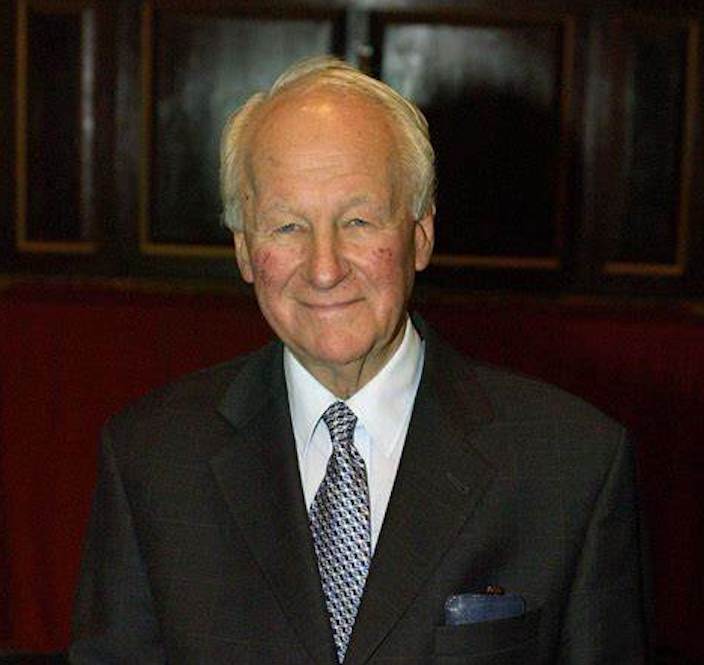
Showing posts with label Christian education. Show all posts

Friday, 11 April 2025

What is Christian pedagogy? It is much more than just advice on teaching

In my book 'Pedagogy and Education for Life: A Christian Reframing of Teaching, Learning and Formation' I argue that Christian education and pedagogy must be rooted in an understanding of God's people in-between this life and the next. 

We are shaped as we engage with others, and move in and out of varied 'communities of practice'. This is a reality for our students as they attend our schools, for it is one of the many 'communities of practice' they inhabit. This term was introduced to us by cognitive anthropologist Jean Lave and Etienne Wenger in their book "Situated Learning: Legitimate Peripheral Participation" (1991). The term describes how as we form groups, and as we inhabit them we begin to learn new things and take on many of the same concerns, passions, values and beliefs. 

The life we all experience includes many people, experiences, successes and disappointments, all of which influence us in varied ways. Such experiences also introduce us to new ideas, beliefs and practices. Our students have lived experiences in and outside school, we need to understand this as our remit, to teach and educate them for life.

1. A Vignette About Jackie

In my book I share an example of what this might look like for our students. I use Jackie (not her real name) as an example of the complexity of multiple communities of practice that influence our students. 

Her family is what we'd call middle class and is very important to her. Her mother is a university trained teacher and her father is in a government administrative role. Her parents are not Christian, but they have sent her to a Christian School 5km from their home, which they believe will give her a good all round education. 

Jackie is well liked at school and has a solid group of friends who are mainly non-Christians. Beyond being at school together, they have a number of common interests in music, film, fashion, dance and boys and so on. 

However, the complexity of the communities of practice she inhabits, goes much further than this and beside those mentioned already includes:

  • A close group within her art classes.
  • Her extended family including her grandparents, a special aunt and uncle and her cousins.
  • A dance group outside school where different friends are found.
  • She is also a part-time staff member at a local pizza restaurant.
  • A Saturday netball team in a Summer night competition.
  • She also has friends at a technical college, where she has been doing a part-time food service course at a local TAFE.
  • As well, she has 2,500 Facebook friends, many more on Instagram and some other platforms as well.

2. The Remit of Faith-based Schools

Given the broad cross section of children across faith-based schools, we can appreciate the complexities. They are responsible for a number of things. They were founded to support Christian students and their families, who are often confronted by beliefs and practices they find problematic.  They need to support students to grow in knowledge across the curriculum and to achieve success in life. But at their very foundations they are also responsible to assist students to grow in faith, knowledge, character, values and the consideration of ideas as presented. 

Teachers of course are not the only influencers. Families, friendship groups, and many other varied groups (or communities) in which our children live, will shape them in some way. Such groups include sporting teams, recreational activities, favourite authors, television, media and for, some churches. With this in mind, a central tenant in my book, is that:

"Education is the whole life of a community, and the experience of its members learning to live this life, from the standpoint of a specific end goal."  


You might be tempted at this stage to say, how can I as a teacher, possibly have much impact on my students when we see them so little, and they are embedded in multiple communities of practice both inside and outside school? There is some truth to this, but there are many areas where we can have an influence. I want to suggest there are three steps you might take that would make a difference. 

3. Three Key Steps Towards Excellence in Teaching

a) Step 1 - Know and love, and understand our students

James K.A Smith has a statement that is helpful here. He suggests that:

“Education is not just what we teach; it’s how we shape what students love.” 

The desires of our children's hearts are varied and are generally easy enough to observe and understand. So as we teach them the curriculum at hand, we should also seek to shape them as people. Some children are easy to love, and some more difficult, there is nothing new about this. But we need to look for good in all of our students as well as helping them change in areas that are problematic.

Of course, we cannot change things outside our control like annoying habits, laziness, rudeness and some personality traits. While we aren't counsellors, we do have a role in shaping our students in character. We can't treat our students as our friends, we are teachers and authority figures not their friends. But we can take an active interest in their lives and listen to the things they might share in the 'cracks' of school life. However, of course, we must set some boundaries here.

b) Step 2 - Pray and be concerned for your students

While being devoted and diligent in personal prayer 

Justin Taylor in a piece titled 'The Great Vision of Christian Education: Ten Foundational Truths' outlines some helpful foundations for our schools.

In the above article Taylor suggests rightly that Christian education is as big as God and his revelation. It goes beyond parenting and teachers and classroom instruction; it should infuse every aspect of the Christian life. In his words ".. it involves not merely donning gospel-centred glasses when we study 'spiritual' subjects, but being filled by the very presence of almighty God as we seek by his Spirit to interpret all of reality in light of the glory of God in the face of Jesus Christ."  

In my time as a teacher in non-Christian schools, I came across many things that were disturbing in the lives of my students outside school. For example, one of my year 6 girls who had withdrawn into the background as a student and looked very sad, revealed privately to me one morning just before school, that she had been subject of abuse from an older brother who had "been practising his kissing on her". Another year 5 student would come to school wreaking of cigarette smoke which I was to learn was due to her father's chain smoking in their 3-room house. Yet another student had was witnessed domestic violence regularly. Of course, such observations must not be set aside.

These few examples underline how we need to know our students well enough to pray for them, to be trusted by them, and at times to even intervene to protect them by reporting events up the line. The latter requires great care and would first be a conversation with your school principal. After that in most cases, there would be a meeting with the parents and then to other authorities if the situation required it.

In the 'cracks' of school life, we can at times observe and hear things that bother us. Some teachers might say this isn't my role. But staying silent in such matters isn't the right response. Somehow, we need to achieve clear boundaries.

I agree with Justin Taylor's statement, but also understand there are limits to what we can and should do. But we all need to be concerned for the welfare of our students. If I had allowed the conversation with my student about her brother, to be shuffled into a box marked "not my responsibility", it may have continued over time and perhaps become worse. 

c) Step 3 - Establish Our Education Based on sound Foundational Principles    

One of the most helpful set of principles I've found is outlined in an article by Justin Taylor, in 'Desiring God' titled 'The Great Vision of Christian Education: Ten Foundational Truths'. These might be helpful.

1. True Christian education involves loving and edifying instruction, grounded in God’s gracious revelation, mediated through the work of Christ, and applied through the ministry of the Holy Spirit, that labors to honour and glorify the triune God.

2. Christian education begins with the reality of God. God the Father, God the Son, and God the Holy Spirit — one God in three persons — creating and sustain all things (Genesis 1:1–2; Colossians 1:16; Hebrews 1:3). 

3. Christian education seeks to rightly interpret and correctly convey all aspects of God’s revelation, both his self-disclosure through the created world (called “general revelation”) and his self-disclosure through the spoken and written word (“special revelation”) Romans 1:20; Hebrews 1:1–2).

4. Christian education, building on the Creator-creature distinction, recognizes the fundamental difference between God’s perfect knowledge of himself and the limited, though sufficient, knowledge we can have of God through his revelation (Romans 11:34; 1 Corinthians 2:16).


5. Christian education recognizes that the recipients of our instruction — whether believers or unbelievers — are created in the image of God, designed to resemble, reflect, and represent their Creator by ruling over creation and relating to one another (Genesis 1:26–27).

6. Christian education reckons with the sobering reality of the Fall — because of Adam’s rebellion as our covenental head, all of us have inherited a rebellious sinfull nature and are legally regarded as guilty (Romans 3:10, 23; Romans 5:12, 15, 17–19). Creation itself is fallen and in need of liberation (Romans 8:19–22). Our disordered desires and every aspect of our thoughts, feelings, and actions are affected, hence we must still battle indwelling sin (Galatians 5:17).

7. Christian education is built upon the work of Christ — including, but not limited to, his substitutionary atonement and triumphant resurrection victory over sin and death (Galatians 4:4–5; 1 Corinthians 2:2; 15:1–5). All of our instruction is founded upon this great event that makes it possible for sinners to stand by faith in the presence of a holy and righteous God.

8. Christian education recognizes that to reflect the mind of Christ and to take every thought captive (2 Corinthians 10:5), we must be born again (John 3:3), putting off our old and renewed in knowledge after the image of God (Colossians 3:10).

9. Christian education insists on the indispensable work of the Holy Spirit, who teaches (John 14:26; 1 Corinthians 2:13), searches everything (including the depths of God) and comprehends the thoughts of God (1 Corinthians 2:10–11). He helps us in our weakness, intercedes for us (Romans 8:26–27), and causes us to bear good fruit (Galatians 5:22–23).

10. Finally, Christian education recognizes the insufficiency of merely receiving, retaining, and relaying notional knowledge (1 Corinthians 8:1; Matthew 7:21–23). Our knowledge must be relational and covenantal (1 Corinthians 13:12), such that our study results in delight (Psalm 37:4; 111:2), practice (Ezra 7:10), obedience (Romans 1:5), and discipling and teaching of others (Matthew 9:19–20; 2 Timothy 2:2).

Conclusion

Please take the time to reflect on these foundational principles, perhaps discussing them with other teachers, and working together to see what changes you might make in your schools and as teachers. Pray that God will use us as teachers and educators, to embrace sound Christian pedagogy. Such a pedagogy, while being true to the educational processes and and curricular required in all schools, will be shaped by the word of God, as we seek to grow our students in faith as well as in knowledge.

Tuesday, 30 January 2024

The Importance and Nature of 'Double Listening'

The Importance of ‘Double Listening’ in Faith-based Schools (Revisited)


An Update - I posted on this topic in November (HERE) but I've posted this shorter version that might be more helpful for School staff to commence a discussion


While writing an article for a journal recently, I was reminded of John Stott’s concept of ‘Double Listening’. I believe it needs to be shared with faith-based teachers and schools. John Stott was an English Anglican priest and theologian, who was noted as a leader of the worldwide evangelical movement. He was the founder, director, and honorary president of the London Institute for Contemporary Studies. He wrote 40 books! His work was always filled with great wisdom.

In one of his many publications, ‘The Contemporary Christian: Applying God’s Word to Today’s World’ (1992: IVP), Stott introduced the concept of ‘Double Listening’. He shared, “we are called to the difficult and even painful task of ‘double listening’. That is, we need to listen carefully… both to the ancient Word and to the modern world, in order to relate the one to the other with a combination of fidelity and sensitivity.”


This concept resonates so clearly with my own work. Those who have read ‘Pedagogy and Education for Life’, will see immediately why I find his concept of ‘Double Listening’ so helpful. It sits comfortably with my call for faith-based teachers to think deeply and critically about how “…we shape the whole life of a community viewed from the standpoint of the kingdom of God?” (Cairney, 2018, p.30).


Why is Double Listening Important for Terachers?


Faith-based schools tread a tightrope while seeking to teach and shape their students with the World’s many competing voices and challenges. Even in the setting of a Christian school, there constant tension between preparing our students for the world, while also seeking to grow them as people. In my work, I give special emphasis to encouraging teachers, parents and students to see their faith as central to all of life and not to be distracted simply by success in the world. In any faith-based school, we need to encourage everyone to listen first to the Word of God, while also preparing students for life IN the world. That is, we seek to bring the Word to bear on the world, not the other way around.


In an interview in 1997 with Professor Derek Morris (Southern Adventist University, Tennessee), John Stott was asked to explain what he meant by ‘Double Listening’. He responded:


“By double listening, I mean listening, of course, to God and to the Word of God, but listening to the voices of the modern world as well. Now, I make it clear that in listening to the modern world, we are not listening with the same degree of respect as that with which we listen to the voice of God. We listen to Him in order to believe and obey what He says. We listen to the modern world, not in order to believe and obey what it says, but in order to understand its cries of pain, the sighs of the oppressed. And it seems to me that relevant communication grows out of this process of double listening.”


2.  How should faith-based schools respond to and learn from this challenge?


In ‘Pedagogy and Education for Life’ I argue that education in faith-based schools should always be situated in the “whole of life of the school”. This in turn is situated within our students’ complete lives that simultaneously transcend varied and multiple communities of practice. As teachers, we need to keep reminding ourselves that our students’ learning does not occur simply in our classrooms Things taught in the school are integrated and interpreted as part of daily life. Collectively, this perspective seeks to create “…classroom life with the potential to ‘speak’ to our students about what is important in the world of the classroom and school, and consequently, what matters in the world” (Cairney, 2018, p.31).


John Stott’s words might seem ‘quaint’ to some, but we must be careful not to quickly dismiss his bold claim. These words are very helpful for anyone who has faith in God, and is navigating a world that is increasingly hostile to all faiths. Stott’s comment relates directly to the key challenge all Christian schools to balance the obvious desire of parents, as students and teachers seeking success in life, with a desire to see them to seek faith and eternal hope in God.


An important complement to ‘Double Listening’ is the development of “standpoint” or point of view (Cairney, 2018, pp 27-29). This relates to the shared understandings students develop in multiple communities. A key role of the teachers in faith-based schools is to present and help shape viewpoints within classroom and school life. Students can be encouraged to orient their life to the Kingdom of God, not the ways of the world. This requires an all of school approach and the creation of community life that places faith and our hope in Christ at the centre.


3.  How does this concept relate to my work on “formation”?


First, we need to understand and embrace the concept of ‘Double Listening’ in our lives as Christians and teachers. We also need to observe and understand the world in which our students live, and the many ideologies that are spoken of, promoted and that ‘wash over’ them each day. As teachers (and parents), we need to be alert to the signs of varied ideologies shaping our students’ priorities and practices. But as well, we need to have the courage to push back on some of the ideas they embrace, and explain what the Bible teaches us about life’s priorities.

Second, we must not forget that a key part of our roles as teachers is to “orchestrate the meaning, language, and life of the classroom” (Cairney, 2018, p. 67). To observe the lives of our students is a key priority, but we also need to be active in attempting to shape our students to consider all of life in the context of God’s word to us.


But, one more comment is necessary. Schools must be careful not to create places so insulated from the world, that they become escapist ‘bubbles’ protecting them from the world. Schools can in a sense, become such separate worlds, that students aren’t really prepared for the wider world, where the cultures and priorities are so different, and where they have new autonomy.


The place of ‘Double Listening’ in schools is very important. As teachers, we must become such good listeners and observers that we are in a position to have an influence on the worldviews that students develop and how faith has a central role to play in shaping them.


Sunday, 26 November 2023

The Importance of ‘Double Listening’ in Faith-based Schools

While writing an article for a journal recently, I was reminded of John Stott’s concept of ‘Double Listening’. I believe it needs to be shared with faith-based teachers and schools.

John Robert Walmsley Stott was an English Anglican priest and theologian, who was noted as a leader of the worldwide evangelical movement. He was the founder, director, and honorary president of the London Institute for Contemporary Studies. He wrote 40 books! His work was always filled with great wisdom.


In one of his many publications, ‘The Contemporary Christian: Applying God’s Word to Today’s World’ (1992: IVP), Stott introduced the concept of ‘Double Listening’. He shared, “we are called to the difficult and even painful task of ‘double listening’. That is, we need to listen carefully… both to the ancient Word and to the modern world, in order to relate the one to the other with a combination of fidelity and sensitivity.”


This concept resonates so clearly with my own work. Those who have read ‘Pedagogy and Education for Life’, will see immediately why I find his concept of ‘Double Listening’ so helpful. It sits comfortably with my call for faith-based teachers to think deeply and critically about how “…we shape the whole life of a community viewed from the standpoint of the kingdom of God?” (Cairney, 2018, p.30).


1.    What is ‘Double Listening’?


I’ve written many times about the tricky tight rope walk faith-based schools tread, while seeking to teach and shape their students in a world with many competing voices and challenges. In the setting of a Christian school, there is constant tension between preparing our students for the world, while also seeking to grow them as people. In my work, I give special emphasis to encouraging teachers, parents and students to see their faith as central to all of life, and not to be distracted simply by success in the world. In any faith-based school, we need to encourage everyone to listen first to the Word of God, while also preparing students for life in the world. In other words, we seek to bring the Word to bear on the world, not the other way around. 


In an interview in 1997 with Professor Derek Morris (Southern Adventist University, Tennessee), Dr Stott was asked to explain what he meant by ‘Double Listening’. He responded:


“By double listening, I mean listening, of course, to God and to the Word of God, but listening to the voices of the modern world as well. Now, I make it clear that in listening to the modern world, we are not listening with the same degree of respect as that with which we listen to the voice of God. We listen to Him in order to believe and obey what He says. We listen to the modern world, not in order to believe and obey what it says, but in order to understand its cries of pain, the sighs of the oppressed. And it seems to me that relevant communication grows out of this process of double listening.”


2.  How should faith-based schools respond to and learn from this challenge?


In ‘Pedagogy and Education for Life’ I argue that education in faith-based schools should always be situated in the “whole of life of the school”. This in turn is situated within our students’ complete lives that simultaneously transcend varied and multiple communities of practice. As teachers, we need to keep reminding ourselves that our students’ learning does not occur simply in our classrooms Things taught in the school are integrated and interpreted as part of daily life. Collectively, this perspective seeks to create “…classroom life with the potential to ‘speak’ to our students about what is important in the world of the classroom and school, and consequently, what matters in the world” (Cairney, 2018, p.31).


John Stott’s words might seem ‘quaint’ to some, but we must be careful not quickly dismiss his bold claim. For any Christian, navigating a world that is increasingly hostile to varied faiths, his words are very helpful. What I like about Stott’s comment is that it directly links to the key challenge all Christian schools must address. That is, the need to balance the obvious desire of parents, students and teachers seeking success in life, with a desire for them to seek faith and eternal hope in Christ. 


An important complement to ‘Double Listening’ is the development of “standpoint” or point of view (Cairney, 2018, pp 27-29). This is essentially the shared understandings of students, that a teacher seeks to shape within community life. The hope is students can be encouraged to orient their life to the Kingdom of God, not the ways of the world. This requires an all of school approach and the creation of community life that places faith and our hope in Christ at the centre.


3.  How does this concept relate to my work on “formation”?


First, we need to understand and embrace the concept of ‘Double Listening’ in our lives as Christians and teachers. We also need to observe and understand the world in which our students live, and the many ideologies that are spoken of, promoted and ‘wash over’ them each day. As teachers, we need to be alert to the signs of varied ideologies shaping our students’ priorities and practices. But as well, we need to have the courage to push back on some of the ideas they embrace, and explain what the Bible teaches us about life’s priorities.


Second, we must not forget that a key part of our roles as teachers is to “orchestrate the meaning, language, and life of the classroom” (Cairney, 2018, p. 67). To observe the lives of our students is a key priority, but we also need to be active in attempting to shape our students to consider all of life in the context of God’s word to us.


Above: The danger of raising 'bubble' kids


But, one more comment is necessary. Schools must be careful not to create places so insulated from the world, that they become escapist ‘bubbles’ protecting them from the world. Schools can in a sense, become such separate worlds, that students aren’t really prepared for the wider world, where the cultures and priorities are so different, and where they now have new autonomy.


Friday, 31 March 2023

God Made us as Unique Creatures

Since not all readers of this blog have read my book 'Pedagogy and Education for Life', I thought it might be helpful to look at the foundational principles of the pedagogy I developed and encourage. There are three major purposes and each has a number of things we do as people of faith in God to reflect and encourage a right view of education. In this post I will briefly outline the actions that are required to demonstrated that we see this as foundational to our teaching and faith-based education. 

The first is that God made us unique creatures! When we enter a classroom we need to keep in mind that:

1. We need to identify that which is valuable in each child

This is a fundamental part of being a great teacher. Of cours, this is not confined to Christian teachers. As a young boy living in a dysfunctional household with alcoholic parents I didn't always see this in my parents, but I did see it in some other people. As a consequence, in every school holidays my older sister and I I would escape to the security of maternal Christian grandparents. As well, I had one or two early teachers that could see I came from a troubled background on sought ways to encourage me and develop my character.


But the Christian teacher is to be constantly looking for the things that are valuable in each child. As a former school teacher I know how hard that can be with some students from Christian families and other non-Christian families. But this is a key component of my pedagogical framework.  


2. As teachers we build on the foundations of families


This second principle is important too! We need to know something of the parents of our students whether Christian or otherwise. This should help us to work out why at times our students act as they do. If we know nothing of their family background that will make it hard. Seek to find out more about them. If you know your students well, it will help. I can recall many occasions as a teacher when I observed things in my students that could be negative and sometimes disturbing. The child who is always late for school, poorly dressed, emotionally unstable, aggressive and so on, should not immediately be labelled as a problem you need to deal with. Yes you do, but before drawing conclusions about the child, find our more about them. First by observing them, and second, if necessary, by seeking out their parents.  


3. We need to demonstrate and encourage service


Because God made all of us to be different, we need to look closely at what gifts our students have beyond their grades and observable behaviour in the classroom. Do they serve others, or expect to be served, even by you as the teacher! As a young child at school, one or two of my elementary teachers saw things in me that others didn't. Some saw me as simply a pest, while a couple saw more, and tried to direct my energy and at times disruptive behaviour in better and more productive directions. Do we know our students well enough to observe such things.


4. We need to develop a right view of work and effort

God made us all to "...contribute to the order and running of his world in our work. (Gen 2:15). If as teachers our central focus is the assumed difficulty of children today, our attitude towards them will be a negative one. Having taught many troubled children, I know how hard it is not to interpret every action of the troubled child as their fault. But as teachers we mustn't lose sight of the reality that their work is part of God's plan, whether that year 9 class is difficult or not. How can we as colleagues encourage each other to encourage and help one another?

I write much more about these basic elements of Christian pedagogy, but I would encourage readers to look afresh at their own situations in light of this first major. In my next post I will look at the second major purpose 'God's Creatures as Learners'.


Wednesday, 25 January 2023

What should the priorities be for a Christian teacher?

As we approach the beginning of a new school year in Australia, it’s timely to ask every teacher, how they will judge their success as a teacher, as well as that of the school?


My comments are meant for school teachers at any level. As Trevor Hart points out in the foreword to my book, my primary   intent in writing ' Pedagogy and Education for Life' was to challenge teachers to maintain a strong focus on developing both the hearts and minds of their students. 


If readers gain nothing else from reading my book, I hope they at least take away the message that teachers need a pedagogy founded in an ‘eschatology’. Eschatology of course, is that part of theology concerned with death, judgement and the final destiny of our souls as well as mankind more broadly. As Christian teachers, we must help our students to grasp that there is an eternal future not simply an earthly one. The eternal future will always trump our earthly future. The faith-based school must avoid a pedagogy that is short-term, and simply prioritizes worldly success.


In any Christian school the faith of our teachers, and the ethos of the school, should point to a hope that is not just in the world. The lives of teachers and the priorities they set, play a major role in student formation. There are more significant goals than academic achievement, a good job or the right university course. To focus on, and hopefully achieve these goals, we need to remember four key things:


1. First, teachers must work hard at creating classroom environments that sustain faith in God, and assist student formation as learners and communicators, to sustain their faith in varied communities of practice in life. 


2. Second, we need to create classroom environments where students can ask questions of you as their teacher, but also of each other. Our questions and observations as teachers, should not just focus simply on assessing how smart they are, but also whether they demonstrate love for one another, humility, curiosity and an openness to knowing God.


3. Third, the communities we sustain must of course bridge the many communities of practice that students live in day by day (Chapter 2 of my book covers some of this ground). Not just the communities they experience at church and in faith-based schools, but those they frequent outside school.


4. Finally, schools must be places where the different communities of practice subtly present in classrooms, playgrounds, and varied social settings outside school, don't draw them away from God. Instead, the varied communities they inhabit, also shape them primarily in the habits, beliefs, attitudes and practices of life.


Chapters 1-4 in ‘Pedagogy and Formation and Education for Life’ are of course key chapters that cover the key role teachers have in shaping communities of practice that have eternal significance. The wonderful work of Charles Taylor and Lev Vygotsky are a focus in these chapters. A major theme is that learning is much more than the gaining of knowledge and worldly success.


For the teacher, this requires us to create classrooms where students can reflect on and see the relationship between their lives, and the varied communities they inhabit in and out of school. In chapter 5 of 'Pedagogy and Education for Life' I share five vignettes that seek in a practical way to demonstrate show how classroom and school life can shape our students to centre their hopes on God, not simply worldly success. Schools might find these helpful when discussing the way we can achieve the goals I outline above.


Tuesday, 30 August 2022

Why 'Kidwatching' is critical for parenting and teaching.

One of the greatest challenges for Christian education institutions, is how to build and sustain the centrality of their Christian beliefs, with pedagogy that is consistent with this faith. While a specific faith would have underpinned all religious schools when first established, maintaining such a focus and foundation can be difficult. Far too many faith-based educational institutions end up measuring their success based on the maintenance of academic, cultural and sporting standards and whether parents are satisfied ‘customers’. This is not to say that these things are unimportant, although parents are partners not 'customers' or clients! Faith-based institutions were always meant to offer so much more. They were established to educate and shape students spiritually, not simply academically. To help students grow in body, mind and soul!


Any faith-based institution will find after successfully founding and growing a school or university, that over time the pursuit of excellence in academic, sporting and school rankings of all kinds will begin to dominate key decisions and practices.  If this drift occurs, we should ask, is it still possible to achieve the original founders’ goals? A key factor critical in achieving this aim, is whether teachers actually get to know their students well enough to have an impact on their character and lives, not just their success in public exams, sporting achievements and career outcomes.


A key starting point is that teachers need to get to know their students more deeply. They need to observe and be concerned for more than just school results and behaviour in class, but also their wellbeing and moral character. What is the key to doing this? I believe that teachers need to be ‘Kidwatchers’ (Owocki & Goodman, 2002). I’ve written about this in my book ‘Pedagogy and Education for Life’ in detail. But in essence, it requires teachers to be more attentive to student life in our classes and schools, and even in the playground.


As teachers, we need to use our eyes to observe the behaviour of students, and ears to listen to the things they say. Not just in class, but in the ‘cracks’ of school life. Perhaps as students gather on arrival at our classes, or simply by observing their behaviour in the playground. Why? So that we might understand our students’ priorities, passions and interests? Who are the people who seem to have greatest influence on them? Other students and friends! We need to understand what they are learning from other students that shape their values and beliefs? ‘Kidwatching’ is one of the twenty actions in my ‘Framework for Christian Pedagogy’. Teachers need to have or develop this key ability (Cairney, 2018, 138-155).


One of the most helpful discussions of the challenges in sustaining focus in Christian education is offered by Smith & Smith (2011, 9-10). When discussing the work of Alasdair MacIntyre, they remind us that Christian schools and educators fight on two key fronts. One concerns the objects and focus of our students’ attention, and the other is the ‘absorbing’ and ingraining of habits, skills and dispositions (‘Habitus’) as they live and learn together within varied communities of practice in and outside school. Each and every student we teach takes on an “embodied history, internalized as a second nature” (Bourdieu, 1990, p.56).


Etienne Wenger (1999) has contributed much to our understanding of how groups work together. Our students are part of many formal and informal physical and virtual communities of practice, and over time some of these ideas and practices become accepted as part of life together. Their life together in such groups can extend even to the incorporation of specific ‘secret’ codes that reify certain ideas and beliefs as part of the community. Of course, as I have said already, most of this ‘life’ is unseen by teachers and parents. Taylor suggests that below the surface of life, imagination is at work helping our students to consider stories, myths, dreams and hopes. They begin to imagine the world as they would want it to be (Taylor, 2004; Smith, 2009; Smith & Smith, 2011).


Every day our students share their lives, their hopes and dreams for the future, and the unseen struggles that occur along the way. We need to understand that most critical discussions of things that ‘matter’ to them, do not occur with parents and teachers, but rather with their friends. If they do have adult ‘influencers’, they usually have celebrity status in the wider world. They do this by consuming large amounts of social media each day, where ‘influencers’ promote ideas, values, challenges and hopes. Sadly, we can discover far too late, that our children and students can have double lives. 


In my own writing, I find James Gee’s (Gee, 1996) idea of being ‘apprenticed’ to social groups as a partial explanation of what occurs in our classrooms and schools. The behaviour of our children, their beliefs, the activities they value, and the personal image they seek to create, is shaped by others as part of group life. This is not to say that parents and teachers are powerless in such things, just that we cannot assume they will look to us first for guidance and even their values (Cairney, 2018).


What can we do about the issue that I highlight? As I have already said, first place a priority on becoming ‘kidwatchers’ (Owocki & Goodman, 2002). This is 'simply' being attentive to student life in and out of class. As I said above, use our eyes to observe behaviour, and ears to listen to what is said in different situations. Primarily in class, but also in the 'cracks' of school life. What are their passions and interests, the people who influence on them most, their hopes and dreams? Kidwatching is one of my twenty key actions I believe teachers should demonstrate in their classroom and school practices (Cairney, 2018, 138-155). If you want to know you will find additional detail in the book.