Showing posts with label Christian pedagogy. Show all posts

Monday, 22 December 2025

Pedagogy and Education: An End of Year Recap

What drives us as teachers?

Have you ever considered what drives us as teachers; and by extension, what drives the schools in which we serve? Is our major concern to see our students grow in character? Or are we fixated on growing knowledge, leading to success at school? Is our major priority (and perhaps that of parents) simply to help students' succeed at school and hence, in life? What a shallow and inadequate aspiration this is for education!

Every parent of course wants their children to succeed in life, to gain employment, have families and so on. But what of their character? Where does their formation as people fit in? Is it a deep concern for us as teachers? And what role if any, do we play in partnership with parents in the formation of  our students?  

When I wrote ‘Pedagogy and Education for Life: A Christian Reframing of Teaching, Learning, and Formation’, it was a distillation of my many years as a teacher and research. My intent was to address questions that get to the heart of our purpose. My experience as a teacher and researcher, as well as my faith, led me over almost three decades, to develop a pedagogy that did not consist simply of knowledge of good practice and appropriate curriculum content. It was based on my central assumption that children learn in relationship to others, and that these relationships and the practices they engage in day by day, are always embedded within shared communities, consisting of people who hold many understandings, beliefs and practices. The definition that shaped my book reflects my personal life journey as a teacher. My conclusion was that.
“Education is the whole life of a community, and the experience of its members learning to live this life, from the standpoint of a specific goal”
This lead me to develop a pedagogical framework with 20 components, organized around three key main strands within a biblical theology of person hood:
  • God made us as unique creatures
  • God made us as creatures who learn
  • God made us for communion
Each of the above understandings of person hood lead to a number of questions that should shape pedagogy. In this post, I want to comment on the first question that relates to our uniqueness.

Do I identify that which is valuable in each child?

Above: Picasso's Girl with a mandolin

All children are made in the image of God (Gen 2:15-25) and yet, all are different. While we might recognize common behaviour, attitudes, knowledge, habits (good and bad), abilities, emotional strengths or weaknesses and so on, in our children, each child in his or her own way is unique. This is of course is true, even for identical twins (monozygotic twins) who from the same fertilized egg. They too are genetically different (see this article) and different in character.

What does this simple plank in my pedagogy imply for pedagogy? Let me suggest five things.

a) First, that to teach the whole class as a single group is foolishness. Sure, if we wish to teach specific skills and knowledge that we see as vital (e.g. learning to count), it will mean that all will be taught the same content. But if we are to engage students as learners, we will need to find content that varies and relates to diverse interests and adopts varied methods.

 
b) Second, we should expect our students to have different strengths and weaknesses. Furthermore, we have a responsibility to build on strength and support students to cope with their weaknesses, and perhaps overcome them. Conversely, we need to have a diverse curriculum that allows students to demonstrate their varied capabilities. As a young difficult child in primary school I was grateful to several teachers who encouraged some of my key interests and tolerated areas of weakness.


c) Third, we should strive to develop curriculum content that opens up many and varied forms of learning. This of course might reflect and relate to curriculum content (science, art, writing, maths, drama, natural history, music etc), or perhaps other modes for learning (creative activities, oral and written expression, divergent as well as convergent thinking etc). 


d) Fourth, we should offer choice in content and curriculum activities, not simply prescription.  Enthusiasm can be more easily engendered by ensuring some freedom and choice for students in relation to the activities that are experienced.


e) Fifth, we need to understand that we all have different abilities and capabilities, and ensure that we allow space for this in our curriculum and pedagogical practices.

Schools in Australia have closed for the long summer holidays. Teachers and students are in need of rest before commencing a new year. To be an effective teacher is to recognize that which is unique and valuable in each child. I ask that God might bestow on my readers rich blessings at this time and a chance to rest, spend time with family and celebrate the wonder of our Saviour's birth. 


Enjoy your holiday break!


Friday, 31 October 2025

Story Telling Imagination & Life

Introduction

I have been writing this post while at the same time writing my monthly post for my Literacy blog titled 'Literacy, Families & Learning'. This of course has a different audience, but nevertheless many Christians read that blog as well as other faith-based people from around the world who are not Christians. One of the largest groups of followers overseas are parents who live as Muslims in a wide range of Muslim countries. Their concern for their children's education and growth is similar to many Christian parents. A case in point is seen in this month's topic, it is of relevance to people of all nations. 

In the post, I want to revisit the topic of Storytelling and discuss just how critical it is for the development of our children. This should not surprise you because I devote a full chapter to 'Imagination & Life' in my Pedagogy book. The book addresses pedagogy and teaching quite broadly. Considering the role of the  human imagination is one of the areas examined. The varied outputs of life are often expressed through the imagination, or at a minimum influenced by it.

1. Keeping Imagination in check 

C.S. Lewis talked often about the relationship between imagination and reason. He stressed we must not let imagination shape us so much, that we misuse it or allow it to replace reason. Jeremiah warns us not to walk "in the imagination of our hearts". By this, most commentators believe that he is stressing that while God gave us imaginations we must use them properly. 

Above: C.S. Lewis in his Study

I was an atheist to this point in my life, but went to church one day 40 years ago. I did so (much to her surprise) simply to accompany my wife, who while not a Christian herself, had an interest in God. She had attended Sunday School as child and her Grandparents were Christians. 

We moved to Bathurst (NSW Australia) in 1982 so I could take up a University appointment, my wife stayed at home to care for our two daughters aged 5 and three at the time. She took our 5 year old daughter to a Playgroup at the local Baptist Church after a neighbour (not a Christian) encouraged her to go with her.

To my wife's surprise, when she told me one day that she wanted our daughters to go to Sunday School, and a week later that she wanted to go to church herself, I surprised her (and inwardly myself). I replied "what makes you think I don't want to go too?" To this point in my life I saw myself as an Atheist. I was impacted by the sermon in the service on Matthew 11:28-30.

"Come to me, all you who are weary and burdened, and I will give you rest. Take my yoke upon you and learn from me, for I am gentle and humble in heart, and you will find rest for your souls. For my yoke is easy and my burden is light".

I was touched by the message and when I got went home to the bathroom, dropped to my knees and in tears cried out to God, "God, if you're real, reveal yourself to me". In that moment, I was deeply convicted, and committed my life to follow him then and there on my knees. My wife came to faith about two weeks later. 

2. But a warning!

Veith and Rustuccia in their helpful article "Between the Image and the Word" remind us that imagination can provide some of the "subject matter" and "impetus" for our feelings and choices (see also Trevor Hart's book that was a key source for Veith & Rustuccia). Ultimately it is God who must use the circumstances of our lives, the gift of the imagination and the work of his Spirit, in concert with His Word, to bring us to our knees, repent and believe.

The would be evangelist, who takes pride in "their work" saving people and leading them to Christ, must not forget that it is the work of God that drives all, not us.  

3. Where to from here?

C.S. Lewis helpfully draws the above ideas together in his work "Bluspels and Flanasferes" pp 10-11 (Oxford University Press, 1939). While accepting the above insights about the imagination and God's use of it in lives like mine, we must remember that our imaginations can just as easily lead us in unhelpful directions. We must battle not to be captured by imaginations to lead us to stray and away from the truth. Having said this, it is also wrong to fear the imagination which God gave us as a gift. So encouraging children's imaginations is not bad, rather it is a gift that must be nurtured, encouraged and used to help all grasp truth.

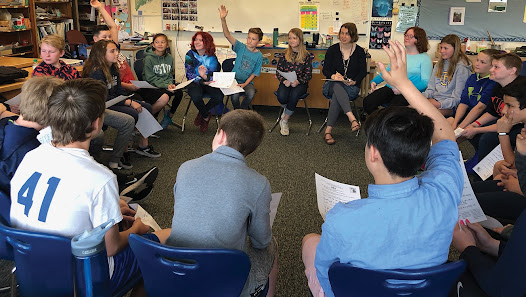
Above: A Playgroup that encourages children to explore 

As teachers, we are to create classroom environments and atmospheres, that encourage children to explore questions like "what if?" "how come" and of course "why"? Such questions might lead to the seeking of deep truths mirrored in God's word. 

As parents we shouldn't fear the imagination. It is good for children to experience all written and spoken genres, including fantasy, to rightly understand the place of God's word in our lives. Fantasy, and truth are not the same thing. We need to help our children to understand and manage both as they engage and live in the world. 

These are important challenges for teachers and parents, might God bless and teach you as you head down such paths. 

Friday, 11 April 2025

What is Christian pedagogy? It is much more than just advice on teaching

In my book 'Pedagogy and Education for Life: A Christian Reframing of Teaching, Learning and Formation' I argue that Christian education and pedagogy must be rooted in an understanding of God's people in-between this life and the next. 

We are shaped as we engage with others, and move in and out of varied 'communities of practice'. This is a reality for our students as they attend our schools, for it is one of the many 'communities of practice' they inhabit. This term was introduced to us by cognitive anthropologist Jean Lave and Etienne Wenger in their book "Situated Learning: Legitimate Peripheral Participation" (1991). The term describes how as we form groups, and as we inhabit them we begin to learn new things and take on many of the same concerns, passions, values and beliefs. 

The life we all experience includes many people, experiences, successes and disappointments, all of which influence us in varied ways. Such experiences also introduce us to new ideas, beliefs and practices. Our students have lived experiences in and outside school, we need to understand this as our remit, to teach and educate them for life.

1. A Vignette About Jackie

In my book I share an example of what this might look like for our students. I use Jackie (not her real name) as an example of the complexity of multiple communities of practice that influence our students. 

Her family is what we'd call middle class and is very important to her. Her mother is a university trained teacher and her father is in a government administrative role. Her parents are not Christian, but they have sent her to a Christian School 5km from their home, which they believe will give her a good all round education. 

Jackie is well liked at school and has a solid group of friends who are mainly non-Christians. Beyond being at school together, they have a number of common interests in music, film, fashion, dance and boys and so on. 

However, the complexity of the communities of practice she inhabits, goes much further than this and beside those mentioned already includes:

  • A close group within her art classes.
  • Her extended family including her grandparents, a special aunt and uncle and her cousins.
  • A dance group outside school where different friends are found.
  • She is also a part-time staff member at a local pizza restaurant.
  • A Saturday netball team in a Summer night competition.
  • She also has friends at a technical college, where she has been doing a part-time food service course at a local TAFE.
  • As well, she has 2,500 Facebook friends, many more on Instagram and some other platforms as well.

2. The Remit of Faith-based Schools

Given the broad cross section of children across faith-based schools, we can appreciate the complexities. They are responsible for a number of things. They were founded to support Christian students and their families, who are often confronted by beliefs and practices they find problematic.  They need to support students to grow in knowledge across the curriculum and to achieve success in life. But at their very foundations they are also responsible to assist students to grow in faith, knowledge, character, values and the consideration of ideas as presented. 

Teachers of course are not the only influencers. Families, friendship groups, and many other varied groups (or communities) in which our children live, will shape them in some way. Such groups include sporting teams, recreational activities, favourite authors, television, media and for, some churches. With this in mind, a central tenant in my book, is that:

"Education is the whole life of a community, and the experience of its members learning to live this life, from the standpoint of a specific end goal."  


You might be tempted at this stage to say, how can I as a teacher, possibly have much impact on my students when we see them so little, and they are embedded in multiple communities of practice both inside and outside school? There is some truth to this, but there are many areas where we can have an influence. I want to suggest there are three steps you might take that would make a difference. 

3. Three Key Steps Towards Excellence in Teaching

a) Step 1 - Know and love, and understand our students

James K.A Smith has a statement that is helpful here. He suggests that:

“Education is not just what we teach; it’s how we shape what students love.” 

The desires of our children's hearts are varied and are generally easy enough to observe and understand. So as we teach them the curriculum at hand, we should also seek to shape them as people. Some children are easy to love, and some more difficult, there is nothing new about this. But we need to look for good in all of our students as well as helping them change in areas that are problematic.

Of course, we cannot change things outside our control like annoying habits, laziness, rudeness and some personality traits. While we aren't counsellors, we do have a role in shaping our students in character. We can't treat our students as our friends, we are teachers and authority figures not their friends. But we can take an active interest in their lives and listen to the things they might share in the 'cracks' of school life. However, of course, we must set some boundaries here.

b) Step 2 - Pray and be concerned for your students

While being devoted and diligent in personal prayer 

Justin Taylor in a piece titled 'The Great Vision of Christian Education: Ten Foundational Truths' outlines some helpful foundations for our schools.

In the above article Taylor suggests rightly that Christian education is as big as God and his revelation. It goes beyond parenting and teachers and classroom instruction; it should infuse every aspect of the Christian life. In his words ".. it involves not merely donning gospel-centred glasses when we study 'spiritual' subjects, but being filled by the very presence of almighty God as we seek by his Spirit to interpret all of reality in light of the glory of God in the face of Jesus Christ."  

In my time as a teacher in non-Christian schools, I came across many things that were disturbing in the lives of my students outside school. For example, one of my year 6 girls who had withdrawn into the background as a student and looked very sad, revealed privately to me one morning just before school, that she had been subject of abuse from an older brother who had "been practising his kissing on her". Another year 5 student would come to school wreaking of cigarette smoke which I was to learn was due to her father's chain smoking in their 3-room house. Yet another student had was witnessed domestic violence regularly. Of course, such observations must not be set aside.

These few examples underline how we need to know our students well enough to pray for them, to be trusted by them, and at times to even intervene to protect them by reporting events up the line. The latter requires great care and would first be a conversation with your school principal. After that in most cases, there would be a meeting with the parents and then to other authorities if the situation required it.

In the 'cracks' of school life, we can at times observe and hear things that bother us. Some teachers might say this isn't my role. But staying silent in such matters isn't the right response. Somehow, we need to achieve clear boundaries.

I agree with Justin Taylor's statement, but also understand there are limits to what we can and should do. But we all need to be concerned for the welfare of our students. If I had allowed the conversation with my student about her brother, to be shuffled into a box marked "not my responsibility", it may have continued over time and perhaps become worse. 

c) Step 3 - Establish Our Education Based on sound Foundational Principles    

One of the most helpful set of principles I've found is outlined in an article by Justin Taylor, in 'Desiring God' titled 'The Great Vision of Christian Education: Ten Foundational Truths'. These might be helpful.

1. True Christian education involves loving and edifying instruction, grounded in God’s gracious revelation, mediated through the work of Christ, and applied through the ministry of the Holy Spirit, that labors to honour and glorify the triune God.

2. Christian education begins with the reality of God. God the Father, God the Son, and God the Holy Spirit — one God in three persons — creating and sustain all things (Genesis 1:1–2; Colossians 1:16; Hebrews 1:3). 

3. Christian education seeks to rightly interpret and correctly convey all aspects of God’s revelation, both his self-disclosure through the created world (called “general revelation”) and his self-disclosure through the spoken and written word (“special revelation”) Romans 1:20; Hebrews 1:1–2).

4. Christian education, building on the Creator-creature distinction, recognizes the fundamental difference between God’s perfect knowledge of himself and the limited, though sufficient, knowledge we can have of God through his revelation (Romans 11:34; 1 Corinthians 2:16).


5. Christian education recognizes that the recipients of our instruction — whether believers or unbelievers — are created in the image of God, designed to resemble, reflect, and represent their Creator by ruling over creation and relating to one another (Genesis 1:26–27).

6. Christian education reckons with the sobering reality of the Fall — because of Adam’s rebellion as our covenental head, all of us have inherited a rebellious sinfull nature and are legally regarded as guilty (Romans 3:10, 23; Romans 5:12, 15, 17–19). Creation itself is fallen and in need of liberation (Romans 8:19–22). Our disordered desires and every aspect of our thoughts, feelings, and actions are affected, hence we must still battle indwelling sin (Galatians 5:17).

7. Christian education is built upon the work of Christ — including, but not limited to, his substitutionary atonement and triumphant resurrection victory over sin and death (Galatians 4:4–5; 1 Corinthians 2:2; 15:1–5). All of our instruction is founded upon this great event that makes it possible for sinners to stand by faith in the presence of a holy and righteous God.

8. Christian education recognizes that to reflect the mind of Christ and to take every thought captive (2 Corinthians 10:5), we must be born again (John 3:3), putting off our old and renewed in knowledge after the image of God (Colossians 3:10).

9. Christian education insists on the indispensable work of the Holy Spirit, who teaches (John 14:26; 1 Corinthians 2:13), searches everything (including the depths of God) and comprehends the thoughts of God (1 Corinthians 2:10–11). He helps us in our weakness, intercedes for us (Romans 8:26–27), and causes us to bear good fruit (Galatians 5:22–23).

10. Finally, Christian education recognizes the insufficiency of merely receiving, retaining, and relaying notional knowledge (1 Corinthians 8:1; Matthew 7:21–23). Our knowledge must be relational and covenantal (1 Corinthians 13:12), such that our study results in delight (Psalm 37:4; 111:2), practice (Ezra 7:10), obedience (Romans 1:5), and discipling and teaching of others (Matthew 9:19–20; 2 Timothy 2:2).

Conclusion

Please take the time to reflect on these foundational principles, perhaps discussing them with other teachers, and working together to see what changes you might make in your schools and as teachers. Pray that God will use us as teachers and educators, to embrace sound Christian pedagogy. Such a pedagogy, while being true to the educational processes and and curricular required in all schools, will be shaped by the word of God, as we seek to grow our students in faith as well as in knowledge.

Wednesday, 5 March 2025

The Relationship Between Pedagogy and Student Formation in Schools

1. Formation as the ‘Practice of many Practices’


I write in my book 'Pedagogy and Education for Life' that:


Education is the whole of life of a community, and the experience of its members learning to live this life, from the standpoint of a specific goal”.  


And of course the formation of our students is a critical part of how this occurs as we enact this through our pedagogy.


The challenge within our schools is that our students arrive from at times very different backgrounds. This might well have included growing up in a Christian home, and attending a church with strong biblical teaching. They may have been challenged by God’s word, to live in ways consistent with the Scriptures. Of course, if only this was always the case, our job as teachers would be much easier.


Christian and in fact, all faith-based schools have a significant role to play in an environment where students not only learn and grow as students and people, but also in faith and character.


Faith-based schools whether Christian or of another faith, make a commitment to the spiritual formation of our students. Hopefully, this is not just by sending them off to Chapel once or twice a week. True formation occurs in multiple communities, or groups as the “Outcome of the ‘Practice of many Practices.” I borrowed this excellent comment, from Craig Dykstra and Dorothy Bass.


I point out in my book that this might not be realistic in all faith-based schools. When I wrote the book I was thinking of Christian schools. It's worth noting that I’ve been invited to speak to staff at varied faith-based schools in recent years, and all have shown considerable interest in my work. Other religions also see much which resonates with their own desire to see their children grow spiritually. For example, a large number of school leaders, teachers and parents read my blog in Muslim countries.  It seems, they also want their schools to demonstrate pedagogy and school communities that are true to their faith.


2. Going Deeper, to consider the subtle and almost unseen practices of our schools


Dykstra and Bass in their work, comment on formation and issue a challenge to teachers to bring to “consciousness the hidden dimensions embedded in and through our actions and relations.” (see p. 91). This sounds anything but practical, but hang in there. They define “Christian Practices” as:


… the things Christian people do together over time to address fundamental human needs in response to and in light of God’s active presence for the life of the world.


In short, Christian schools help students to see, respond to, and navigate all the practices of life (Christian and non-Christian), with a telos that is shaped by and directed toward the kingdom of God. NB: “telos” is an ancient Greek word meaning “ultimate end”, “purpose”, “goal” or “action”.


It is important to stress, that our task as Christian schools and teachers is NOT just to put our energy into inculcating our students with ideas, whether this is dressed up as “virtues”, “values”, "church traditions" or even “worldview”. If ideas become the focus of pedagogy, there is less chance of us inscribing a “Habitus” that actually ‘primes’ and shapes their actions.


Pierre Bourdieu developed the concept of “Habitus” (or Habit) and saw it as rooted in family life, and conditioned by social class. What’s more, “Habitus” is part of Aristotle’s teaching on Ethics. In a sense, it is within family life, and the way we bring our children up, that there is significant influence on how our children and students see ourselves in later life.


3. Being Shaped by ‘That Which is Invisible’


It is also important to discuss how the invisible things of life, have an influence on us and of course our students. I draw on the work of Charles Taylor and Lev Vygotsky in helping us to understand what I mean by this.


Charles Taylor argues that we need to stop assuming only ideas move people. James Smith makes a similar point drawing on Taylor. Taylor suggests that beneath any cognitive or intellectual discussion by a group or institution (e.g. a school), we have human imagination at work (p.99). This helps us to engage with stories, dreams, hopes, myths, images etc, and connect them with past and present experiences, as well as imagining the way we’d like the world to be.


Vygotsky used the word Obuchenie to discuss this ‘invisible’ action. In essence, this word points to the way that in life, as we live in communities, we adjust to one another. The teacher student relationship is a context in which this is very important. He argues that simply passing on knowledge doesn’t change people. If we follow his argument and apply it to our school context, then growing our students in knowledge and faith, might require us to make some subtle changes to our pedagogy.


Rather than simply transmitting knowledge about Christian faith which we hope students will accept and replicate, we need to grasp that our students must see connections themselves between such a life underpinned by faith, and the myriad of communities of practice they already inhabit. This of course, requires them to reflect on and adjust to these multiple communities.


So what might our role look like in such a context? Daniel Estes ('Ten Ways to Destroy the Imagination of the Child'), suggests that:


“The metaphor of the teacher as a guide includes both direction by the teacher and active involvement of the student in the learning process.”


As teachers in Faith-based schools, this needs to be part of our role. My hope is that at the very least, our focus in Christian schools should enable teachers and schools to “help students see, respond to, and navigate all of the practices of life (Christian and non-Christian), with a telos that that is shaped by and directed toward the Kingdom of God." Above, all we hope they will not take on different personas depending on where they are and who they are with. Rather, our goal with our students and our own children, should be for them mature in faith and understanding and seek to live consistent lives that honour their God.


Friday, 11 October 2024

Formation in Education Involves an Education of the Heart - Part 2

Introduction


This post is based on my Day 2 Keynote address to the 'Australian National Leaders' Summit Christian Schools Conference' (19-22 Aug 2024). In this talk I shifted focus and considered how we develop and sustain a pedagogy that transforms classroom life. Just how do we create environments that foster the formation of our students? Such formation is not just intellectual and physical, but also spiritual, it is very much “the life of the playground, as well as the classroom that influences formation”. And of course, the life of our students outside our schools is also very significant. While we have opportunities within the school and classroom to shape and influence our students, there is less opportunity outside the classroom; except perhaps in extra curricula activities like sport, dramatic productions and so on.

I address this critical topic more fully in Chapter 6 of “Pedagogy and Education for Life”, where I zoom in on the life of our classrooms and the wider school. The wisdom of Alasdair MacIntyre, reminds us that “EVERY activity, every inquiry, every practice aims at some good”. This might NOT be THE GOOD but something we PERCEIVE to be good. Our lives, point us in directions, that can shape us. Our formation is the outcome of the “practice of many practices”.


The second half of my book is very much the ‘how to’ part. Here I remind us, while we teach, we are also ‘guides’ for our students, in a world with many voices and stories. These pull us in different directions as perceptions of what is ‘good’ will frequently clash with what parents and teachers see as ‘good’. And of course their directions chosen, may conflict with THE ultimate ‘Good’ that God offers them. The Christian school has as a significant role in this formation.


For, “Education is the whole of life as a community and the experience of its members learning to live this life from a specific standpoint or end goal.” (“Hear my Son”, Daniel J. Estes).[1]


I want to draw indirectly on my framework for Christian pedagogy (Ch 9) to discuss how this Christ-centred pedagogy contributes to the transformation of our students; in mind, body, and soul.

As I shared in my last post, Taylor’s concept of the “social imaginary” is very helpful. Like us, the life of students is influenced by “the ways we are able to think or imagine the world (or society)”.[2] This is shaped as we absorb the stories of life, and engage in rituals and cultural practices that shape desires, and develop visions of the good life. Students arrive at school already with an inner sense of what they want life to be like, and perhaps well-formed hopes and desires. We “imagine the world” as we hope it will be.


We’d hope the life of the classroom and the school, will help them to understand the greatest ‘good’, is to be found in and though Christ. Teachers and staff have an incredible opportunity to witness to their faith as they teach and nurture the students God gives them.


My Early Life


I had no such opportunity as a child to hear anything about Jesus in my home, for I grew up with parents who were both alcoholics from the time I was 7 or 8 years old. The photo below of me as a baby with my parents shows my Mum and Dad in happier times. Sadly these didn't last long. My Dad followed his father's example and was an Atheist and Communist.


My Mother had grown up in a Christian home, but sadly rejected her faith when she met my father. As I visited friends’ homes and saw the closeness of their families, I would covet what they had. But I could only imagine what this would be like. Perhaps this was when God placed the first seeds of a future hope in my mind. Decades later I was to accept Christ. My older sister was a great support to me, but I coveted a family just like some of my friends had. Understanding and perhaps influencing such inner hopes and desires in our students is relevant to our task as leaders and teachers.

The things our students hope for are also influenced by the stories we share with one another. “Story” influences how we imagine our futures, how we hear the hopes of others, and also how we share our own. We are in actions and practices very much storytellers.


But what are the stories that capture student imaginations? Many are from outside the classroom, as they observe others, watch television, listen to their favourite music, read things that open their eyes to other worlds. As teachers, we should share some of our stories, as we strive to see hearts captured for the Good. This is where teachers have a key role.


The Teacher as Guide


Daniel Estes in his book “Hear My Son” (p.237-285) reminds us of the great responsibility all teachers have as “expert(s) WITH authority”, and as “facilitators” in the classroom. He also points us to our role to “guide” our students. Proverbs 22:6 echoes this:


“Start children off on the way they should go, and even when they are old they will not turn from it.”


Of course, this proverb was directed at parents, but teachers can also play a part in such shaping. The greatest spiritual influence on our students’ should be parents, youth leaders, School Chaplains and so on. But teachers also have students for a large part of their lives, which is an incredible privilege and opportunity.


Even in public schools at a time I was not even a Christian, I had to deal with student imaginations being captured through the stories and practices of life. In the classroom, playground, and related activities, student are being shaped in behaviour, but also in the desire to belong to groups of people with whom they share many practices, dispositions, hopes and preferences. James Smith suggests such groups introduce us to what he calls “secular liturgies” (Smith, “Erotic Comprehension”, pp 5-6).


Students like us are “immersed within an intertextual cacophony of stories that shape and influence the things we desire” (Cairney). Aristotle argued that the motivation for this is our desire for “human flourishing.” We’re taught and even lured, by visions of the ‘good life’. When I was a teenager, like all boys I wanted to be fit, with a taught body (I failed on all counts). But today, our desires have gone to another level. Young men (and women) can end up worshiping their bodies. To be like someone else can so easily become their greatest desire.


The challenge for all Christian students and teachers, is to push back upon unrealistic and unhealthy views of the world. Our students are taught, perhaps even lured, by many pictures, or alternative visions of the ‘good life’ and their hoped for futures.

Daniel J. Estes [3] helps us to see how to apply Vygotsky’s work. He suggests that:


The metaphor of the teacher as guide includes both direction by the teacher and active involvement of the student in the learning process”.


How this is achieved will depend on the age of your students as well as the role of chaplains, and the structures you have in place for Christian Growth. Chaplains might take the lead in such things, but always in partnership with teachers. The Christian activities we plan in our schools, hopefully create a number of contact points for such discussions. But there are many more (lost) opportunities in the ‘cracks’ of school life.


Let me share briefly a vignette from my book. Jackie is a year 11 girl aged 16. She’s from an average lower-middle-class family with a mortgage on a comfortable home, and two cars in the garage. Her mother is university trained and a teacher, while her Dad has an administrative role in a government department. Jackie has a good group of mainly non-Christian friends and is well-liked. Not surprisingly, she is a member of a number of groups, or ‘communities’, in fact eight:


  • Close school friends
  • Students in her art class
  • Her extended family
  • A dance group she has been in for 8 years
  • Pizza restaurant staff where she works part-time
  • Members of her netball team
  • Fellow students at technical college where she does a food-service course part-time
  • Her 2500 Facebook friends, as well as content and contacts on Tik Tok, Snapchat and Instagram.


As James Smith suggests, any group has its own ‘secular liturgies’ that impact on lives. Such ‘liturgies’ that occur in groups begin to shape and teach us to be a certain ‘kind of person’.


Even if Jackie doesn’t accept all the values and views of the groups she frequents, they all require some ‘quiet acceptance of, and compliance with these practices if she wishes to be part of group life. As Jackie moves in and out of these diverse groups her desires are being shaped, and her priorities of life formed. A vision of her future is developing.


Any impact on Jackie’s formation, occurs against a backdrop of many competing stories, desires, and views of the good life. 


Now for any teacher reading this post, who has already crossed arms and is thinking, “that’s why my role is just to teach and lead, to do more seems impossible”. But read on! Because, as James Smith reminds us that:


“Christian formation and discipleship are 'educational' projects in the most holistic sense.” And as teachers we are included. For while we cannot disciple all our students, we can have an impact in significant ways for some, and for many small but significant ways.


At this stage you might be silently saying “whatever”! How can I as a teacher have much influence on my students? My response is, “That all depends on the relationship you have with your students, and the breadth of their relationships with Christian students and teachers, sporting coaches etc in and outside their school.”


Addressing the Invisible Things of Life

As teachers, we soon learn that much of what our students and children learn is through “things which are invisible”. Pierre Bourdieu’s idea of “habitus” and Charles Taylor’s concept of the “social imaginary” help us as we grapple with this issue [p.99 ‘Pedagogy and Education for Life’ p.99].


For “… beneath the surface of any discussion, argument or opinion expressed by a group or institution, sits the human imagination at work, helping us engage and take notice of stories, myths, new concepts, hopes and dreams. And in doing so our inner desires are shaped”.


Russian psychologist Lev Vygotsky used the term Obuchenie (ar-bu-cheene), to explain the relationship between school teaching and learning as something “intertwined”. For as students listen to their teachers, they also listen to other sources of ‘authority’ on many things. This includes fellow students! Vygotsky’s term tries to capture the actions and intentions of both teacher and learner. Once again, these voices also work on and in them.


The key for us as teachers is to understand this “intertwining” as inevitable. While we know our students listen to many sources and authorities on life, as teachers, we should also share our thoughts. Our role is not indoctrination, but creating environments where there is openness and dialogue possible to see things from different perspectives. While our key role as teachers with expertise and knowledge of what students need to learn is to teach, as Christian teachers and leaders we also need to share life wisdom in the cracks of classroom life. Our voices need to be one more amongst the many voices they will hear in and outside the school. This is a significant duty and responsibility we all assume. Might God empower us as we seek to do so.


Sunday, 29 September 2024

Is Christian pedagogy any different to sound secular pedagogy? Part 1

This was the question that shaped one of two plenary addresses I presented to the 'Christian Schools Australia' annual conference in Brisbane recently. I was asked to speak to the 300 delegates about the key points of difference in pedagogy in Christian schools compared to public schools. The brief was to unpack the ideas in my book 'Pedagogy and Education for Life'. It was a challenging task to synthesize all aspects of my work in two 45 minute addresses. But, it's even more difficult to do so in two posts. But here goes!

1. "Is There Such a Thing as Christian Pedagogy?" 

The word 'Pedagogy' is derived from the Greek word “Paidagogeo” which is a compound of “paidos” (child) and “agogos” (one who leads or guides) (Cairney, 2018, p.32). Some quick questions in response. Is this how we see the role of the teacher in Christian schools? I believe it should be. If so, how do we lead or guide our students? Does it look any different to secular schools?


The Apostle Paul used the word “Paidagogeo” in Ephesians 6:4 in relation to “discipline" which is how it is often translated. But Paul and others were using it in the sense of “bringing [them] up in the discipline and instruction of the Lord.” But what does he mean by this? Let me work through some key points.


2. What does it mean to teach 'Christianly'?

I think most Christian Christian leaders would agree that teaching is different in Christian schools. But as I have visited Christian schools, and talked with teachers and administrators, much of what they mean when using the term “Christian teaching”, or in some cases “Teaching Christianly”, is have a faith in God, and that their personal faith somehow shapes their work in the classroom. That's one of the reasons, I use the term Christian pedagogy NOT Christian teaching.

In a school with all (or mostly) Christian teachers, what's different about their practices? Is the relationship between teacher and students different? At a broader level, what do the principal, school board and parent body, see as the fundamental things that make their school a Christian school?


How recognisable would this be to others? Would they be recognisable to parents, students, other non-Christian schools and so on? Or, are our schools (and parents) just as distracted by academic success, and simply relegate matters of faith to the background?

I believe we need to devote more time in Christian schools to considering what faith-based pedagogy looks like in all classrooms. In fact, we need to develop a 'whole of life perspective' as well as a community perspective in our schools. Why? Because our schools should be places where faith is evident in varied ways, and where it is discussed and seen as a priority with teachers, students and parents.

3. Education is the whole of life of a school community?

One of the key assumptions and priorities in the type of pedagogy I'm suggesting, is that we create classroom and school environments where:

"Education is seen as the whole of life of a community, and the experience of its members learning to live this life, from the standpoint of a specific end goal" (Cairney, 'Pedagogy and Education for Life'). And of course, I'm suggesting that the "whole of life" of the school is more than studying subjects and succeeding academically, in order leading to gain good results and employment. 


Rather, the "whole of life of the school" should be just as much about shaping students to grow in faith, with an understanding that God created them to do more than simply being successful in life. Our God wants our students to know Him, seek to honour Him, and lead lives that bring glory to Him.

  • If so, what does such community ‘life’ look like?
  • How do we live from the standpoint of a specific goal? 
  • What might the goals of the school and the teacher look like?
  • What is our role in helping to achieve such communities? 

I will look more closely at some of these questions in my next post. But I quote John Hull in the introduction to me book, who helpfully notes:

"What normally passes for Christian Education can more accurately be named 'Christians educating'." Ouch!

Trevor Hart identifies rightly in the foreword to my book that I have sought to describe a “teleology” (i.e. a reason or explanation for the function or purpose of something) or an “eschatology” (i.e. seeing our students in the light of a bigger and more ultimate vision). We do not simply seek educational and intellectual accomplishments, or future wealth.

Hart also suggests, as I do, that what makes “Christian Education” distinctive, is not the curriculum, specific pedagogical methods and so on, but an “eschatology” that views our hopes for our students, in light of a much bigger vision than academic success, future employment and ongoing self-advancement.


4. Summing Up


I hope our schools, teachers and leaders, articulate and offer clear reasons for the faith that drives their every action? I implore all of us to assess whether our pedagogy and priorities demonstrate a much bigger vision for our students’ future (and their parents), than just top marks and rankings, careers and success. Of course, this might be different from what some parents (and even staff) perceive as the ‘good life’. But there is no reason to see these things are incompatible. We need to keep asking, what does “success” look like for students and us as teachers? Finally, if teachers, parents and students have different views, how do we reconcile them?


Christian schools should seek to create rich school environments, that point students towards faith in our Lord and Saviour, not just ‘success’ in life?


In my next post, I will look more closely at how Christian Pedagogy has a key role in shaping our students in the faith which at times might be invisible. While we can easily see and assess student growth in knowledge, skills, and commitment to learning, how do we assess growth in the inner life of our students?


John Hull, “Aiming for Christian Education, Settling for Christians Educating”, Christian Scholar Review 32 (2009) 203-23.