Showing posts with label faith. Show all posts

Wednesday, 5 March 2025

The Relationship Between Pedagogy and Student Formation in Schools

1. Formation as the ‘Practice of many Practices’


I write in my book 'Pedagogy and Education for Life' that:


Education is the whole of life of a community, and the experience of its members learning to live this life, from the standpoint of a specific goal”.  


And of course the formation of our students is a critical part of how this occurs as we enact this through our pedagogy.


The challenge within our schools is that our students arrive from at times very different backgrounds. This might well have included growing up in a Christian home, and attending a church with strong biblical teaching. They may have been challenged by God’s word, to live in ways consistent with the Scriptures. Of course, if only this was always the case, our job as teachers would be much easier.


Christian and in fact, all faith-based schools have a significant role to play in an environment where students not only learn and grow as students and people, but also in faith and character.
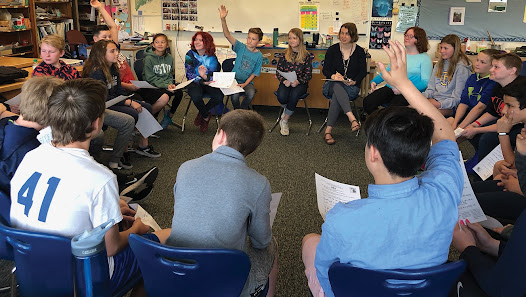


Faith-based schools whether Christian or of another faith, make a commitment to the spiritual formation of our students. Hopefully, this is not just by sending them off to Chapel once or twice a week. True formation occurs in multiple communities, or groups as the “Outcome of the ‘Practice of many Practices.” I borrowed this excellent comment, from Craig Dykstra and Dorothy Bass.


I point out in my book that this might not be realistic in all faith-based schools. When I wrote the book I was thinking of Christian schools. It's worth noting that I’ve been invited to speak to staff at varied faith-based schools in recent years, and all have shown considerable interest in my work. Other religions also see much which resonates with their own desire to see their children grow spiritually. For example, a large number of school leaders, teachers and parents read my blog in Muslim countries.  It seems, they also want their schools to demonstrate pedagogy and school communities that are true to their faith.


2. Going Deeper, to consider the subtle and almost unseen practices of our schools


Dykstra and Bass in their work, comment on formation and issue a challenge to teachers to bring to “consciousness the hidden dimensions embedded in and through our actions and relations.” (see p. 91). This sounds anything but practical, but hang in there. They define “Christian Practices” as:


… the things Christian people do together over time to address fundamental human needs in response to and in light of God’s active presence for the life of the world.


In short, Christian schools help students to see, respond to, and navigate all the practices of life (Christian and non-Christian), with a telos that is shaped by and directed toward the kingdom of God. NB: “telos” is an ancient Greek word meaning “ultimate end”, “purpose”, “goal” or “action”.


It is important to stress, that our task as Christian schools and teachers is NOT just to put our energy into inculcating our students with ideas, whether this is dressed up as “virtues”, “values”, "church traditions" or even “worldview”. If ideas become the focus of pedagogy, there is less chance of us inscribing a “Habitus” that actually ‘primes’ and shapes their actions.


Pierre Bourdieu developed the concept of “Habitus” (or Habit) and saw it as rooted in family life, and conditioned by social class. What’s more, “Habitus” is part of Aristotle’s teaching on Ethics. In a sense, it is within family life, and the way we bring our children up, that there is significant influence on how our children and students see ourselves in later life.


3. Being Shaped by ‘That Which is Invisible’


It is also important to discuss how the invisible things of life, have an influence on us and of course our students. I draw on the work of Charles Taylor and Lev Vygotsky in helping us to understand what I mean by this.


Charles Taylor argues that we need to stop assuming only ideas move people. James Smith makes a similar point drawing on Taylor. Taylor suggests that beneath any cognitive or intellectual discussion by a group or institution (e.g. a school), we have human imagination at work (p.99). This helps us to engage with stories, dreams, hopes, myths, images etc, and connect them with past and present experiences, as well as imagining the way we’d like the world to be.


Vygotsky used the word Obuchenie to discuss this ‘invisible’ action. In essence, this word points to the way that in life, as we live in communities, we adjust to one another. The teacher student relationship is a context in which this is very important. He argues that simply passing on knowledge doesn’t change people. If we follow his argument and apply it to our school context, then growing our students in knowledge and faith, might require us to make some subtle changes to our pedagogy.


Rather than simply transmitting knowledge about Christian faith which we hope students will accept and replicate, we need to grasp that our students must see connections themselves between such a life underpinned by faith, and the myriad of communities of practice they already inhabit. This of course, requires them to reflect on and adjust to these multiple communities.


So what might our role look like in such a context? Daniel Estes ('Ten Ways to Destroy the Imagination of the Child'), suggests that:


“The metaphor of the teacher as a guide includes both direction by the teacher and active involvement of the student in the learning process.”


As teachers in Faith-based schools, this needs to be part of our role. My hope is that at the very least, our focus in Christian schools should enable teachers and schools to “help students see, respond to, and navigate all of the practices of life (Christian and non-Christian), with a telos that that is shaped by and directed toward the Kingdom of God." Above, all we hope they will not take on different personas depending on where they are and who they are with. Rather, our goal with our students and our own children, should be for them mature in faith and understanding and seek to live consistent lives that honour their God.


Friday, 28 June 2024

The Tricky Relationship Between Open-Mindedness, Critical Thinking and Indoctrination

In this post I want to address what I see as the tension for people of faith between three well known concepts, 'Open-mindedness', 'Critical thinking' and 'Indoctrination'. My specific focus will be on how Christian schools deal with them. For some of my readers who identify with other faiths, what I have to say has equal relevance to you too. Educating the whole child, involves many things, but the role of faith in their (and our) lives must be central and obvious.

Etienne Wenger in his book "Communities of Practice" suggests that living in the world is a process of "negotiated meaning". In saying this he isn't saying there is no such thing as "truth", but his comment is still a bit confusing. I also find his use of the term "negotiated meaning" as quite dangerous. 

A "truth" IS something that is known to be true. We can of course argue about such things with others, but in reading a book like the Bible, which seeks to shape the lives and beliefs of Christians, we need always to be seeking the truth. But what is a 'truth'?

An application of this relationship between truth & life

The implications of the above for Christian life are significant. I DO believe in "truths" and clearly this is what the Bible teaches. But ensuring that we understand how we live by faith and seek the truth as believers, requires attention to the Word of God and the mutual support of others. 

I want to illustrate this by looking at the relationship between the three key words in my title, the difference between "open-mindedness", "Critical Thinking" and "Indoctrination".

What Wenger DOES NOT mean in his statement is that we can arrive and believe in a specific truth by negotiation (and perhaps convenience). As Christians we have little trouble answering the question "is Jesus the Son of God"? But what about "does being a Christian require us to meet together as believers"? And, "is the Bible really truth or can we leave out the bits we don't like"? I recall a teenager in a young adult group I led once, who tore Romans from her Bible because she didn't like its teachings on Homosexuality.

As we unpack these questions about truth, indoctrination and so on, we might also keep in mind some of the practical matters we deal with constantly as parents, and also as parishioners. For example, at a time when we are still emerging from three years of the COVID pandemic, we might ask is watching my church services online every Sunday okay? My answer is no if members are healthy and can get to church. 

Above: Image of the COVID-19 image

But why? Because the Bible teaches us that while we should worship and pray privately (Matthew 6:6) it's also clear that we should not give up meeting together to worship and pray (Heb 10:25). Involvement in our Christian community is important and an imperative. Technology enabled us to 'meet' as churches during the global COVID 19 pandemic, but now it is much less of a threat, we need to meet together as much as possible. As Hebrews 10:25 reminds us, we should NOT

 "... give up meeting together, as some are in the habit of doing, encouraging one another - and all the more as you see the Day approaching."

Surely this isn't essential for salvation? Of course it isn't, but we need to meet with one another. But is it essential for salvation? No! And yet in the Catholic Church the attendance at Sunday Mass is seen as an imperative. But why? One frequently used justification for it is, that it's our obligation to meet to pray, listen to the message from the priest, and go to communion to keep in a 'state of grace'. The last bit of this Catholic view is what is most problematic. Christians are commended and encouraged to gather together. Not simply to take part in the "sacraments" but to learn from God's word, grow in faith and serve one another as we learn, worship our God and rejoice. Devotion to attending Church and taking part in Mass does NOT save anyone. Only faith in our God and the only true access to forgiveness and salvation, Jesus!

Above: St Mary's Cathedral Sydney

"For God so loved the world, that he gave his one and only Son, so that whoever believes in him shall not perish but have eternal life." (John 3:16)

So what about the "Tricky relationship between these three things..."?

My post is meant to be a cautionary word to Christians and in fact all people of faith with belief in God. 

a) Open-mindedness

The dictionary meaning of "Open-mindedness" is not the acceptance of anyone's views about God and salvation. Rather it is "the willingness to search actively for evidence against one's favoured beliefs, plans, or goals, and to weigh such evidence fairly when it is available". It has nothing to do with being humbly accepting everyone's views of the world and their views on what faith in God looks like.  

b) Critical thinking

Again the Oxford Dictionary meaning is "the objective analysis and evaluation of an issue in order to form a judgement". This has nothing to do with accepting the beliefs of others and allowing this to reshape your own view of God and our obligations before him. No, we must examine the Bible and read it to seek the truth for ourselves.

c) Indoctrination

Finally, what is the meaning of "indoctrination"? This might surprise you. "The process of teaching a person to accept a set of beliefs uncritically".

Summing up and a few warnings

So, what implications do the above have to those of us who support religious schools of any type. 

First, as teachers in all religious schools, our task is NOT to indoctrinate. Rather, as Christians it is to present our beliefs as they are reflected in the Bible, and challenge our students to consider these for themselves. And of course, as teachers, we are to live our lives in a manner that is based on our beliefs. Children very quickly see through hypocrisy.

Second, as parents we should not simply send our children to a faith-based school to ensure their salvation, no matter what our faith might be. If we want our children to accept and follow the faith we profess, we must live this life ourselves. Children once again see through hypocrisy. 

Third, we should not simply seek to enforce our beliefs on any child, whether your own or one you teach. Our children must be taught and encouraged to have faith, but ultimately they must accept this for themselves.

Hopefully, our schools as institutions, and their teachers and leadership, demonstrate their faith is genuine in their lives and actions. As well, in all aspects of what the school demonstrates as most important, should offer the most powerful demonstration of the value and truth of the faith they accept.


Monday, 23 October 2023

'Building Schools Where Everyone Understands that Each Member is a Gift'

Anyone who has been a teacher will testify that at times there have been children who were hard to like. I was one of those children for a number of my teachers. What about you? Can you recall students who were challenging and difficult to like? Perhaps ask yourself why they were hard to like?


Towards the end of my book 'Education and Pedagogy for Life', I suggest that one of the key marks of the good teacher is they are attentive to all their students. Note 'ALL'! What's more, they encourage students to tolerate one another, not simply those in their friendship groups. Community building in school is very important, and the best teachers will shape class and group communities to help students understand in some way, that every other student is a gift to all of us in a classroom.


Life is filled with many relationships, and each contributes to us in some way. We learn and grow in and out of school as we experience life together in varied communities of practice. School should not be seen as a place to which we simply send our children in order to have their heads filled with knowledge, and discipline instilled. Hopefully, we want them to grow in understanding and character. This requires "immersion in a life that is only partly lived at school... our students have complex lives in which they dwell in numerous communities of practice."  (Cairney, 2018, p.164).


The Christian school is to be a place where our students' presuppositions are challenged constantly, as they try to grapple with the experiences of life. Ricoeur ('Figuring the Sacred: Religion, Narrative and Imagination', 1995) reminds us that all of life impacts us, and our presuppositions are challenged daily. This includes the things taught in classes or the school Chapel, as well as ideas expressed by students in community life, playground conversations etc. 

Ricoeur suggests that as faith emerges, it will be challenged as we try to make sense of changed priorities and lives. How do we do this? He argues that "metaphorical imagination" is strongly implicated in such efforts to make sense of varied realities. My take on this is that as we encounter conflicts between the things we believe and value, we will need to reconcile such clashes by creating inner 'metaphors' to hold them in balance, rather than in tension. 


As a student comes to faith in our schools or begins to reflect more critically on the faith of other students, and also their own, they have the need to reconcile inner conflicts. They observe and listen to others and ask questions of them. But they also ask questions of themselves as they carry many inner conflicts alone.

Ricoeur's take on this is that for such inner conflicts, we can experience redemption by imagining the possibilities if we were to move in new directions in life. He suggests that by "imagining his possibilities, man (sic) can act as a prophet of his own experience." While I agree that at the point of key decisions about our faith and where we stand in a community like a Christian school, I also see the growth or loss of faith in our students as much more deeply interwoven with all of life. Bad life examples and good ones, all play their part.

God reveals himself in many ways within school communities. For the teacher, I suggest "the things we teach, the priorities we set, the activities we plan, the experiences that are structured, the books we share; indeed all of life in and outside the school acts upon us and shapes us" (Cairney, p.166).

For the student, this will often be the examples of teachers and students. This is demonstrated in their lives; the priorities they hold, the things they believe and so on. 

Christian schools exist to reveal God in every aspect of life. We are seeking to shape young lives for the good. Buber reminds us that teachers present a "selection of the world" to our students with formation of character as the key purpose. But every member of our school communities is used by God and plays their part.


As I say many times in my writings, the calling to be a teacher is an honorable one. We have the opportunity to help shape hearts and minds; we are vehicles for learning about God and revealing God through his word and our witness. We must continue to meditate on this truth. What a responsibility! But in his strength and power all things are possible.

Friday, 26 November 2021

Identity, faith & imagination: Who am I?

Who am I? I suspect the answer for many people the honest answer is “it depends”. If a stranger was to walk up to you and say “Hi, I’m Frank, who are you”, how would you respond? You’d most likely start with your name. What follows is a type of social ‘dance’, as we reveal things about ourselves in order to present a certain persona. For a total stranger, your answer would probably be short, not giving too much away too quickly. The person’s gender and appearance might also shape your response, and what you will share. Our identity reflects many things, but what we share with others is always a representation of who we believe we are, or the person we wish to project that we are. In reality, only God knows us as we are, for he sees all, and knows all about us.


One of the great challenges within the school is that our students are constantly seeking to present themselves to the world in a particular way. Most people invest a lot of energy trying to project an image of who we think we are, or would like to be. We live in an age, where increasingly, people of all ages embrace varied media to build an identity, and present it to the world using Instagram, Facebook, Pinterest, WhatsApp, Twitter and so on.

This reality begs the question, can anyone truly know us? Probably not, for we tend to withhold information from others. The one exception is God, who of course does know us as we truly are. As King David reveals in his famous Psalm 139:

1 You have searched me, Lord,
and you know me.
2 You know when I sit and when I rise;
you perceive my thoughts from afar.
3 You discern my going out and my lying down;
you are familiar with all my ways.
4 Before a word is on my tongue
you, Lord, know it completely.
5 You hem me in behind and before,
and you lay your hand upon me.
6 Such knowledge is too wonderful for me,
too lofty for me to attain.


However, we can’t know our students or children as God does, but as teachers and parents, we need to get below the surface representations our students project each day, to understand who they truly are. As I wrote in my book ‘Education and Pedagogy for Life’, when our students arrive in our schools and classrooms, they don’t come as clean slates. They come with memories and hopes, and of course ‘baggage’ of all kinds. If a child has been subject to a domineering parent, or perhaps a level of poverty and trauma in the household, they will be positioned differently in the classroom and school community than the child from a stable and privileged past. They will also have a different sense of identity that reflects their lived experience.


Our students’ knowledge of the world and their place within it, are distilled from a
limitless array of experiences, stories, and memories. How can we help them to grow and mature in their understanding of self, and to develop secure and positive self-concepts? And it seems the imagination plays a part.

Ricoeur suggests “the imagination generates new metaphors for synthesizing disparate aspects of reality that burst conventional assumptions about the nature of things.” The imagination is not an alternative to perception but an important part of it. In a sense, our perceptions of who we are can be shaped in part by our imaginations.


Let me offer an example from my life. There were a number of moments in my childhood when specific events helped me to ‘imagine’ myself as someone other than who I thought I was, the second child, living in the shadow of my sister, who always seemed to be the favourite. But a simple event when I was about 10 years old helped to shift my attention away from who I wasn’t towards who I might just be one day become.


The memory, will seem somewhat trivial, but it had a long-term impact. Our household received a delivery of coal which was to be shared with a neighbour. The load was dumped in our driveway, and my father and the neighbour were moving half of the load by wheelbarrow next door. I was watching and my Dad and he said, “Here son, have a shovel”. I took the shovel and began moving the coal to give my Dad a break. But I continued for quite a while. Our neighbor turned to my Dad and said “Struth Henry, the boy shovels like a man”.

Why do I recall that event with such vivid clarity? Because it helped me to understand something about myself. I had an inner determination, energy and strength that I had demonstrated not just to others but also to myself. Such memories might seem inconsequential, but they represent life moments when the imagination and real life events collide and help us to see ourselves a little differently.

In my book, I share a variety of vignettes and stories that all to some extent seek to show the connection between identity, imagination and life. I also challenge teachers to think less about compliance and more about observation and formation. These communities of practice that we create as teachers really matter! Let me end with a quote from my 'Pedagogy & Education For Life' p.132:

“The distance between teacher and student is little more than a relational artefact. A classroom where there is compliance, where students do their work and perhaps even achieve highly, is not necessarily a transformative classroom…. Are we providing the relational contexts that are speaking into our students’ lives… Imagination is central to how our student minds are engaged, hopes are formed, aspirations are primed, friendships are conceived, and supported… Imagination also plays a key role in connecting who our students are, who they wish to become, and what is critical to their sense of belonging.”

Tuesday, 29 June 2021

The Underrated Need for Persistence!

I’m sure that we all know some very bright and successful people. At times in schools the student who is scarily bright or clever in some area, can be intimidating to others. As a parent or teacher, you’ve probably heard comments from children like the following: “Sally (or Sam) is so much better than me?” 


If you’re not the brightest person in a class or a gathering of people, it can be intimidating and frustrating to see others doing things seemingly with ease and little effort.


I've had many conversations with children in varied contexts, where they were decrying their lack of success in some area. It might have been a test or assignment in a subject that isn’t their favourite. Or, it might just be the 200 metres freestyle event at the school swimming carnival. When confidence is lacking, we can hide behind excuses for our lack of success with statements like “I’m just not good enough”, or “she’s just better than me”. In Australia, we have an expression that sums up the response that is often needed for many of these situations – you need to “Have a go”! By this we mean make an effort, don’t give up so easily, persist and give it your best shot.


Success at school, just like success in sport, employment, marriage, or even dog training, requires more than ability, it also requires persistence and effort. 


In my book ‘Pedagogy and Education for Life’, my fourth pedagogical principle is ‘Do our practices place sufficient emphasis on work and effort’? Of course, I wasn't assuming that these qualities are sufficient alone. There are many dimensions to 'work' itself. And I think ‘persistence’ is one key aspect that we don’t emphasize enough.


Above: Cliff Young After Winning the Ultra Marathon Aged 61


We have a monument in Australia to a potato farmer and part-time athlete from Beech Forest, Victoria. In the inaugural Sydney to Melbourne Ultra Marathon in 1983 (over a distance of 875 km), Albert Ernest Clifford "Cliff" Young, at the age of 61, surprised the field. Cliff won the event after training in gumboots chasing his cows around his farm. He wasn’t a fast runner, but he won by denying himself sleep and running while the others were resting. After being well behind early in the race, he slowly gained on them and eventually won by a big margin. His effort was an inspiration to many and offered a great life lesson. You can see a memorial gumboot at Beech Forrest today, that commemorates this remarkable athlete (and farmer).


Above: Gumboot Memorial


I’m reminded of Cliff when I hear children and adults decrying their inability to do specific things. When our students do so, there is often little more we offer can them than encouragement to “have a go”, to “dig deep”, to “stop making excuses”, to “keep at it” and so on.


But what might it look like in our faith-based classrooms to encourage students to persist? I think that most of all, it requires teachers to believe in their students and to challenge them to continue to make their best efforts in any task they find hard. As well, we need to challenge them to not simply make excuses and give up. It is far too easy for children to say, “but I’m just not good at ….”. Persistence is a human quality that can help us to overcome limitations in other areas.


Of course, while persistence is critical for learning at school, it is even more critical for living a life of faith. Life will be filled with varied challenges for all, whether simple ones like struggling in a school subject, or coping with students who are treating others badly. There are many places in Scripture that offer wisdom and encouragement at such times. For example, Hebrews 10:19-39 reminds us that persistence and perseverance are critical to the life of faith:


“Let us hold unswervingly to the hope we profess, for he who promised is faithful. 24 And let us consider how we may spur one another on toward love and good deeds, 25 not giving up meeting together, as some are in the habit of doing, but encouraging one another—and all the more as you see the Day approaching” (Hebrews 10:23-25). 


These verses first and foremost are about persistence in faith rather than school work, but the need for persistence extends to all of life. And of course, this requires faith in God. The faith-based school must ensure that faith in God is more than a class once a week, it is central to shaping the school community and the lives of our teachers and students.


While our students might need to trust in their ability and their teachers to help them succeed at school, more importantly they must keep all things in perspective, for there is awaiting those who trust in Jesus a prize beyond all others. As the Letter of James, the Apostle to the early Christian church teaches us:


12 Blessed is the one who perseveres under trial because, having stood the test, that person will receive the crown of life that the Lord has promised to those who love him.” James 1:12


As a teacher within a faith-based school it is critical that we don’t forget that persistence is a critical aspect of life, whether in relation to the day to day study and the work of our students, or developing a deeper and more dependent faith in God. Encouraging and nurturing faith-based persistence in our students and the school community is a core requirement in the faith-based school.

Sunday, 1 November 2020

Principle 18: How much is learning in my classroom related to the world beyond?

The 18th Principle in my pedagogical framework flows very much from the discussion in the 6th chapter of my book devoted to ‘Classroom Life’. One of my recurring observations of education in schools during my career as a teacher, teacher educator, school leader, and researcher, has been the frequent discontinuity between the life of the School and that of the world. Hang on, I hear you saying, isn’t this what we want?! Well yes, but at the end of the day, we seek students so transformed by the Word of God, that as they live in the wider world, it will be obvious to all that they are different in all the contexts and roles they will fill in life. We don’t want students who only display faith at school, we want transformed lives for our students. I have much to say about education as formation in 'Pedagogy and Education for Life' within Chapter 2 titled ‘Education as Formation in Communities’. The chapter is framed by a quote from the work of Douglas Barnes who addresses some of the ideas I explore in my book:

Education is “embodied in the communicative life of an institution, the talk and gestures by which pupils and teachers exchange meanings even when they quarrel.”


In the 1990s when I began to consider, evaluate and apply my previous research and writing in secular schools in the context of Christian education, I was surprised to see that in many religious schools there was a tendency to ‘build walls’ around the school. Metaphorical walls, but nevertheless, significant artificial barriers meant to shut the world out while children were shaped within. In a sense, when schools go down this path, they spend much of their time critiquing and opposing the practices, values and worldviews experienced outside the students’ school. The problem with a strong emphasis on this approach, particularly with older elementary and secondary students, is that students begin to learn that they can mouth the right answers and tell us what we want to hear, without any personal inner transformation and commitment.


Such an approach can often be observed in schools that embrace Worldview approaches to religious education. Many will say in response to my comments, “but why wouldn’t any parent not want the school to shield their children from philosophies and practices that aren’t consistent with the family faith”. True, we would want to do this, but life and child development is not that simple. It is difficult to separate our children from the world and its philosophies, practices and worldviews. We need to ask ourselves, will isolation and instruction in a form of worldview favoured by a school, ensure inner Christian formation and equip them for later independent living. While we can teach children a faith position and how to respond to questions posed by the world, only God can truly transform the hearts and minds of our children. Romans 12:2 speaks of the need for our hearts and minds be transformed; this includes our children.


Do not conform to the pattern of this world, but be transformed by the renewing of your mind. Then you will be able to test and approve what God’s will is – his good, pleasing and perfect will.”


The role of the Christian teacher is not simply to teach the Bible and rebut the views of the world, they must create open environments in which students can express doubts and challenges within the varied communities of practice that make up their life, so that they can test them against the Word of God. The Christian teacher must nurture, inspire, transform, and influence the children God places in our schools for ‘the good’. The chief task of the teacher is to:


“… create contexts for education that assist children’s formation as learners, mature humans, communicators, people who work, and people who can cope in community as knowers, lovers, and desirers of God. As James Smith states, the key task of education is the formation of our loves and desires that, in turn govern and generate action (both individual and collective).” (‘Pedagogy & Education for Life’, p.13.)


The challenge for us as Christian educators and teachers is not simply to seek Christian distinctiveness in our school by shaping curriculum to incorporate and reflect specific values, worldview, virtues, and so on. While such concerns and practices are legitimate in Christian education, transformative education needs to be shaped by end goals not simply based on continuous downloads of knowledge, worldviews and Christian values. For our ‘means’ surely follow from our telos, that is “the good” or aimed-for end, or goal of schooling. The teaching of community values, virtues, and alternative worldviews have little impact if in conflict with one’s goals. That is, if they do not represent the telos. They must be in harmony if education is to be transformative. Communities of practice that permit students to be open and even vulnerable are critical.


God has created for us a world with unparalleled complexity, co-dependence, integration, and diversity. And yet all people are our neighbors (Luke 10:29–37). This understanding should shape our response to the world. In our Christian schools, I would encourage teachers to ask questions such as the following of each other. Do we offer opportunities for learning that place great value on seeing knowledge, our world, and our place within God’s world, in an integrated way under God’s sovereign rule? Do we promote our students’ understanding of their role as global citizens, and an understanding that God has plans for the future of his world?


My hope is teachers can challenge and support the emergence of our students’ views of the world, undergirded by an emerging, growing or existing faith. Such a focus is necessary in the broad educational contexts that I find of interest. As a result, I am not convinced that by “naturalizing Christian practices” as Dykstra and Bass suggest, it will lead to the changes we hope for in the ‘hearts’ of our children. I don’t accept that Christian practices are “unique” and that teaching them should be our focal strategy. Love is not unique to Christians, although we might suggest that Jesus is the epitome of love, having sacrificed himself for us.


The central approach I explore in ‘Pedagogy and Education for Life is not where Dykstra and Bass end up. That is, seeking as teachers to identify and replicate Christian practices within life. Instead, my focus is on how Christian teachers and schools can help students to see, respond to, and navigate all of the practices of life (Christian and non-Christian), with a telos that is shaped by and directed toward the kingdom of God. We need to remember that many of the students in Christians schools are not in fact Christians at all, so they are on a journey toward an understanding of how Christians might respond in specific situations. 


David Smith and James Smith make a significant contribution to our understanding of these issues by seeking to clarify what we might mean by Christian practices. I agree with their view that teaching ‘Christian ideas’ - regardless of whether by this we mean virtues, values, or even worldview theory - is not the primary solution to the transformation of our children. If ideas become the focus of our pedagogy, then the prospect of Christian habits reflecting Biblical understanding, and faith constituting a second nature, rather than simply compliant practices, will not be realized.


In contrast to the approaches advocated by some of the writers I explore in my book, I suggest that teachers need to be as concerned with the ‘invisible’ things in school communities and children’s wider worlds, not just the more ‘visible practices’ and liturgies. Two writers whose work can help shape such a pedagogy are Charles Taylor and Lev Vygotsky. I discuss these ideas in full chapters 6 and 7 of my book.


Charles Taylor’s notion of the “social imaginary” has the potential to widen our focus and offer a lens that can assist us to make sense of how children are formed in school contexts. Taylor argues that to understand culture we need to stop assuming only ideas move people. This is also a strong message in the work of James Smith. Taylor suggests that beneath the surface of the cognitive and intellectual arguments of a group or institution, we have human imagination at work which helps the individual to engage with stories, myths, images, iconic hopes and dreams, and connect them with our own present and past experiences, as we imagine the world as we would like it to be. Taylor suggests all groups and individuals are motivated by a “social imaginary.” This helps them imagine the context of their lives and their place within its present and future. I discuss Taylor’s work more fully in chapter 8 of my book, when I consider imagination and creativity.


One final point is worth making. In Chapter 5 of my book I discuss the work of Lev Vygotsky. Vygotsky’s work helps to explain why the relationship between teacher and learner (and I would add learner and learner) is so important. We must remember that classroom life is not just about the things we do or say to one another. There is a dialectical relationship between teaching and learning. Vygotsky labels this concept obuchenie. This isn’t easily translated, as it means both teaching and learning as a unified process. Obuchenie requires both the teacher and the student to adapt to one another. While the teacher has a position of authority and usually greater knowledge and world experience, this does not prevent both from listening to and learning from one another.


Above: Group work in action


Vygotsky was suggesting a shift toward a different context for learning, one in which the relationship between teacher and student is changed. This also requires a shift of pedagogical focus. In short, from simply transmitting knowledge or practices for students to replicate, to:


“… the creation of classrooms where students have the opportunity to see connection between the varied communities of practice they navigate each day as part of normal life.”


Such classrooms are places where teachers “guide, nudge, respond, question, listen, observe, urge, teach, and reveal truth in ways students can connect to their lived experiences” (see p.100 of my book). If you would like to explore these ideas more fully I would suggest that you spend time in Chapter Six of my book.

Tuesday, 26 May 2020

Principle 13 - How do we evaluate the ends towards which our pedagogy is directed?


Aristotle

The greatest challenge we face in seeking to create authentic Christian education is to keep ‘higher’ purposes at the centre of education. Ideally, parents, teachers and students should have a degree of shared understanding and agreement about the purposes for learning. Sadly, many parents and even teachers of faith, can have very narrow goals for school learning. Far too often goals seem to value material success and the attainment of power and influence in the world as paramount. More rarely do we observe the telos of learning based on a desire for a specific type of character, and evidence of virtues or faith in God rather than self. Ancient moral philosophers like Aristotle and Plato argued that the ability to make moral judgements was connected to some accountability for one's actions, not just what is best for the individual. The purpose of education in today's schools is often seen primarily as success in material or worldly terms, and choices are often focussed on what will be best for me! Will you get into the best course, at the right university? In turn, will this give you the best chance of employment that will deliver the right lifestyle? Thankfully, some parents, teachers and school principals still sense that education should offer more than just worldly success.


In 'Pedagogy and Education for Life' I argue for a radical change in direction and emphasis in schooling. The model of schooling that dominates most nations is one based on individual success, primarily centred on exams, that in their own way shape what constitutes curriculum. If we are to broaden our understanding of the signposts of educational success for our schools, we must continue to evaluate the attitudes and priorities we hold. These inevitably tend to shape what we do, and the emphasis we give to specific practices and signposts of success. Are the things we do in our schools pointing our children toward the ‘good’? Or are we distracted primarily by the values of the world? What shapes our view of the future, and how are we shaping our children and students’ views of their hoped-for futures?


However, parents like teachers, can lose sight of the fact that life isn't simply shaped by success at school and whether students get the exam marks for entrance into the 'right' course, in the 'right' university. Sadly, it is far too easy to become captured by worldly success, school rankings, state test results and so on. One of the greatest conduits to developing conceptions of schooling in such narrow terms, is an over-emphasis on externally moderated exams. To be fair, schools also value other non-academic activities, and celebrate success in sport, the arts and civic achievements. But at the end of the day, far too often school success seems to be measured based on individual achievement rather than team effort and good outcomes of a community of learners.


We need a radical change in direction and emphasis in schooling. The model of schooling that dominates most nations is one based on individual success, primarily centred on exams, that in their own way shape what constitutes curriculum. If we are to broaden our understanding of the signposts of educational success for our schools, we must continue to evaluate the attitudes and priorities we hold. These inevitably tend to shape what we do, and the emphasis we give to specific practices and signposts of success. Are the things we do in our schools pointing our children toward the ‘good’? Or are we distracted primarily by the values of the world? What shapes our view of the future, and how are we shaping our children and students’ views of their hoped-for futures?


Six Key Questions Every Principal, Teacher and Parent Should Ask?


The following questions might serve as a helpful way to discuss these issues with colleagues.


Do we have a right balance in our projected purpose and vision for our students, classes and the school? 

What are our goals for teaching and learning, and how do we assess individual and group achievement? How does the education we offer shape character, confidence, a sense of self-worth, and a hope for the future?

What do the stories we tell about our schools, their aims, and the things we celebrate say about us and that school in terms of priorities?  

How do we inspire and direct our students? Are the stories we tell our students and children designed to reinforce a view of the world that is dependent on individual success, personal effort and a self-obsessed attitude to life, that reflects a quest for status, security and status?

What posture do we adopt toward success and the way we define it?

How do we as parents and teachers deal with failure? What might we teach them about the way failure can shape character, open up other possibilities, redirect our motivations for the ‘good’? Is failure only ever seen as bad, or do we accept that from failure can emerge new learning, character building and potentially new opportunities and directions?

What are the expectations we project to parents?

As teachers, what do we signal to parents about the things that matter in the way we recognize achievements at school? I’m tempted to ask all schools to list the things that the school collectively celebrates and acknowledges? Perhaps, simply examine school newsletters, websites, school brochures and promotional videos and so on. What are the things that are applauded most at school assemblies and in speeches from the Principal? How often do we share stories of ‘self-sacrifice, and triumph in adversity? Do we speak of how failures can be turned into success and so on? What do we acknowledge and celebrate most as a school? Who is acknowledged beyond the sporting heroes and the highest achievers on internal and external exams?

If we are in leadership and appoint staff, how do we assess their view of the purpose of schooling and its end goal?

A number of years ago, I took the time to analyse the websites of a number independent schools. I was rather shocked at what they said about themselves. Schools might take the time to assess print material, websites and promotional videos to see if it is easy to see what the telos is for the school.

How easy is it to discern the way the school celebrates ‘character’?

It is helpful in speaking of ‘character’ to reflect on the work of Alasdair McIntyre who in ‘After Virtue’ explores character at some length. In defining and discussing ‘character’, Macintyre fuses role and personality. What characters are seen, admired and held up as worth emulating as “moral representatives of their culture”. And of course, characters to be admired “express bodies of moral belief in their actions”. What are the characters we admire most in our schools? Who or what type of person are the “objects of regard”.


Summing Up


One of my major themes within my book is that our faith-based schools have lost connection with the ultimate purposes for which they were created. In the process, we may well have formed good schools that stand proudly against secular schools with no faith basis and different views of the world. However, many schools have lost connection to the ‘ends’ for which they were first created. What will make our schools outstanding ‘Christian Schools’, rather than just excellent schools producing good academic outcomes? It is not simply how well our teachers are able to impart knowledge of the curriculum. No, it will be based on a specific ‘teleology’ informed by our faith and the purposes for life and existence that God’s word teaches in Scripture. As schools, teachers and parents, we must assess and evaluate our students and our schools based on more than exams and other forms of worldly measures of success. It is far too easy to drift into shallow measures of success. For example, the number of doctors and lawyers produced, major academic achievements, the number of sporting heroes, public figures of note, people of high net worth and so on. Instead, we need to evaluate the ends toward which our pedagogy is directed shaped and informed by the Scriptures.


One of my favourite quotes from John Piper in his book 'Desiring God' reflects his biblical understanding of what God desires most for us, and it isn't simply worldly success.


“God is most glorified in us when we are most satisfied in Him”


That is, we will find true happiness and contentment in life when we seek God, honour God and desire him above all other things.  I will finish with another of my favourite quotes from Piper.


“It is about the greatness of God, not the significance of man. God made man small and the universe big to say something about himself” (John Piper,  'Don't Waste Your Life').