Monday, 25 March 2019

Understanding the Diverse Nature of Learners - Principle 7

I’ve been rather disturbed as a teacher and researcher in recent years, to observe that many of our nation’s educational administrators, some of our leading teacher educators, many parents, and some business leaders and varied professionals, seem to assume that the way to improve educational outcomes is to test our children. Not so! Only teaching and student support of learning will improve educational outcomes. I hope that few Christian schools and their parents fall into this trap, but I suspect that many do. Principle 7 of my pedagogical framework deals with this issue.


Testing our way to mediocrity

I've written in other places about this disturbing phenomenon (see HERE and HERE). Testing and assessment should always have as their goal to inform practice. And in particular, to help teachers and parents to tailor instruction and support to the needs of the child. But somehow, we’ve lost sight of this most fundamental of educational principles and I see schools and teachers doing more testing than teaching. And perhaps worse still, their teaching becomes increasingly directed towards achieving desired grade standards as judged by test administrators, rather than responding to student needs to help them to learn and grow.

The desire to constantly test our children has many detrimental impacts on them as learners. I know a child who when she started school could already read. She reached the end of the year and said to her mother, I didn’t learn anything new this year at school. In her second week in Kindergarten she was excited to be taken to the library and to be allowed to borrow some books. She looked at the picture books and saw few that she hadn’t read before, and others which didn’t capture her interest. She moved to the junior fiction shelves only to be reprimanded by the librarian and told that she couldn’t read those books because they “were too hard for her”. “But Miss”, she pleaded, “I can read these books”. “Go back to the picture books” the librarian replied. She left that day without a book to take home. When she entered her second year at school she again reached year’s end and said quietly to her mother, “This year was just like kindergarten, I haven’t learnt anything new this year either”. “Mummy, when will I get to learn some new things at school?”

In her third year at school she was excited to be in a composite class with children from the grade above her, surely her mother thought, this will be a chance for her to learn new things and be stretched. But alas, the school in its ‘wisdom’ had decided to pair the weakest grade 3 students with the best grade 2 students. Why you might ask? I’m not sure, but it seems to me that it was probably to ensure as narrow a spread of ability as possible so as to make it easier to teach a common program across the composite classroom, or at the very least, to allow the bright grade 2 children to teach themselves. It might also have been to concentrate on the struggling year 3 students to help them pass the tests, while the year 2 students worked alone. I find any of these options depressing for they show little concern for individual differences in our children. Constant system wide testing has pushed many teachers down a path towards teaching to a common grade by grade standard irrespective of children’s abilities.

Curriculum that dumbs down and ignores diversity


The use of curriculum and teaching practices that assume all students are the same, and teaching diverse classes a common program and with identical expectations, couldn’t be further from the way education should occur. God made us different, and this wasn’t by accident. Varying abilities and even learning styles weren’t an unfortunate accident of creation. All of our students will have different strengths, weaknesses, and needs (Rom 12:6). Christian teachers, classrooms, and schools should demonstrate this understanding in word and action. We are to do this by responding to, valuing, respecting and building on our children’s varied needs and gifts. Teaching to the middle, or application of restrictive methods to the point of frustration for some, is not an option that should serve as an appropriate goal or acceptable practice. We are to encourage and help students who are slower to learn, and enrich those students who show specific gifts, and develop those who have learning difficulties. God has made our children to be different, hence we need to educate as much as possible to extend and grow all of our students as learners and people.


Embracing, celebrating and working with difference
Having children of different abilities in our classrooms is an uncomfortable reality for teachers, even when we carefully grade our classes. But rather than seeking to minimize differences, or ignoring them, we need to embrace them and help each and every learner to grow. In the midst of this ‘growing’ we might just see that our children who might perform differently on narrow test regimes (to their detriment), will begin to demonstrate different gifts and abilities. The best reader in grade one might be not so good at maths, and perhaps even hopeless at sport, public speaking and in demonstrating the varied basic human virtues like respect, loyalty, honesty and so on.   

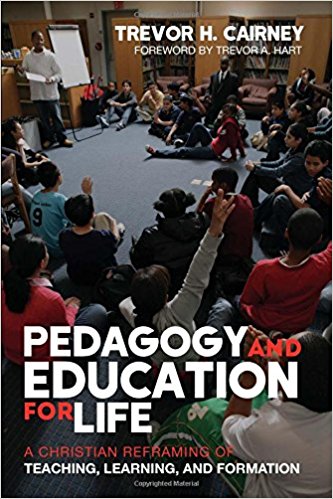
In my book ‘Pedagogy and Education for Life’, I also stress in my 7th statement about Christian pedagogy that as well as accepting difference within our classrooms, we need to identify how unique our children are and seek to develop social harmony amongst them.

In the tradition of shalom1, we are to seek the flourishing of all in our care. Our children come to us each day with varied gifts, lived experiences, ethnicities, abilities, and pasts. On any day, we will have troubled and difficult children in our classrooms. As Jesus neared the crucifixion, he said, “Peace I leave with you; my peace I give you. I do not give to you as the world gives. Do not let your hearts be troubled and do not be afraid” (John 14:27). Safety and the assurance of physical needs was not what Jesus was promising. Shalom meant much more than this. While shalom can mean tranquility and peace in our classrooms in the sense of freedom from harm, it also means unity and accord among people.

While true spiritual harmony involves restoration with God, Christian classrooms must be places that demonstrate shalom in the sense of harmony within the community, peace among students, love and service to one another, and a culture of restoration of differences with others.


Footnote

1. Nicholas Wolterstorff, Educating for Shalom: Essays on Christian Higher Education. Edited by Clarence W. Joldersma and Gloria Stronks. Grand Rapids: Eerdmans, 2004.

Monday, 4 February 2019

Developing Humble Learners: Principle 6

In this post, I want to consider principle 6 in my pedagogical framework, 'God made us as creatures who learn', yet another distinctive of a Christian pedagogy that doesn't seem to be linked very often with success in the world. God's plan for us was that we should be 'humble learners'. Now, while humans are not unique as creatures capable of learning, this characteristic is one that only humans seem to possess. In spite of what E.B. White might have suggested in 'Charlotte's Web', the cunning rat, and the plump barnyard pig are not capable of displaying humility. Nor would it necessarily be in their best interests to do so. In fact, humility isn't a trait that is terribly obvious in many people, let alone children. But principle 6 in my pedagogical framework suggests that the Christian teacher should be seeking to 'develop humble learners'.

As a small child I spent many hours with my grandfather, Alexander Linton. I would follow him around as he did business with others, built a holiday house, or as he repaired all manner of things. My mother's father was a very smart man. From 1920s to 1963 he ran his own business, taught himself how to build radios and later televisions, studied accountancy through the London International Correspondence School and was a leader in his community. If anything needed fixing (cars, radios, televisions, appliances etc), or any problem required some wisdom, the locals would find their way to my grandfather's door.

As a child of 8-12 years old I would talk and natter away as he'd do his work. I'd also at times, offer him some advice about the latest problem. In response, one statement he would gently use quite often when I was making my many suggestions was as follows:

"Son, what I know about this topic I could write on the back of a postage stamp. What you know, you could write on the head of a pin."  

In his own unique way, my grandfather was trying to teach me about humility. There are many places that we can go to in the Bible that speak of the need for humility to be part of the character of the Christian. It is of course the opposite of pride and is a trait that reflects an understanding that compared with the God of the universe we are inconsequential. 1 Peter 5:6-7 reminds us that God resists the proud and gives grace to the humble. We are to clothe ourselves with compassion, kindness, humility, gentleness and patience (Col 3:12).   Scripture also suggests that many good things flow from the person who demonstrates humility, including:
  • Respect for elders (1 Peter 5:5)
  • Forgiveness (2 Chron 7:14)
  • Favour with God (Prov 3:34)
  • Wisdom (Prov 11:2)
  • Honour (Prov 18:12)
  • God teaching us his way (Psalm 25:9)
In a Christian school where humility is cultivated and encouraged, we will look beyond things such as intellectual or life achievements, to the depth and character of our students. And of course, as we teach our students in classrooms and schools where there is an ongoing effort to seek and encourage humility in our learners, they will be different! And if the gospel of Christ is central to all that we do in our Christian schools, then we will be offering the perfect example of true humility - Jesus himself! Jesus provides the perfect example of true humility (Philippians 2:1-8):

Therefore if you have any encouragement from being united with Christ, if any comfort from his love, if any common sharing in the Spirit, if any tenderness and compassion, then make my joy complete by being like-minded, having the same love, being one in spirit and of one mind. Do nothing out of selfish ambition or vain conceit. Rather, in humility value others above yourselves, not looking to your own interests but each of you to the interests of the others. 

In your relationships with one another, have the same mindset as Christ Jesus:

Who, being in very nature God, did not consider equality with God something to be used to his own advantage; 
rather, he made himself nothing by taking the very nature of a servant, 
being made in human likeness. 
And being found in appearance as a man, 
he humbled himself by becoming obedient to death—
even death on a cross! 
If Christ is at the centre of our school communities, then they will be very special, with a pedagogy that is truly Christian.


For more details, see my new book (available in hard cover, paperback or Kindle):

'Pedagogy and Education for Life: A Christian Reframing of teaching, learning, and formation' (Wipf & Stock, 2018).

Or, if in Australia HERE

Friday, 11 January 2019

Made to be Meaning Makers: Principle 5

In the next 10 posts, I turn my attention to what teachers typically want to talk about first - teaching and learning. But a warning, this blog isn't a 'how to' resource (I've written other books about teaching and learning as well as another practice-based blog). Pedagogy was never meant to be a word that describes what content the teacher will offer on Monday, nor simply how they might do it!

In my book  'Pedagogy and Education for Life: A Christian Reframing of Teaching, Learning, and Formation', I suggest that good pedagogy doesn't start with our choice of curriculum content, nor the adoption of particular teaching methods. Rather, pedagogy is concerned with our purpose for doing the things we do, and how we focus the hearts and minds of our students on ends and goals that are much more important than success at school and test results. 

Much of what I have to say about pedagogy and more basic things such as learning and teaching, are shaped by a concern for 'Why?' Why do we do the things we do as teachers? And of course, 'what' is our ultimate purpose for education? My pedagogical framework reflects my biblical theology of personhood. We are unique among God's creatures for we commune with the God of the Universe. God made us for communion and for learning. About him, but also about the world he has given us and his plans for us.

In my last post, I considered the 4th principle within my framework under the first of three truths that have shaped this book. That is, we are 'Unique Creatures' made by God. In that post, I considered what the Bible teaches about a right view of work. Now, I shift to the second of three theological truths that shape my pedagogy: "God made us as creatures who learn". And of course, this involves lifelong learning. This is a key part of our distinctiveness as humans. In all, ten of the twenty principles in my framework, concern learning.

So, if God did make us to be creatures who learn, what are the implications for us as Christian teachers?  First, our task as teachers is to develop students who are meaning-makers not meaning-regurgitators. We seek to shape students "... who interpret language and knowledge to know 'truth'." Second, the task of the teacher is not to 'deliver' knowledge for young 'sponges' to soak it up. Children are not empty vessels to be filled with our ideas, nor simply passive recipients of our knowledge, wisdom and worldview as teachers. Rather, we are to encourage our students to be well-informed meaning-makers who have a desire to seek and know God. Third, our classrooms and schools are to be shaped as learning communities where ideas are shared and tested against truth. For the truths that shape life, are not simply taught through knowledge transfer, they are taught and understood within communities of practice, as members seek to make sense of the world and their place within it.
 

The Christian classroom is a place where ideas are exchanged, where hard questions are asked, and where wisdom and truth can be shared. This sharing is not just by teachers, it also includes our students. The didactic teaching of content and the absorption of knowledge are not what matters most in the formation of our students. While the quest for knowledge should be at the centre of the Christian classroom, they are to be places where we gain, share, and test biblical knowledge and truth. This must be the transformational heart and focus of our Christian classrooms.

A key characteristic of such classrooms is 'negotiation'. David Fernie, Bronwyn Davies, Paula McMurray, and Rebecca Kantor suggest that classroom life involves students negotiating roles, rights, obligations, norms, and expectations from different standpoints. This of course, is true of life in general. The teacher and students contribute to the context in which they learn, while they also negotiate roles and relationships, and what counts as knowledge, culture, and belief. The application of a Christian pedagogy will hopefully show evidence of different responses, actions, and communications that seek to change behavior and attitudes to the world, as well as forming character. 

However, the life of the school has added complexity due to students’ concurrent membership of many diverse communities, in and outside school. Some are 'real' and others virtual. Our students don't simply engage with embodied communities, many are virtual and invisible to teachers and parents. Life is shared in meaningful ways as students exchange ideas, loves, and desires inside and outside the precincts of the school. As Kevin Vanhoozer reminds us, our everyday world includes “the moral, intellectual, and spiritual atmosphere in which we live.” But while we share a similar context with others at school, “we inhabit it differently.”

As we share common practices, concerns, and desires with others, we might also enter into their cultural worlds as well and begin to take on shared ideas. Our students make, share, and communicate meaning with others and are in part formed by these transactions, as they interact and exchange values and views of the world. Meaning itself is actually being tested in such exchanges, as students share ideas and views and 'negotiate' truth with others! What is right or wrong, appropriate or inappropriate, false or true and so on, are subject to negotiation, consensus or even disagreement. How our students make sense of the world requires them to reconcile the views of one's teacher and other students alongside those of parents and a myriad of other people outside the school. And of course, the word of God is set against this life complexity and is to be our foundation as Christian teachers.

My final point is this, while as teachers we might seek to shape the way our students see the world, if our students are to come to share such views of the world shaped by God's teaching, it will require them to engage with these ideas. They will need to discuss them with others and assent to them as an act of will, not because they want to please us or their parents, but because they come to see that this reflects the truth of God taught in his word.

1. David Fernie, Bronwyn Davies, Paula McMurray, and Rebecca Kantor,
'Becoming a Person in the Preschool,' Meaning, Learning, and Formation, 67 

2. Kevin Vanhoozer, 'What is Everyday Theology', in Everyday Theology, 19.

Saturday, 29 December 2018

Developing a right view of work and effort - Principle 4

If you have read my previous posts on this blog you will realize that I am working my way through the 20 key principles within my pedagogical framework that is the foundation of my book 'Pedagogy and Education for Life'. There are 20 principles in all shaped that reflect three key aspects of God's relationship to us as his creation. First, "God made us as unique creatures". Second, "God made us as creatures who learn". Third, "God made us for communion". In this post, I want to look at the fourth and final principle that relates to the first aspect of our humanity, that is our uniqueness as God's creatures. This fourth statement stresses that while God made all of his creatures to 'work', only humanity is charged with the responsibility of seeing work as a gift from God for our good.

What is a right view of work and effort?

Genesis 2 reminds us that God made us to contribute to the order and running of our world. When he made us, God put us in the garden to "work and take care of it" (Gen 2:15). Work was part of God's good plan for us, and continues to be part of our humanity. While work will at times be hard as we 'toil' with the tasks for which we are responsible, there is a purpose to all of our work. Yes, it will provide money to buy food and pay for a shelter for our heads, but its role in our lives offers so much more. For a start, work is used by God to help us to understand the satisfaction of effort and of tasks completed. That moment when we can look at the fruits of our labour and say, yes the job is finished. At the moment of work's end, we can also be thankful for the rest that follows. Rest follows work.

But of course, work and effort can be misplaced. We can toil in our work simply to create something that "we've built", seeing it as our achievement; I did this! Of course, satisfaction in completing a task well can easily slip from thankfulness to pride and self-congratulation. Somewhere between the starting and finishing of our work, motivations can be easily misplaced. We can quickly shift from being thankful that God enabled and equipped us for a task to basking in the 'glory' of what "I've just done"!

So, Christians are to embrace work as part of God's good plans for us. We are to avoid idleness and be productive, because God gives us things to do, and this is part of what it means to be his creatures. 

We are God's co-workers. Not as equal partners, but as willing and obedient servants grateful for yet another of his gifts - work! And of course, 'effort' is closely intertwined with the goodness of work.  There is little commendation for idleness and laziness in God's word. He made us to be creatures who work and rest. This is part of who we are.

So, what does this mean for us as teachers?

The book of Colossians commends the slave to be obedient to the master. It offers a perspective on work, whether student, teacher or truck driver, that is different to many of the messages that flood us today. The slave was not commended to obey their earthly masters, just to gain their favour, but "... with sincerity of heart and reverence for the Lord" (Col 3:22) We are to embrace work and do it "... with all of our heart, as working for the Lord, not for human masters" (Col 3: 23). 

The Christian teacher has two great responsibilities in relation to work. They are to demonstrate a right view of work themselves, and also instill this same right view in their students. We are to encourage our students to adopt a right attitude to all tasks. Hard work is not to be shunned (or even apologized for by the teacher), it is to be embraced as part of life and God's plan for us.

As teachers, we will have good days, and sometimes very bad days. Our students might be out of control, and we might be having trouble making it to the end of the school year and a much needed summer break. But we are to strive to show thankfulness for the work God has given us and also for the time of rest he gives us in order to sustain our work through what to the teacher will seem at times very long school terms. As teachers (and students), we are to fellowship with God when it gets tough. As the book of Isaiah reminds us, God will strengthen us in the midst of life, including work. We are to seek fellowship with God when times are tough in our classrooms and schools. Likewise, we are to encourage our students to understand this great truth (Isaiah 41:10). As his word reminds us our God is aware of the challenges, and when work is tough he is there. 

"For I am the Lord your God who takes hold of your right hand
and says to you, Do not fear; I will help you."
Isaiah 41:13


Thursday, 29 November 2018

Do My Classroom and School Encourage Service to One Another? Principle 3

In my previous two posts, I introduced the first two principles within my pedagogical framework, each framed as questions. My third question encourages us to think about the way classroom life encourages our students to serve one another. 

How do your classroom and school demonstrate and encourage service to one another?

Service is not something that can be simply taught as curriculum content. Rather it is a reflection and outcome of the whole of life. An early influence on my thinking in this area was the work of Douglas Barnes. As a young postdoctoral fellow at Indiana University in Bloomington Indiana, I was introduced to the work of the work of this English scholar. Barnes was not a Christian but he wrote a small book that was quite influential. I read it while I was conducting research in schools in Indianapolis in the 1980s.

My research was situated in elementary classrooms, and my focus was the nature of community life. I was particularly interested in the influence of language on learning in the classroom, home and communities. Barnes book 'From Communication to Curriculum' offered a refreshing insight into the relationship of the language of classroom to learning. At the heart of Barnes' thinking was the premise that education is "...embodied in the communicative life of an institution, the talk and gestures by which pupils and teachers exchange meanings even when they quarrel". His thesis was that learning language is not simply a cognitive process, it is acquired in an embodied, whole of life way. We learn language (in fact we learn anything), as we are immersed in a rich web of social relationships.  Likewise, we learn about and acquire human qualities such as 'service' in the context of community.

This may not seem profound in 2018, but for a young academic with a brand-new PhD in cognitive psychology, who had only just 2 years before become a Christian, it resonated deeply with my lived experiences as a teacher, father and researcher. What Barnes' work helped me to grasp was that education must be much more than filling young minds with knowledge, ideas, facts, values or even a specific worldview. Rather, it is as much an embodied experience as an intellectual activity of mind. As such, the whole of life of a community is critical when we try to grapple with what school pedagogy might look like. As James K.A. Smith has put it in his book 'Desiring the Kingdom: Worship, Worldview and Cultural Formation', Christian formation and discipleship are "Educational projects in the most holistic sense: the goal isn't just to equip knowers, but to form doers."

What I have learned in varied educational contexts over the last 30+ years conducting research in classrooms and educational institutions is that while the curriculum we structure, the content we deliver and the activities we plan collectively have an impact on shaping knowledge and learning, there is more! Teaching and learning are not simply dependent on the transfer of content and knowledge into young heads, or the planning of effective teaching and learning activities that transfer knowledge and skills. Rather, teaching, learning and curriculum are embodied activities that impact on our formation as knowers, doers and people. Part of the way learning is embodied is in the rituals and practices of classroom life.

Above: Group work (Wiki Commons)
Hence, as a teacher we can't 'teach' children to serve one another. Being prepared to put the needs of another before one's self runs smack in the face of self-interest. And so, as the teacher and her students live together in the classroom, they commune with one another and 'grow' together as they interact and commune within a particular context or community of practice (a concept I've discussed in previous posts). God made us to learn and 'grow' in knowledge of him as we commune with him.  Likewise, he shapes us within varied communities of practice and life. Gatherings of people influence the way we see the world and how we act. If these gatherings have God at the centre we are formed as we relate to one another under God. These are 'places' where are encouraged to seek the good of the community, not simply self. Within community, we learn to "Love your neighbor as yourself" (Matt 22:37–40). Such qualities are not learned intellectually, but as we learn and commune together.

As teachers and school leaders we are to act in ways that foster community by encouraging all members to serve one another in word and action. The teacher in God’s service is the primary (but not sole) example to their students. Our students also serve as examples to one another. Service and servanthood should be the mark of all teachers, and are of central importance to any classroom within a Christian school. God the Servant King who took on 'the very nature of a servant' made us to be servants to him, but also to one another. Jesus, of course, is the perfect example of service, having given his life for us (Phil 2:7; Matt 20:25–28).

As teachers, our example is a critical part of what it is to be a Christian teacher, as we demonstrate what service looks like, as well as shepherding and watching over our students. But of course, their example to one another is just as powerful. We become servants as we receive the fruit of servant-hood from others.

In my next post we will consider the fourth principle in my framework: 'Developing a right view of work and effort'.

Tuesday, 6 November 2018

Building on the Foundations of the Family - Pedagogical Principle 2

As I wrote in my last post, the central concern of the Christian school teacher must be the formation of character in their students. While growing minds and bodies is also important, it is the character of every child that is the central concern of God. As James K.A. Smith argued in a conference that I convened in Sydney in 2012, education is much more than teaching skills or helping children to acquire knowledge, it is more fundamentally an exercise in the formation of the child. And of course, the outcome of such formation is what we would typically describe as 'character'. Martin Buber suggested that "education worthy of its name is essentially education of character" (Martin Buber, 'Between Man and Man'). And of course, character is not 'taught'; rather, it is acquired or developed in community.

The importance of community is a critical element in 'Pedagogy and Education for Life'. In the book I outline a framework that reflects a key foundational proposition in my pedagogy:
“Education is the whole life of a community, and the experience of its members learning to live this life, from the standpoint of a specific goal”
In the final chapter of my book I offer 20 statements that expand on this central definition and act as a framework for education in a Christian organization. I express them in the form of questions. In the last post I considered the first question, "Do I identify that which is valuable in each child?"

In this post I consider the second question.

Do my class and school build on the foundations of the family? 

I spent almost 20 years conducting research on family literacy and learning. This work offered valuable insights into the relationship between the home, school and community, and demonstrated that when schools understand and respect families, that education at school is more effective. One national project that I led for the Australian government, considered the role that parent support and understanding of school pedagogy played in helping children to succeed in literacy learning in the elementary school years. The outcome of the work is described in my book 'Beyond Tokenism: Parents as Partners in Literacy'. While my concern in 'Pedagogy and Education and Life' is the education of the whole child, the findings from my family literacy and learning research, showed that even in relation to school success, a strong open relationship between home and school is vital. This of course is even more clearly needed when we are concerned for the whole child as Christian parents and teachers. This in turn will reflect our faith, and a view of the world shaped by the Scriptures and the gospel-centred narrative that binds the Bible together from beginning to end.      

So why is it important to build on the foundations of the family?

First, it is important to understand families because our students are first and foremost the responsibility of parents under God. While we have the privilege of teaching the children of families, we must understand that our students arrive as people shaped initially by parents. As well, we need to respect the wishes of families for their children. Having said this, it is also important to remember that families are all different and so their parenting strategies will also be different. Also, our parents might not be people of Christian faith. Nevertheless, the school and its teachers need to take responsibility to ensure that parents understand what the school offers and the school's statement of faith that is meant to shape pedagogy and school life.

Second, and more fundamentally, the Bible has much to say about the importance of the family as a critical unit in any society. The Bible teaches that God made us to live in relationship first to him, and second to other people. And the family was the foundation of humanity (Gen 2:15-25), and continues to be the foundation for learning in the early years of life (Deut 6:1-9). Families also have a vital role throughout schooling, and hence the Christian school is to know the families of its students, to support them as they nurture their children, and as God works in their lives. Families are not problems to be managed, but rather partners in education and recipients of God’s grace, sometimes delivered through the school.

Any teacher reading this post will of course realize just how hard it can be at times to deal with parental attitudes and expectations, that do not mirror those of the teacher or the school. In the final chapter of my book I follow the pedagogical framework with a series of case studies that highlight some of the challenges that teachers face in their partnership with parents, who may not share their beliefs. In fact, many of our students do not accept the Christian faith themselves. I stress in the second case study in chapter 9 of my book, that the key challenge for the Christian teacher when teaching the children of non-Christian parents is "... to communicate honestly to parents whether  Christian, or non-Christian." And as well, as the teacher does so, they need to trust God will use her words according to his purposes."

Friday, 28 September 2018

'Indentify that which is Valuable in all Children' - Pedagogical Principle 1

Have you ever considered what drives us as teachers; and by extension, what drives the schools in which we serve? Is our major concern to see our students growth in character? Or are we fixated on growing their minds, or perhaps, just helping them to achieve success at school? Is our major priority (and perhaps that of parents) simply helping students' to succeed at school and hence, in life? What a shallow and inadequate aspiration this is for education!

Every parent of course wants their children to succeed in life, to gain employment, have families and so on. But what of their character? Where does their formation as people fit in? Is it even a concern of the teacher? And what role if any, does the teacher play in partnership with parents in the formation of children?  

In my last post I emphasized that my book ‘Pedagogy and Education for Life: A Christian Reframing of Teaching, Learning, and Formation’ represents a distillation of my many years as a teacher and researcher addressing questions of this type. My experience as a teacher and researcher, as well as my faith, led me over almost three decades, to develop a pedagogy that did not consist simply of knowledge of good practice and appropriate curriculum content. Rather, it has a central assumption that children learn in relationship to others, and that these relationships and the practices they engage in day by day, are always embedded within shared communities, consisting of people who hold many understandings, beliefs and practices. The definition that shaped the pedagogy within my book reflects the culmination (at that time) of my personal life journey as a teacher when I realized that.
“Education is the whole life of a community, and the experience of its members learning to live this life, from the standpoint of a specific goal”
At the end of my last post I shared a pedagogical framework reflecting this definition and promised that I'd begin to discuss each of the 20 components organized around three key main strands of a biblical theology of personhood:
  • God made us as unique creatures
  • God made us as creatures who learn
  • God made us for communion
Each of the above understandings of personhood lead to a number of questions that should shape pedagogy. In this post, I want to comment on the first question that relates to our uniqueness.

Do I identify that which is valuable in each child?

Above: Picasso's Girl with a mandolin
All children are made in the image of God (Gen 2:15-25) and yet, all are different. While we might recognize common behaviour, attitudes, knowledge, habits (good and bad), abilities, emotional strengths or weaknesses and so on, in our children, each child in his or her own way is unique. This is of course is true, even for identical twins (monozygotic twins) who from the same fertilized egg. They too are genetically different (see this article) and different in character.

What does this simple plank in my pedagogy imply for pedagogy? Let me suggest five things.

a) First, that to teach to teach the whole class as a single group is foolishness. Sure, if we wish to teach specific skills and knowledge that we see as vital (e.g. learning to count), it will mean that all will be taught the same content. But if we are to engage students as learners, we will need to find content that varies and relates to diverse interests and adopts varied methods.
b) Second, we should expect our students to present with different strengths and weaknesses. Furthermore, we have a responsibility to build on strength and support students to cope with their weaknesses and perhaps overcome them or cope with them. Conversely, we need to have a diverse curriculum that allows students to demonstrate their varied capabilities. As a young difficult child in primary school I was grateful to several teachers who encouraged some of my key interests and tolerated areas of weakness.
c) Third, we should strive to develop curriculum content that opens up many and varied forms of learning. This of course might reflect and relate to curriculum content (science, art, writing, maths, drama, natural history, music etc), or perhaps modes for learning (creative activities, oral and written expression, divergent as well as convergent thinking etc). 
d) Fourth, we should offer choice in content and curriculum activities, not simply prescription.  Enthusiasm can be more easily engendered by ensuring some freedom and choice for students in relation to the activities that are experienced.
e) Fifth, we need to understand that we all have different abilities and capabilities, and ensure that we allow space for this in our curriculum and pedagogical practices.

To be an effective teacher is to recognize that which is unique and valuable in each child.

In my next post, I will consider the second of my 20 principles. This examines the place of the family in God's plan, and the question "Does my class and school build on the foundations of the family"?