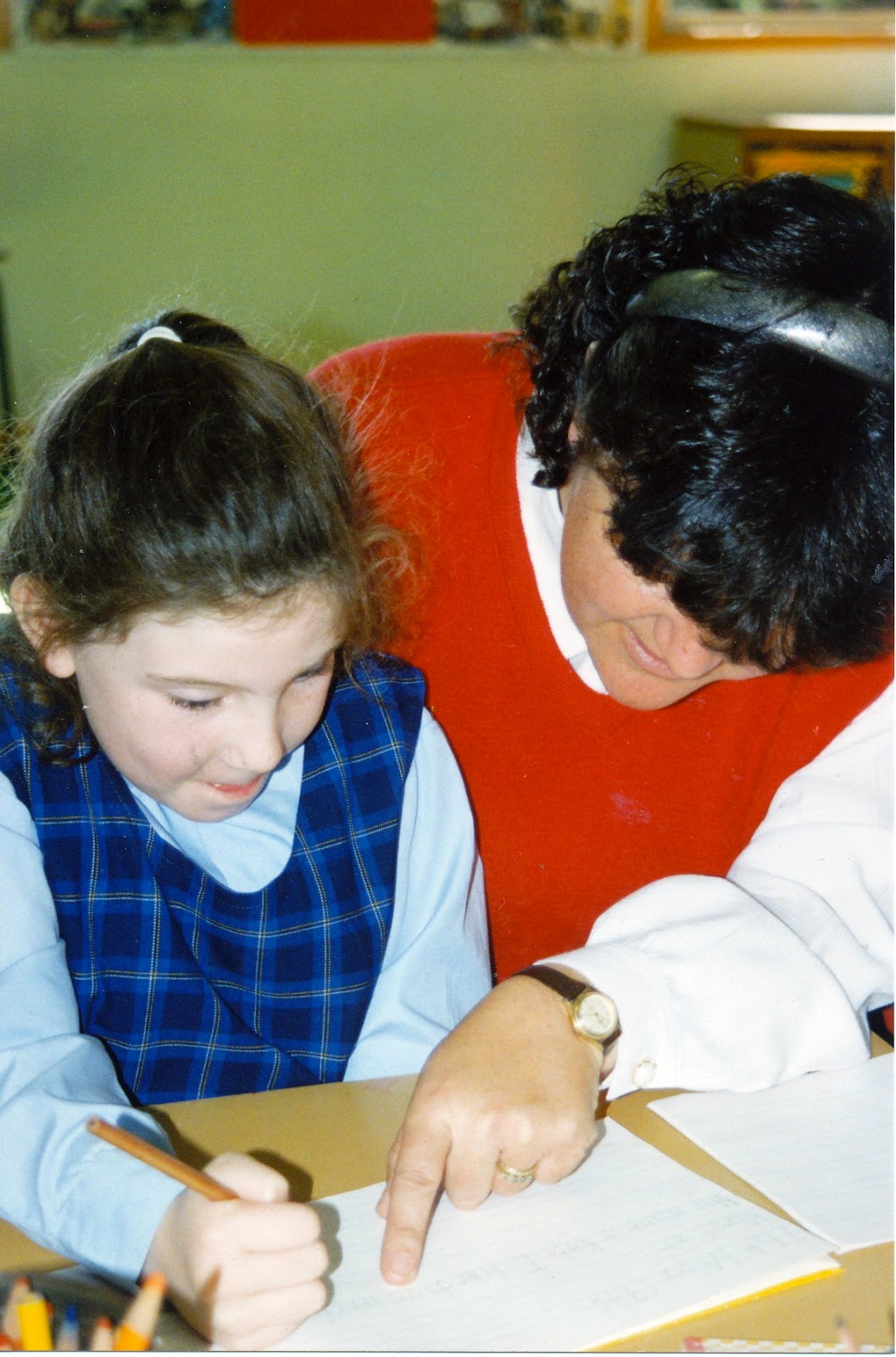
Education is the whole of life of a community, and the experience of members learning to live this life, from the standpoint of a specific end goal
Saturday, 22 August 2020
Principle 16 - Does my classroom model and promote self-sacrifice and generosity?
Sunday, 26 July 2020
Principle 15 - Demonstrate forgiveness and seek repentance in students as hearts are trained.
If you revisit my framework for Christian pedagogy, you will see that my twenty principles are framed by three key biblical truths. Each of these speak of the nature implanted in us by our God. It is this nature that separates us from all other creatures. God made us as creatures who are:
Unique,
Made to learn, and
Made for communion.
My fourteen
previous principles have reflected the first two aspects of our character that
reflect the nature of our God. We now turn to consider what education might
look like once we have given serious thought to this third aspect of character.
We were made by God for communion. So, the last six
principles in my pedagogical framework, are all concerned with how students and
staff in schools and classrooms, demonstrate rich communion with one
another shaped by our faith, trust in, and communion with God.
Principle 15 is a first principle for shaping a pedagogy that reflects God's character and his teaching. It is also one that is foundational for the building of the rich fellowship and community discussed above. We are to create classrooms where as teachers we:
"Demonstrate forgiveness and seek repentance in students as hearts are trained.”
As well, we seek to create classrooms where students demonstrate that they too can be repentant and also forgive others. This principle should be a critical part
of life within Christian schools. Our classrooms are to be places where
forgiveness is readily offered and repentance is demonstrated. For the Bible teaches that all have sinned and fall short of
the glory of God (Rom 3:23), and one day will face judgment (Matt 12:36; John16:8; 2 Cor 5:10). Hence, schools should be places where forgiveness and repentance are part of
daily life. So, we need to ask ourselves as teachers, how do we articulate and demonstrate these
key aspects of the character of believers, who know they fall short of the
expectations of God? Are our classrooms places that demonstrate students
and their teachers understand that all are in need of forgiveness and redemption?
But how do we demonstrate such aspects of character? In my book - ‘Pedagogy and Education forLife’ - I include a number of case studies that help teachers and students to discuss just how school and class communities can be places that demonstrate such biblical qualities. Some of life’s greatest lessons occur in the midst of disappointments and failure. School communities centred on a biblical understanding of personhood, will deal with disappointment, failure, and distress in a different way. How well teachers deal with such failures in their students is critical, for every event of this kind is an opportunity for student learning and growth. Teachers are to set strong examples as people who can model how broken relationships can be restored, forgiveness offered and restitution made. An important part of the teacher’s role, requires a willingness to train and encourage students to forgive one another.
In my next post, I will deal with Principle 16 ‘Does my classroom model and promote self-sacrifice and generosity?’
Thursday, 2 July 2020
Principle 14 - Is your classroom a place where just punishment and discipline are part of school life?
When I created this blog, I set out to write posts on all 20 of the principles that shape the pedagogy central to my book 'Pedagogy and Education for Life'. I stressed that the very start of good Christian pedagogy requires the teacher to mirror the person of Christ, in order to make good and wise choices as they nurture and teach the children in their care. I included a framework within the book organized under three major headings, all reflecting the theology that informed the book, as well as offering a biblical theology of personhood.
These three headings are broad biblical truths, and give shape to my framework: “God is Creator,” “God’s creatures are meant to be learners,” and “God made us for communion.” Principle 14 is the last of ten that relate to the central truth that God created us to learn with others. We are to spend time with other people, as fellow learners who thrive in communities centred on knowledge of, and faith in God. If this is the case in your classroom and school, then the community will be different. This extends to every aspect of pedagogy and life in the school, including discipline.
As a teacher, you will need to make different (though hopefully consistent) decisions for each child in your care. It may require you to respond in different ways, and offer different forms of support and even discipline, every day. It is important to stress again, that pedagogy isn't a set of one size fits all methods, techniques or procedures. The search for the perfect pedagogy will have a fruitless search, for the day-to-day working out of our pedagogy will vary from teacher to teacher and class to class.
But—and this is an important “but”—we should strive to teach in ways that are true to the way God has created us and his purposes for doing so. We must constantly acknowledge our nature as learners and creatures made in the image of God, and that the essence of community is shaped by the gospel of Christ.
The great challenge for teachers and leaders in Christian schools is to consider what should be distinctive about our education and schooling. This of course extends to the way we administer discipline. Proverbs 13:24 teaches that he who loves the child “is diligent to discipline him,” but such punishment is to be just and not in anger and for revenge. Do we understand that unjust and unexplained punishment, punishment that breaks the spirit or is in anger and frustration, is wrong? Do we see punishment and discipline as a means that “yields the peaceful fruit of righteousness to those who have been trained by it” (Heb 12:11)? And through discipline, do we also show our love and concern?
Any kind of physical punishment is banned in most Western countries; hence discipline is inevitably related to detention, spoken comments, the withdrawal of privileges, and the involvement of parents. However, while some will see limited options for punishment, sound teaching requires management of classroom life in such a way that punishment is rarely needed. The key to effective discipline and the lack of need for it, is pedagogy that leads to exciting classrooms that engage and motivate learners. If our students are motivated and encouraged to contribute positively to community life, and are engaged in the activities of the classroom and school, discipline usually becomes less necessary. Having said this, if punishment is required, it must be administered fairly, consistently, and justly, otherwise the teacher will have lost the battle to create a learning environment where all students are engaged and motivated and see their schooling as having life purposes that matter. The example of Chanda in chapter 2 of my book is an illustration of how one disagreeable, unmotivated, belligerent, noisy and disruptive student was redirected in my classroom, simply by taking the time to get to know her, understand her personal life situation, and open a doorway into her life through my interest in her underground music and poetry.
It is worth stressing that if the teacher finds themselves needing to discipline all or some of their students regularly and excessively, then they have a significant pedagogical problem. Why? Because clearly students are disengaged and alienated from the teacher, the purposes of education in the class and school. Furthermore, it is highly likely that the teacher does not know their students. In particular, they do not know their hopes and dreams, interests and desires, motivations and hopes for life. Knowing and loving our students is the starting point for effective discipline and pedagogy.
Tuesday, 26 May 2020
Principle 13 - How do we evaluate the ends towards which our pedagogy is directed?
| Aristotle |
The greatest challenge we face in seeking to create authentic Christian education is to keep ‘higher’ purposes at the centre of education. Ideally, parents, teachers and students should have a degree of shared understanding and agreement about the purposes for learning. Sadly, many parents and even teachers of faith, can have very narrow goals for school learning. Far too often goals seem to value material success and the attainment of power and influence in the world as paramount. More rarely do we observe the telos of learning based on a desire for a specific type of character, and evidence of virtues or faith in God rather than self. Ancient moral philosophers like Aristotle and Plato argued that the ability to make moral judgements was connected to some accountability for one's actions, not just what is best for the individual. The purpose of education in today's schools is often seen primarily as success in material or worldly terms, and choices are often focussed on what will be best for me! Will you get into the best course, at the right university? In turn, will this give you the best chance of employment that will deliver the right lifestyle? Thankfully, some parents, teachers and school principals still sense that education should offer more than just worldly success.
In 'Pedagogy and Education for Life' I argue for a radical change in direction and emphasis in schooling. The model of schooling that dominates most nations is one
based on individual success, primarily centred on exams, that in their own way shape
what constitutes curriculum. If we are to broaden our understanding of the
signposts of educational success for our schools, we must continue to evaluate
the attitudes and priorities we hold. These inevitably tend to shape what we
do, and the emphasis we give to specific practices and signposts of success.
Are the things we do in our schools pointing our children toward the ‘good’? Or
are we distracted primarily by the values of the world? What shapes our view of
the future, and how are we shaping our children and students’ views of their
hoped-for futures?
However,
parents like teachers, can lose sight of the fact that life isn't
simply shaped by success at school and whether students get the exam
marks for entrance into the 'right' course, in the 'right' university.
Sadly, it is far too easy to become captured by worldly success, school
rankings, state test results and so on. One of the greatest conduits to
developing conceptions of schooling in such narrow terms, is an
over-emphasis on externally moderated exams. To be fair, schools also
value other non-academic activities, and celebrate success in sport, the
arts and civic achievements. But at the end of the day, far too often
school success seems to be measured based on individual achievement
rather than team effort and good outcomes of a community of learners.
We need a radical change in direction and emphasis in schooling. The model of schooling that dominates most nations is one based on individual success, primarily centred on exams, that in their own way shape what constitutes curriculum. If we are to broaden our understanding of the signposts of educational success for our schools, we must continue to evaluate the attitudes and priorities we hold. These inevitably tend to shape what we do, and the emphasis we give to specific practices and signposts of success. Are the things we do in our schools pointing our children toward the ‘good’? Or are we distracted primarily by the values of the world? What shapes our view of the future, and how are we shaping our children and students’ views of their hoped-for futures?
Six Key Questions Every Principal, Teacher and Parent Should Ask?
The following questions might serve as a helpful way to discuss these issues with colleagues.
Do we have a right balance in our projected purpose and vision for our students, classes and the school?
What are our goals for teaching and learning, and how do we assess individual and group achievement? How does the education we offer shape character, confidence, a sense of self-worth, and a hope for the future?
What do the stories we tell about our schools, their aims, and the things we celebrate say about us and that school in terms of priorities?
How do we inspire and direct our students? Are the stories we tell our students and children designed to reinforce a view of the world that is dependent on individual success, personal effort and a self-obsessed attitude to life, that reflects a quest for status, security and status?
What posture do we adopt toward success and the way we define it?
How do we as parents and teachers deal with failure? What might we teach them about the way failure can shape character, open up other possibilities, redirect our motivations for the ‘good’? Is failure only ever seen as bad, or do we accept that from failure can emerge new learning, character building and potentially new opportunities and directions?
What are the expectations we project to parents?
As teachers, what do we signal to parents about the things that matter in the way we recognize achievements at school? I’m tempted to ask all schools to list the things that the school collectively celebrates and acknowledges? Perhaps, simply examine school newsletters, websites, school brochures and promotional videos and so on. What are the things that are applauded most at school assemblies and in speeches from the Principal? How often do we share stories of ‘self-sacrifice, and triumph in adversity? Do we speak of how failures can be turned into success and so on? What do we acknowledge and celebrate most as a school? Who is acknowledged beyond the sporting heroes and the highest achievers on internal and external exams?
If we are in leadership and appoint staff, how do we assess their view of the purpose of schooling and its end goal?
A number of years ago, I took the time to analyse the websites of a number independent schools. I was rather shocked at what they said about themselves. Schools might take the time to assess print material, websites and promotional videos to see if it is easy to see what the telos is for the school.
How easy is it to discern the way the school celebrates ‘character’?
It is helpful in speaking of ‘character’ to reflect on the
work of Alasdair McIntyre who in ‘After Virtue’ explores character at some
length. In defining and discussing ‘character’, Macintyre fuses role and
personality. What characters are seen, admired and held up as worth emulating
as “moral representatives of their culture”. And of course, characters to be
admired “express bodies of moral belief in their actions”. What are the
characters we admire most in our schools? Who or what type of person are the
“objects of regard”.
Summing Up
One
of my major themes within my book is that our
faith-based schools have lost connection with the ultimate purposes for
which
they were created. In the process, we may well have formed good schools
that stand
proudly against secular schools with no faith basis and different views
of the
world. However, many schools have lost connection to the ‘ends’ for
which they were first
created. What will make our schools outstanding ‘Christian Schools’,
rather than just excellent schools producing good academic outcomes? It
is not simply how well our teachers are able to impart knowledge of the
curriculum. No, it will be based on a specific ‘teleology’
informed by our faith and the purposes for life and existence that God’s
word
teaches in Scripture. As schools, teachers and parents, we must assess
and
evaluate our students and our schools based on more than exams and other
forms
of worldly measures of success. It is far too easy to drift into shallow
measures of success. For example, the number of doctors and
lawyers produced, major academic achievements, the number of sporting
heroes, public figures of note,
people of high net worth and so on. Instead, we need to evaluate the ends toward which our pedagogy is directed shaped and informed by the
Scriptures.
One of my favourite quotes from John Piper in his book 'Desiring God' reflects his biblical understanding of what God desires most for us, and it isn't simply worldly success.
“God is most glorified in us when we are most satisfied in Him”
Wednesday, 15 April 2020
Could Dr Seuss Help Us to Deal With the Corona Virus?
I've always found that children's literature offers great human wisdom and insights for many situations in life. As the world has struggled with the Covid-19, I think we've observed some of the best and worst of human behaviour. There have been numerous stories of human sacrifice from medical staff and age carers treating others at great personal risk and cost, airline staff transporting patients home from foreign countries, generous people sharing food, shelter and belongings with unemployed workers. As well, families separated in different countries with little prospect of getting home, have been given help from varied countries and agencies to journey back to loved ones. These are all examples of human cooperation and generosity. Where does children's literature come in? Children's literature can teach, challenge, inform, and offer emotional support while shining a light on the human condition and how we relate to one another.
In times of crisis, human traits like generosity, sacrificial care and a willingness to forgo self-interest, might just help us to overlook our differences and difficulties together. Yet, there is a darker side to humanity in times of trouble. Selfishness can also be shown by some. There is no place for stubborn self-interest in a crisis; whether it's hoarding food and essential goods (while others have little), or something as simple as stubbornly refusing to keep social distance when asked to by authorities. Young backpackers having parties in parks and on beaches, a man leaves enforced isolation to visit his girlfriend, unnecessary travel is undertaken, putting others at risk and potentially spreading the virus, and so on.
If you've experienced or observed such selfishness, why not share a bit of Dr Seuss wisdom with your children. This might just help them to understand why we all need to do different things in these difficult times, like stepping aside to allow social distance on walking trails or pathways. Or perhaps, not riding your scooter or bike down the centre of a path, and instead, keeping your distance in the interest of others. Dr Seuss has always had a way of embedding social commentary within funny stories. 'The Zax' is a little story that might just help to open up such conversations with our children.
'The Zax' is a wonderful story within the Dr Seuss collection titled 'The Sneetches and Other Stories'. While the other three stories in the volume are also excellent and have much to teach us about human behaviour, 'The Zax' shines a light on the futile nature of stubborn self-centredness. And of course, this has been seen in abundance around the world as interests of varied kind have often got in the way of quick responses to Covid-19.
The story begins with two unusual creatures walking on a straight path towards one another with great purpose.
Trouble was, they were in a direct line for a collision.
And so, it continues:
"Who's in whose way?" snapped the South-Going Zax.
I always go south, making south-going tracks.
So you're in MY way! And I ask you to move...
How might this story all end? Well, it seems that the rest of the world moved on while they remained fixed in their stubbornness.
Well...
Of course the world didn't stand still. The world grew..
In a couple of years, the new highway came through
And they built it right over those stubborn Zax
And left them there, standing un-budged in their tracks.
Thankfully,
the crisis we find ourselves into today around the world has also led
to acts of great generosity, kindness and sacrifice. I pray that we
might see more of these positive virtues as we support one another in
the midst of this global challenge. Here's another lovely example of how a Dr Seuss classic story has been used for social commentary at this challenging time. Kristi Bothur published this lovely example on YouTube just a few weeks ago. "How the Virus Stole Easter". If you loved 'How the Grinch Stole Christmas' you'll enjoy this video based on the Dr Seuss classic picture book that offers a reflection on Covid-19 and reinforces the need for 'hope' and prayer.
Monday, 30 March 2020
‘Doing’ School at Home During the Covid-19 Virus - Some practical help
- How can I as a parent who isn't a trained teacher make this work?
- What if my child gets through all of the school work in a couple of hours?
- How can I make some of the work fun and engaging?
- How do I juggle my paid work if I'm working at home as a parent at the same time?
Monday, 2 March 2020
The need to be ‘kidwatchers’ - Principle 12
Essentially, teachers need to be sensitive to any signs that
their life at home, or in varied wider contexts outside school, might create
additional challenges or opportunities. The latter is just as important, life
and learning might just be much more exciting and rewarding in the wider world than
in the school or classroom. The example of Chanda in Chapter 2 of my book
illustrates this perfectly. A student who wouldn’t write at school was a
prolific writer of music at home.
The second student was an attractive and precocious girl in
Grade 5, who had no end of friends at school. But she struggled to complete
schoolwork due to her tendency to be easily distracted from any work activity.
This behavior continued for all of one term. She was referred to our school
counsellor. After a number of sessions, she discovered that the student’s
mother had left their family home during the school holidays and had not been
seen or heard of for 3 months. With her father working five days per week and
shift work at times overnight, and her older brother at university, she was
frequently left alone.