Tuesday, 27 February 2024

Shake it Off! A Word for the World from Taylor Swift

The Wisdom of Taylor Swift

I started this post on 23.2.24. It was a very warm summer night in Sydney. As we say in Australia, it was a 'sticky' (humid) evening so I had the window in my study wide open. I could hear frogs in various pots in the garden, crickets singing their sweet songs, and Taylor Swift singing in the stadium at Olympic Park, just a 5-minute drive away and about 3 km (as the crow flies). A storm had just passed drenching the 85,000 fans, including one of my granddaughters and her friends. The music started a little late, but they had an amazing night. The following night another granddaughter, her Mum and two friends attended and stayed dry.


I'm sure schools all over Sydney would have been alive all week with discussions of who had tickets and who sadly missed out. What to wear? What merchandise to buy? How many wrist bands to take and swap? I heard on the evening news that one young woman spent $30,000 on "merchandise" at the show in one transaction. 

Am I fan? Not really, but I've heard a bit of her music and I was from a musical family with broad tastes. I'd seen Taylor sing on television, and she is clearly a wonderful performer. And while I prefer opera to popular music, in her genre of music she is top of the tree! Not because she is the best singer in the world (but she is very good), but because she writes songs that resonate with the youth of today, and women in general. How her fame reached this point intrigues me, so I thought I'd have a look at some of the themes in her songs.

I started with "Shake It Off" which seems to be her most popular single. She explained the meaning of the song on Radio in 2015:

"This is a song that I wrote about having to deal with on an everyday basis, just kind of, how human beings treat each other." "... You know, the feeling of humiliation... when a girl has a rumor spread around about her at school that isn't true. It's the same feeling I feel when I'm checking out at the grocery store and I read some crazy headlines about me." She continued, "...rather than writing a song that was victimized in nature I wanted to write a song that was joyful and give people ways to cope with whatever knots of ridiculousness life is doling out to them... and make them want to dance." 

Above: 'Shake it Off' Early album cover

It's easy to see why young (and older) women love her songs. As a man, even I can appreciate she is speaking into women's direct experiences and why some men also love the songs. As well as being smart and talented, Taylor has an understanding of human nature, and her music is her contribution to helping young people with the 'crap' of life. I admire her for that. 

But is life that simple? In a word, NO! Can you just shake off abuse, false rumours, put downs and so on? Not really, but when you have an orchestra of millions singing in unison the words of the song, for a time they are strengthened by the knowledge that many young women suffer, confront and often conquer the same terrible stuff. So, in a sense they support one another in song.

As Christian teachers and parents, what can we learn from this?

With a faith that teaches us the only sure way to be saved from the ugliness of life, is through faith in Jesus and the love of God. Let me unpack what I think is behind Taylor's success, and what we can learn from it?

First, all of us need help and support in the battles of life, whether it comes in the form of ridicule, persecution, illness, family problems, disappointments, body image, and failures of all kinds.

Second, having an exciting day like the concert, a 'perfect' date, spending time with friends who accept and support you, success at school or university, in sport etc, can all help to lift our spirits. But too quickly these experiences lose their shine and are forgotten when problems encroach.

Third, Taylor Swift's songs encourage women to seek support from others who have shared similar life experiences. We gain strength from friends, who have also experienced the problems of life. Taylor Swift's followers are in a sense a community of sisters (primarily), who share the ups and downs of life through song. I watched videos of the 80,000 (mostly) young women singing (screaming) "Shake it off" along with Taylor at the Sydney concert. The passion was extraordinary! 

So, to what do we look to for hope in troubled times?

Ironically, a different 'Taylor' can help us here. Theologian Charles Taylor helpfully gave us the concept of the "Social Imaginary" (See T.H.Cairney) 'Pedagogy and Education for Life').  Taylor suggests that:

"Beneath the more superficial activities of life... below the surface of cognitive and intellectual arguments all groups and individuals are motivated by a 'social imaginary' which helps make sense of their world by allowing them to engage with stories, myths, images, iconic hopes, and dreams, and connect them with their own present and past experiences as we imagine the world as we would like it to be."

In a sense, Taylor Swift's music offers a form of "social imaginary". Charles Taylor suggests that such visions of the future help all groups and individuals to imagine the context of their lives, and their place within its present and future. Of course, there are fans of Taylor Swift who do have a faith in God, which I'm sure offers them a slightly different view of the lyrics of her songs, and the impact on their lives, compared to non-Christians. But all fans seem to engage deeply with the music because the lyrics and experiences she shares, echo to varying extents the challenges they face each day. My hope is that many believers while continuing to enjoy her music, might not 'worship' the performer. I also pray that those who don't know God in the audiences, will seek faith in the only true eternal hope. That is, the eternal hope Christ offers.

You will find a helpful secular explanation of the meaning behind 'Shake it Off' by Taylor Swift HERE   


Tuesday, 30 January 2024

The Importance and Nature of 'Double Listening'

The Importance of ‘Double Listening’ in Faith-based Schools (Revisited)


An Update - I posted on this topic in November (HERE) but I've posted this shorter version that might be more helpful for School staff to commence a discussion


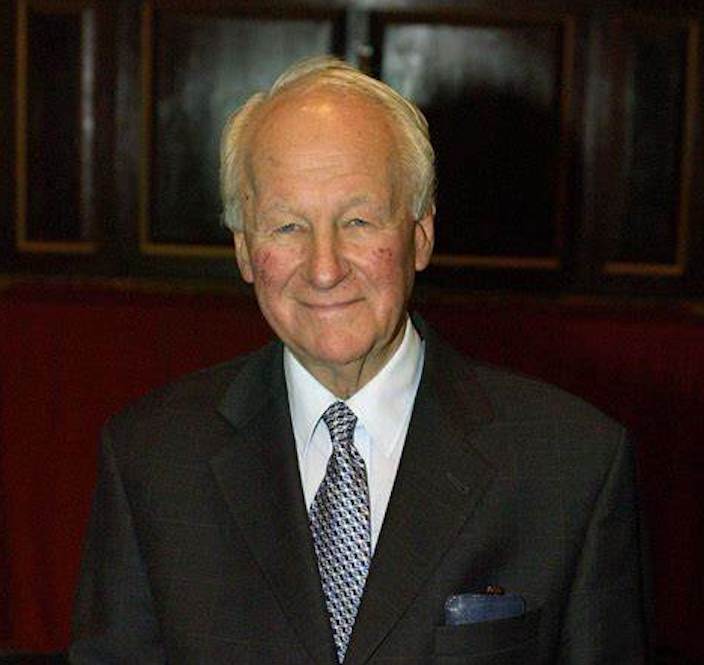
While writing an article for a journal recently, I was reminded of John Stott’s concept of ‘Double Listening’. I believe it needs to be shared with faith-based teachers and schools. John Stott was an English Anglican priest and theologian, who was noted as a leader of the worldwide evangelical movement. He was the founder, director, and honorary president of the London Institute for Contemporary Studies. He wrote 40 books! His work was always filled with great wisdom.

In one of his many publications, ‘The Contemporary Christian: Applying God’s Word to Today’s World’ (1992: IVP), Stott introduced the concept of ‘Double Listening’. He shared, “we are called to the difficult and even painful task of ‘double listening’. That is, we need to listen carefully… both to the ancient Word and to the modern world, in order to relate the one to the other with a combination of fidelity and sensitivity.”


This concept resonates so clearly with my own work. Those who have read ‘Pedagogy and Education for Life’, will see immediately why I find his concept of ‘Double Listening’ so helpful. It sits comfortably with my call for faith-based teachers to think deeply and critically about how “…we shape the whole life of a community viewed from the standpoint of the kingdom of God?” (Cairney, 2018, p.30).


Why is Double Listening Important for Terachers?


Faith-based schools tread a tightrope while seeking to teach and shape their students with the World’s many competing voices and challenges. Even in the setting of a Christian school, there constant tension between preparing our students for the world, while also seeking to grow them as people. In my work, I give special emphasis to encouraging teachers, parents and students to see their faith as central to all of life and not to be distracted simply by success in the world. In any faith-based school, we need to encourage everyone to listen first to the Word of God, while also preparing students for life IN the world. That is, we seek to bring the Word to bear on the world, not the other way around.


In an interview in 1997 with Professor Derek Morris (Southern Adventist University, Tennessee), John Stott was asked to explain what he meant by ‘Double Listening’. He responded:


“By double listening, I mean listening, of course, to God and to the Word of God, but listening to the voices of the modern world as well. Now, I make it clear that in listening to the modern world, we are not listening with the same degree of respect as that with which we listen to the voice of God. We listen to Him in order to believe and obey what He says. We listen to the modern world, not in order to believe and obey what it says, but in order to understand its cries of pain, the sighs of the oppressed. And it seems to me that relevant communication grows out of this process of double listening.”


2.  How should faith-based schools respond to and learn from this challenge?


In ‘Pedagogy and Education for Life’ I argue that education in faith-based schools should always be situated in the “whole of life of the school”. This in turn is situated within our students’ complete lives that simultaneously transcend varied and multiple communities of practice. As teachers, we need to keep reminding ourselves that our students’ learning does not occur simply in our classrooms Things taught in the school are integrated and interpreted as part of daily life. Collectively, this perspective seeks to create “…classroom life with the potential to ‘speak’ to our students about what is important in the world of the classroom and school, and consequently, what matters in the world” (Cairney, 2018, p.31).


John Stott’s words might seem ‘quaint’ to some, but we must be careful not to quickly dismiss his bold claim. These words are very helpful for anyone who has faith in God, and is navigating a world that is increasingly hostile to all faiths. Stott’s comment relates directly to the key challenge all Christian schools to balance the obvious desire of parents, as students and teachers seeking success in life, with a desire to see them to seek faith and eternal hope in God.


An important complement to ‘Double Listening’ is the development of “standpoint” or point of view (Cairney, 2018, pp 27-29). This relates to the shared understandings students develop in multiple communities. A key role of the teachers in faith-based schools is to present and help shape viewpoints within classroom and school life. Students can be encouraged to orient their life to the Kingdom of God, not the ways of the world. This requires an all of school approach and the creation of community life that places faith and our hope in Christ at the centre.


3.  How does this concept relate to my work on “formation”?


First, we need to understand and embrace the concept of ‘Double Listening’ in our lives as Christians and teachers. We also need to observe and understand the world in which our students live, and the many ideologies that are spoken of, promoted and that ‘wash over’ them each day. As teachers (and parents), we need to be alert to the signs of varied ideologies shaping our students’ priorities and practices. But as well, we need to have the courage to push back on some of the ideas they embrace, and explain what the Bible teaches us about life’s priorities.

Second, we must not forget that a key part of our roles as teachers is to “orchestrate the meaning, language, and life of the classroom” (Cairney, 2018, p. 67). To observe the lives of our students is a key priority, but we also need to be active in attempting to shape our students to consider all of life in the context of God’s word to us.


But, one more comment is necessary. Schools must be careful not to create places so insulated from the world, that they become escapist ‘bubbles’ protecting them from the world. Schools can in a sense, become such separate worlds, that students aren’t really prepared for the wider world, where the cultures and priorities are so different, and where they have new autonomy.


The place of ‘Double Listening’ in schools is very important. As teachers, we must become such good listeners and observers that we are in a position to have an influence on the worldviews that students develop and how faith has a central role to play in shaping them.


Tuesday, 19 December 2023

Holiday Ideas to Stimulate Children, Reduce Screen Time & Keep Parents or Carers Sane!

My apologies if you follow my Literacy blog as well as this Pedagogy blog (& thanks too!), but I thought readers of this blog might find these ideas from my Literacy blog of help in holiday periods when school is out.

In Australia, our schools will close in the third week of December for the Summer holidays which last about 6 weeks. After over two years of COVID isolation, lock downs and disrupted schooling, life is just starting to return to normal. As we enter holiday periods with our children and grandchildren, it's helpful to plan a little. While some children might go to summer camps, or holidays with families, there will be plenty of time either at home or away for children to become bored. Hopefully, the solution is NOT just to simply increase their screen time.


If Christmas falls in winter as it does in the US and other northern hemisphere nations, then outdoor activities will be hard. But there are plenty of things to be done inside that are stimulating and fun. In Australia, traveling to catch up with family and friends, the beach, hiking, boating, fishing and more take up lots of time. But there is still time to fill at home because some children end up home while parents go to work for at least part of the holidays.

At Christmas, many families have ongoing traditions that you continue in families or schools. One special tradition in our family is to make the traditional English Plum Pudding using a recipe passed down on my mother’s side first used by her English and Scottish ancestors in the 1800s. Family legend is that one of our relatives worked as a cook in Holyrood Palace in Edinburgh and that the recipe was passed down to family members generation by generation. I used to make the pudding as a child with my grandfather and I’ve carried that tradition on first with one of my daughters, and these days also a second pudding with one of my granddaughters. Perhaps you have your own traditions?

I've written a number of posts in the past about things to do in the holidays with kids (here), as well as simple travel games to fill the time on trips with your children (here). There is also an earlier post on ‘Planning With Kids’ that offers '20 Great Holiday or Travel Activities for Kids (5-15)'. To maintain some balance, you might also read my post on why 'Boredom is still good for children!'.

In this post, I thought I'd revisit some of the ideas and add a few new ones. Holidays offer an opportunity to stimulate your children's minds, and help prepare them for another year of school in 2023.

My criteria for choosing holiday activities are that they should:

  • Stimulate creativity
  • Encourage exploration and discovery
  • Involve using hands as well as their minds
  • Encourage interaction between you and your children
  • Foster language and literacy development 
  • Increase their knowledge
  • Keep them interested

1.      An Excursion

 
The untold great places for an excursion wherever you live. Are you near or in Sydney? Why not enjoy one of the wonderful walking tours of the historic rocks? We took 4 of our grandchildren on a self guided tour of the Rocks during school holidays a few years and had so much fun. The tour we used was free. We were provided with a map and commentary that allowed us to have an adventure together as we explored the historic area. We acted out varied scenarios along the way and took photos to share with other friends & family.

2.      Why not get your children to create an animation, with one of many apps. 

This sounds a big deal but it's not with the right app. I wrote a post about some wonderful apps for digital story telling a few years ago (HERE). One of my favourites is 'Puppet Pals. For one thing, it's VERY easy to use. Your children will work it out in minutes. Puppet Pals is available as a free app for the iPod Touch, iPhone and iPad. Most apps are available for other devices as well. It's essentially a simple way to create an animated movie using 'cut-out' themed characters and a variety of backdrops and scenes to create an animated 'puppet' play.


There is a free version that comes with Wild West backgrounds and actors.  However, you can also purchase different themes for as little as $US0.99 or the 'Director's Cut' in which you can access all the themes for $US2.99. These allow you to obtain a range of additional scenarios and characters based on themes such as monsters, space, pirates, arthropod armada, Christmas and so on. You can even make your backdrops and characters.

It's a very simple app to use that provides very easy story boarding. You can record dialogue, move characters around, create some simple effects, change backdrops and settings and characters. While ideally, before creating the animation, the writer/producer prepares plot summaries and story ideas, but I've seen my grandchildren make excellent animations on their first take. One they used is the 'Arthropod Armada' theme from 'Director's Cut'. 

As a teacher, I also could see myself using a smart board to collaboratively develop a story with my class before introducing individuals and groups to this smart little app.

 
3. Books with a difference

a)  Pick some special books they haven't seen - 

Try to borrow or buy at least 2 books for each child. Based on their interests try to choose books they'll enjoy, not simply books you'd like them to read. Opportunity shops, book exchanges and libraries are also a great place to start looking for some cheap second hand books. I have another post on book exchanges, op shops and web exchange sites here. Alternatively, take them to your local library to choose some.

b)  Use Books as a creative stimulus - While the sheer joy of the book is usually enough, sometimes books can stimulate many wonderful creative activities. For example:

After reading Maurice Sendak's "Where the Wild Things are" go outside and dramatise it. Let one child be Max and let others take turns at being the wild things. Make a boat out of bits of wood, or even have a go at making one out of a large cardboard box (or several).

After reading Jeannie Baker's book "Where the Forest Meets the Sea" (a book about the Daintree Rainforest in which all the pictures are collage), encourage them to make a collage out of natural materials (and maybe some wool, straws etc to supplement) in response to Baker's pictures. Or read a second book and have them use collage in response.


Or after reading Graeme Base's "The Waterhole" get them to paint the waterhole (they can draw the animals, cut them out and paste them around the waterhole).

4. Dramatisation

Dramatisation is an excellent way to respond to a book. If you have a dress-up box all the better. Let your children either re-tell the story through dramatisation or improvise. Get involved to help set the pattern for turn taking etc. I play a mean wolf, and an even better Grandma!


5.   Writing with a difference

Introduce children aged from 5 to diaries or holiday journals.

a) Scrapbooks & journals - Make this fun, not a school activity. Some might prefer to just make a holiday scrapbook by pasting in tickets, leaves they collect, food wrappers etc. But you can also show them how to create a travel diary.

b) A holiday blog - Tech savvy mums and dads might encourage their children to write online. Why not set up a family blog that can be read by friends and relatives (even if only for two weeks). You could use this as part of a trip away, or just use it at home. Older children could set up the blog themselves and all family members could contribute. Let them have access to a digital camera and a scanner and the sky is the limit. See my post on 'Children as bloggers' (here).

c) Start a family joke or riddle book - Maybe offer them some jokes as models ("Knock, knock", "Why did the centipede cross the road"....) etc.

6. Craft

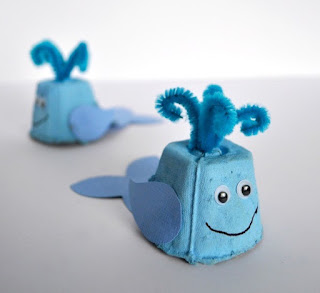
a) Structured Craft ideas - simple beadwork, noodle craft, mask making, making plaster moulds (and painting them), anything for young children that requires paper tearing, gluing, glitter, stickers, works well.

b) Unstructured creative craft - Stock up when you go to the supermarket with simple materials like paper plates (good for masks), brown paper bags, sticky tape, glue, cotton balls, tooth picks, paper cupcake holders, straws (cutting up and threading), noodles (for threading).
c) Play dough - You can buy cheap coloured modelling clay but home-made playdough works well. My wife 'Carmen's can't fail' recipe is 1 tablespoon of oil, 1 cup of plain flour, 0.5 cup of cooking salt, 2 tablespoons Cream of Tartar, 1 cup of water, colouring. Mix together and put in a saucepan on medium heat until it binds together, stirring all the time. Fold together by hand. If you keep it in a sealed plastic bag it will last for ages in or  outside the fridge.

There are endless things to do with play dough. Try to move beyond just cutting out shapes (which kids still love). Encourage them to make a house, a farmyard, a bed, and an aquarium. Use some plastic animals with the play dough or small plastic people. If you don't mind tossing the play dough out you can let them use sticks, plants etc to make simple dioramas. Kids will create complex stories as they manipulate the play dough.

7. Creative Play

I've written a number of previous posts on play (here) but planning for play is important. While you can say to your children go outside and 'play', doing some simple planning at times will lead to more stimulating play times.

a) Dress-up box - If you don't have one take the kids to an Op shop to start one. You might even pick up some gems like old helmets, hats, belts (you can cut them down), handbags etc.

b) Water play - This is hard in cold weather, but maybe you could make bath-time special for young children with extra bubbles, different stuff to take into it. In warmer weather give them a bucket of water and some things to scoop, sieve etc - obviously only UNDER SUPERVISION. Above, it's pick on Grandad day!

c) Build a cubby house - No not with wood, just use a table, some chairs, wardrobes (hitch the blankets into the top of the doors, some pegs and sheets and blankets. By draping them over other objects you should be able to create a special space (about 2x2 metres is enough for three small kids). Or you could try your hand at making one from large cardboard boxes. I've done both types and the fun was the same on both occasions.

Try to get at least 1.5 metres of height. Have the kids 'help' and then get them to collect some special things to have in the cubby.

I used to let my grandchildren have my cheap transistor radio from my shed (lots of fun). We also had a tea set. Sometime they had toys with them and games. If you're up to it, climb in as well and read some stories. I've seen a cubby of this kind amuse kids for half a day. Then of course for the adventurous you can share some snack food as well. You can even build a cubby inside! See my post on cubbies (here).

d) Indoor and back yard fun

Treasure hunts - Write the clues on paper using words and pictures depending on ages and make the treasure worthwhile (chocolate, a coupon for an ice cream in the kitchen etc). For something a little more challenging why not try a map with grid references (see picture opposite).

e) Cooking

Kids love cooking with their mothers or fathers. Do simple stuff. Nicole (Planning With Kids) has lots of great ideas for cooking with kids on her site. Don't forget to make it a language activity as well by getting them to follow the recipes.

Wrapping up - A few basics hints

  • Have a strategy for the holidays - map out a timetable (post it on the wall) and try to plan a few significant events and think through the general structure of each day.
  • If you have younger children still at home, being joined by school kids on holidays, try to think about how you will cope with all their interests and think about varying daily routines a little.
  • Pace yourself - don't use all your best ideas in the first few days (you'll wear them and yourself out and you'll struggle to keep up the variation later).
  • Expect bad weather - think about some ideas that will work in rainy weather as well. It's called the "Law of Holidays" - expect lots of wet weather and a day or two of sick kids.
HAVE FUN!

Sunday, 26 November 2023

The Importance of ‘Double Listening’ in Faith-based Schools

While writing an article for a journal recently, I was reminded of John Stott’s concept of ‘Double Listening’. I believe it needs to be shared with faith-based teachers and schools.

John Robert Walmsley Stott was an English Anglican priest and theologian, who was noted as a leader of the worldwide evangelical movement. He was the founder, director, and honorary president of the London Institute for Contemporary Studies. He wrote 40 books! His work was always filled with great wisdom.


In one of his many publications, ‘The Contemporary Christian: Applying God’s Word to Today’s World’ (1992: IVP), Stott introduced the concept of ‘Double Listening’. He shared, “we are called to the difficult and even painful task of ‘double listening’. That is, we need to listen carefully… both to the ancient Word and to the modern world, in order to relate the one to the other with a combination of fidelity and sensitivity.”


This concept resonates so clearly with my own work. Those who have read ‘Pedagogy and Education for Life’, will see immediately why I find his concept of ‘Double Listening’ so helpful. It sits comfortably with my call for faith-based teachers to think deeply and critically about how “…we shape the whole life of a community viewed from the standpoint of the kingdom of God?” (Cairney, 2018, p.30).


1.    What is ‘Double Listening’?


I’ve written many times about the tricky tight rope walk faith-based schools tread, while seeking to teach and shape their students in a world with many competing voices and challenges. In the setting of a Christian school, there is constant tension between preparing our students for the world, while also seeking to grow them as people. In my work, I give special emphasis to encouraging teachers, parents and students to see their faith as central to all of life, and not to be distracted simply by success in the world. In any faith-based school, we need to encourage everyone to listen first to the Word of God, while also preparing students for life in the world. In other words, we seek to bring the Word to bear on the world, not the other way around. 


In an interview in 1997 with Professor Derek Morris (Southern Adventist University, Tennessee), Dr Stott was asked to explain what he meant by ‘Double Listening’. He responded:


“By double listening, I mean listening, of course, to God and to the Word of God, but listening to the voices of the modern world as well. Now, I make it clear that in listening to the modern world, we are not listening with the same degree of respect as that with which we listen to the voice of God. We listen to Him in order to believe and obey what He says. We listen to the modern world, not in order to believe and obey what it says, but in order to understand its cries of pain, the sighs of the oppressed. And it seems to me that relevant communication grows out of this process of double listening.”


2.  How should faith-based schools respond to and learn from this challenge?


In ‘Pedagogy and Education for Life’ I argue that education in faith-based schools should always be situated in the “whole of life of the school”. This in turn is situated within our students’ complete lives that simultaneously transcend varied and multiple communities of practice. As teachers, we need to keep reminding ourselves that our students’ learning does not occur simply in our classrooms Things taught in the school are integrated and interpreted as part of daily life. Collectively, this perspective seeks to create “…classroom life with the potential to ‘speak’ to our students about what is important in the world of the classroom and school, and consequently, what matters in the world” (Cairney, 2018, p.31).


John Stott’s words might seem ‘quaint’ to some, but we must be careful not quickly dismiss his bold claim. For any Christian, navigating a world that is increasingly hostile to varied faiths, his words are very helpful. What I like about Stott’s comment is that it directly links to the key challenge all Christian schools must address. That is, the need to balance the obvious desire of parents, students and teachers seeking success in life, with a desire for them to seek faith and eternal hope in Christ. 


An important complement to ‘Double Listening’ is the development of “standpoint” or point of view (Cairney, 2018, pp 27-29). This is essentially the shared understandings of students, that a teacher seeks to shape within community life. The hope is students can be encouraged to orient their life to the Kingdom of God, not the ways of the world. This requires an all of school approach and the creation of community life that places faith and our hope in Christ at the centre.


3.  How does this concept relate to my work on “formation”?


First, we need to understand and embrace the concept of ‘Double Listening’ in our lives as Christians and teachers. We also need to observe and understand the world in which our students live, and the many ideologies that are spoken of, promoted and ‘wash over’ them each day. As teachers, we need to be alert to the signs of varied ideologies shaping our students’ priorities and practices. But as well, we need to have the courage to push back on some of the ideas they embrace, and explain what the Bible teaches us about life’s priorities.


Second, we must not forget that a key part of our roles as teachers is to “orchestrate the meaning, language, and life of the classroom” (Cairney, 2018, p. 67). To observe the lives of our students is a key priority, but we also need to be active in attempting to shape our students to consider all of life in the context of God’s word to us.


Above: The danger of raising 'bubble' kids


But, one more comment is necessary. Schools must be careful not to create places so insulated from the world, that they become escapist ‘bubbles’ protecting them from the world. Schools can in a sense, become such separate worlds, that students aren’t really prepared for the wider world, where the cultures and priorities are so different, and where they now have new autonomy.


Monday, 23 October 2023

'Building Schools Where Everyone Understands that Each Member is a Gift'

Anyone who has been a teacher will testify that at times there have been children who were hard to like. I was one of those children for a number of my teachers. What about you? Can you recall students who were challenging and difficult to like? Perhaps ask yourself why they were hard to like?


Towards the end of my book 'Education and Pedagogy for Life', I suggest that one of the key marks of the good teacher is they are attentive to all their students. Note 'ALL'! What's more, they encourage students to tolerate one another, not simply those in their friendship groups. Community building in school is very important, and the best teachers will shape class and group communities to help students understand in some way, that every other student is a gift to all of us in a classroom.


Life is filled with many relationships, and each contributes to us in some way. We learn and grow in and out of school as we experience life together in varied communities of practice. School should not be seen as a place to which we simply send our children in order to have their heads filled with knowledge, and discipline instilled. Hopefully, we want them to grow in understanding and character. This requires "immersion in a life that is only partly lived at school... our students have complex lives in which they dwell in numerous communities of practice."  (Cairney, 2018, p.164).


The Christian school is to be a place where our students' presuppositions are challenged constantly, as they try to grapple with the experiences of life. Ricoeur ('Figuring the Sacred: Religion, Narrative and Imagination', 1995) reminds us that all of life impacts us, and our presuppositions are challenged daily. This includes the things taught in classes or the school Chapel, as well as ideas expressed by students in community life, playground conversations etc. 

Ricoeur suggests that as faith emerges, it will be challenged as we try to make sense of changed priorities and lives. How do we do this? He argues that "metaphorical imagination" is strongly implicated in such efforts to make sense of varied realities. My take on this is that as we encounter conflicts between the things we believe and value, we will need to reconcile such clashes by creating inner 'metaphors' to hold them in balance, rather than in tension. 


As a student comes to faith in our schools or begins to reflect more critically on the faith of other students, and also their own, they have the need to reconcile inner conflicts. They observe and listen to others and ask questions of them. But they also ask questions of themselves as they carry many inner conflicts alone.

Ricoeur's take on this is that for such inner conflicts, we can experience redemption by imagining the possibilities if we were to move in new directions in life. He suggests that by "imagining his possibilities, man (sic) can act as a prophet of his own experience." While I agree that at the point of key decisions about our faith and where we stand in a community like a Christian school, I also see the growth or loss of faith in our students as much more deeply interwoven with all of life. Bad life examples and good ones, all play their part.

God reveals himself in many ways within school communities. For the teacher, I suggest "the things we teach, the priorities we set, the activities we plan, the experiences that are structured, the books we share; indeed all of life in and outside the school acts upon us and shapes us" (Cairney, p.166).

For the student, this will often be the examples of teachers and students. This is demonstrated in their lives; the priorities they hold, the things they believe and so on. 

Christian schools exist to reveal God in every aspect of life. We are seeking to shape young lives for the good. Buber reminds us that teachers present a "selection of the world" to our students with formation of character as the key purpose. But every member of our school communities is used by God and plays their part.


As I say many times in my writings, the calling to be a teacher is an honorable one. We have the opportunity to help shape hearts and minds; we are vehicles for learning about God and revealing God through his word and our witness. We must continue to meditate on this truth. What a responsibility! But in his strength and power all things are possible.

Friday, 15 September 2023

Other Worlds: Literature and Stories as Gateways

While the blog focus of this blog is pedagogy, and has been unpacking the arguments contained in “Pedagogy and Education for Life”, you might not be aware that I’ve written a number of other books. These include some on literacy and literature. One of my early books was ‘Other Worlds: The Endless Possibilities of Literature’ (T.H. Cairney, Heinemann: Portsmouth New Hampshire, 1990). I’ve been revisiting my literature book recently, as I grapple with an interesting new book about Critical Theory, (C. Watkin, ‘Biblical Critical Theory: How the Bible’s Unfolding Story Makes Sense of Modern Life and Culture’, Zondervan Academic: 2022). Don’t stop reading just yet! I’m writing about this book somewhere else.

In this post, I want to try to explain the connection ‘Biblical Critical Theory’ and my thoughts on pedagogy and education. While Watkins book was the catalyst for me focussing again on ‘Story’, I want to look closely at the power of literature to challenge, influence and even transform us. This of course has connections to Chapter 7 in ‘Pedagogy and Education for Life’ in a chapter titled ‘Storytelling and Life’.


Watkins book has also made me revisit the work of Stanley Hauerwas, Oliver O’Donovan, and Charles Taylor who all get mentions in my pedagogy book. So, what are the connections between the more practical book I wrote about literature almost 30 years before my pedagogy book.


Flooding the classroom with books


Let’s skip back to the 1980s and 90s! At this time, I was fascinated with literature as a young teacher, even though I was not from a family where the value and joy of literature was modelled for me. But early in my teaching career (in the 1970s) at a difficult school in Western Sydney, I discovered how important literature could be for my students. I set about making reading and story-making central to my teaching program. These early classes in the 1970s had many students (35-40) who struggled to read, and who had little interest in literature. My solution was to flood my classroom with books. As I did this, I sought ways to encourage my students not only to read, but to gain a love of reading. 

While doing a Masters degree part-time (in my ‘spare time’) and later my PhD in the 1980s, I came upon the work of Charles Taylor who understood the power of story to change lives. I had learnt very early in my teaching career, that even difficult and disinterested children could be ‘captured’ by the power of story. Watkins work has pushed me to reflect even more on why this is so.


Going on Journeys

 As I taught my children in those early classes, I began to see stories had the ability to ‘take’ readers on journeys to places, times and experiences, and that these had the power to touch their hearts and minds. Charles Taylor was one of the writers who helped move me towards a deeper understanding of how we are affected by literature. His work on what he called “social imaginaries” was influential. These he argued lead us to imagine and reflect on our lived experiences as we read, and can even legitimise or explain much about ourselves and help shape hopes and desires.

I began to observe as a teacher for the first time, how the imagination of my students was creating frameworks that helped them to engage, understand and imagine their world through the stories, myths, dreams, and hopes they encountered through the characters in literature. For these children in quite difficult communities and families, literature was helping them to encounter ‘other worlds’ as I flooded the classroom with books. Their reading began to create rich contexts which had the potential to change and shape their lives. This of course, included what they believed, as well as their hopes, dreams and fears in life.


So, what did I learn from these experiences?

Another writer helped me on my way to a deeper understanding of what was going on. Why was my approach having such a profound impact on their lives? Anthony Esolen (‘Ten Ways to Destroy the Imagination of Your Child’), put his finger on one of the most fundamental insights. That is, “… imagination, memory and knowledge are not incompatible but related”. This might seem obvious, but as I read Esolen’s work along with others, I began to see connections with what I had observed in my classrooms in Western Sydney over 30 years ago. As I flooded my classroom with books, read to them regularly to enthuse them about story, and gave them access in the classroom to an ever-changing library of books that had appeal to them, I saw amazing changes as students were given access to ‘Other Worlds’ for the first time. This post has been a taster, I will return to the topic in future posts as I broaden my discussion on the things I learnt with my students.


Key References


1. Trevor Cairney, ‘Pedagogy and Education for Life: A Christian Reframing of Teaching, Learning and Formation’, Cascade, 2017, p. 122.

2. Trevor Cairney, 'Other Worlds: The Endless Possibilities of Literature', Heinemann, 1990.

3. Anthony Esolen, ‘Ten Ways to Destroy the Imagination of Your Child’. Wilmington, DE: 2010.

4. Chris Watkin, ‘Biblical Critical Theory: How the Bible’s Unfolding Story Makes Sense of Modern Life and Culture’, Zondervan Academic: 2022.